ApexDriveRACKING
0%
Very Narrow Aisle Racking can create valuable storage capacity where every square metre matters. By reducing aisle widths, a warehouse may fit more pallet positions within its existing footprint. But the system is not simply a row of taller racks with less space between them. Truck type, load dimensions, floor quality, rack layout, and operator training all affect how well it works.
Warehouse consultant Marc Wulfraat is known for his work on warehouse design and operations. A useful question, reflecting that operational focus, is: “Can the truck handle this aisle reliably, every shift?” It is a practical test, not a verified quotation. That distinction matters when evaluating technical advice.
This guide examines leading Very Narrow Aisle Racking systems in 2026, including their layouts, equipment needs, and operational trade-offs. Picture a reach truck moving a wide pallet beneath bright warehouse lights, with only a small margin beside each upright. That margin must be designed, not guessed. Buyers should compare aisle measurements, load requirements, guidance systems, and service support before choosing a solution. Site conditions vary. A layout that works on a drawing may feel different during a busy shift, especially when pallets are inconsistent or floor levels change. Even a well-planned system has limits. The best choice is not automatically the narrowest one; it is the system the operation can use consistently, safely, and efficiently.
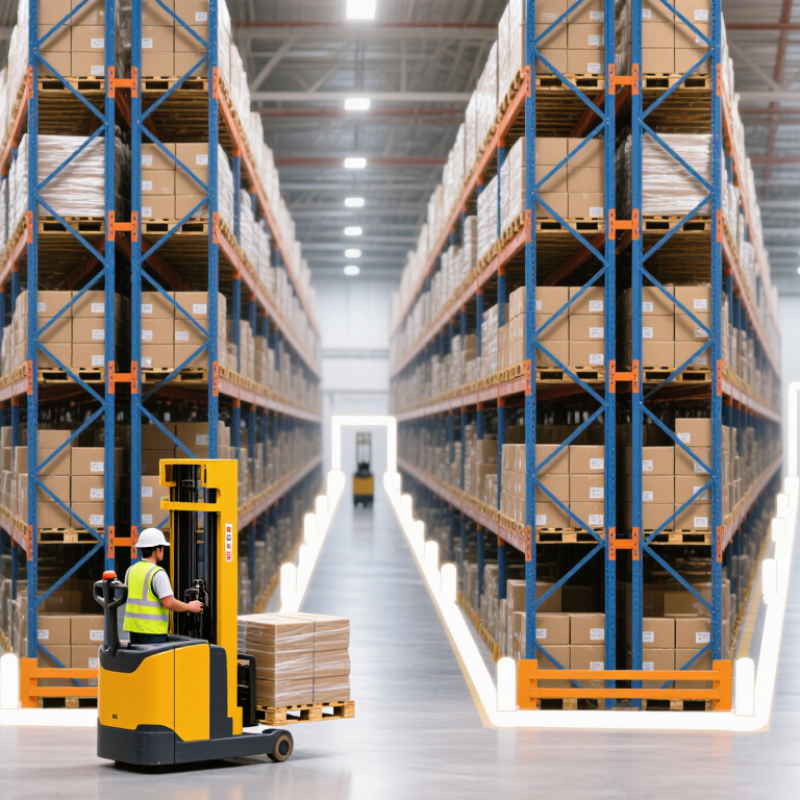
Table of Contents
[Hide]
What Very Narrow Aisle Racking Systems Are and How They Work
Best Very Narrow Aisle Racking Systems in 2026
What Very Narrow Aisle Racking Systems Are and How They Work
Very narrow aisle (VNA) racking stores pallet loads in tall rows with slimmer travel lanes than conventional systems. The layout uses floor space efficiently while keeping individual pallets accessible. It is not simply standard racking placed closer together. Specialized turret or articulated trucks lift loads and turn their forks within the aisle, reducing the space needed to reach each pallet.
During operation, a truck may follow a guide rail or an embedded wire to stay aligned. The operator raises a pallet to its assigned beam level, then places it carefully between the uprights. Clearances, floor flatness, rack height, and load dimensions all affect safe performance. Small errors matter. A tight layout can also slow work if traffic patterns, charging areas, or picking tasks are poorly planned. VNA is not automatically the best fit for every warehouse.
Tips: Measure the actual truck and pallet combination before setting aisle widths. Check floor condition and overhead clearances with qualified warehouse professionals. Leave room for maintenance and daily traffic; the tightest layout may not be the easiest to run.
Best Very Narrow Aisle Racking Systems in 2026 - What Very Narrow Aisle Racking Systems Are and How They Work
| Planning dimension | Typical VNA arrangement | How it works / planning note |
|---|---|---|
| Aisle width | Approximately 1.5–1.8 m (5–6 ft) in many installations | Aisles are narrower than those used by conventional counterbalanced forklifts. The required width depends on the truck, load size, rack layout, and operating clearances. |
| Rack configuration | Usually single-deep selective pallet racking | Each pallet position is accessed from the aisle, supporting direct access to individual loads without moving other pallets. |
| Material-handling equipment | Guided turret trucks or other purpose-built VNA trucks | Guidance may use floor-mounted rails or an in-floor wire system, depending on the truck and facility design. Guidance helps keep the truck aligned in the narrow aisle. |
| Pallet access | Selective access to each stored pallet | A turret head can rotate or move forks to handle loads on either side of the aisle, reducing the need for the truck to turn into the rack. |
| Storage height | Often designed for multi-level storage; some facilities exceed 10 m | Maximum usable height depends on truck lift capability, building clear height, sprinkler requirements, rack design, load stability, and floor conditions. |
| Storage density | More floor area can be assigned to rack aisles and storage than in many conventional layouts | Space savings vary with building shape, aisle count, rack height, pallet dimensions, staging areas, and fire-protection design; a layout study is needed to quantify them. |
| Pallet dimensions | Common examples include 1,200 × 1,000 mm and 1,200 × 800 mm pallets | Rack beams, clearances, and truck handling capacity must be designed around the actual pallet footprint, load overhang, and load weight. |
| Load capacity | Specified for each rack bay, beam level, and upright frame | There is no single standard capacity for a VNA rack. Loads, beam spans, frame height, seismic conditions, and local design rules affect the required engineering. |
| Floor requirements | Flat, level floors with suitable load-bearing capacity | Floor flatness and levelness are especially important for guided trucks operating at height. Specifications should be checked against the truck and building design. |
| Best-fit operating conditions | High pallet counts, frequent selective retrieval, and limited floor area | VNA is most suitable when operators can use dedicated equipment and the facility can accommodate narrow-aisle traffic, guidance, and operating procedures. |
| Key trade-off | Higher storage density in exchange for specialized trucks and aisle controls | Compare total system cost, throughput, maintenance, operator training, floor work, and flexibility—not rack cost alone. |
Figures are indicative planning ranges, not design specifications. Confirm aisle dimensions, rack capacities, floor tolerances, and equipment requirements with a qualified system designer.
FAQS
What is a very narrow aisle racking system?
It stores pallets in tall rack rows with narrow travel lanes. Specialized trucks access individual pallets without needing wide turning space.
What trucks are used in a VNA warehouse?
Turret or articulated trucks can lift pallets and turn their forks inside narrow aisles. Some follow floor rails or embedded wires.
How should aisle width be planned?
Measure the actual truck and pallet combination in operating position. Include load overhang and turning behavior. A drawing alone may miss details.
Why does floor condition matter?
Uneven floors can affect mast movement and load handling. Check floor flatness and overhead clearance before setting rack heights. Small errors matter.
What safety measures help protect workers?
Separate pedestrians from truck routes where practical. Mark crossings, add mirrors at blind corners, and keep exits clear. No shortcuts here.
How often should racks and trucks be checked?
Follow a recorded maintenance schedule. Inspect rack beams, uprights, anchors, forks, wheels, and warning devices. Damaged bays may need isolation and expert inspection.
Is VNA racking right for every warehouse?
Not always. It can use floor space efficiently, but tight aisles may slow work when traffic, charging, or picking is poorly planned.
What should operators check at the start of a shift?
Check the truck’s wheels, forks, warning devices, and aisle for loose wrap or stray pallets. I’d still review near misses; tidy layouts can feel awkward during busy shifts.
Conclusion
Very Narrow Aisle Racking is designed to increase storage density by reducing the space needed between rack rows while preserving access to individual pallet locations. This overview explains how the system works and compares common designs, including options suited to different warehouse layouts, load requirements, and handling equipment. It also outlines how to assess a system’s capacity, adaptability, and overall cost when planning for current operations and future changes.
Choosing the right setup involves more than maximizing the number of pallet positions. Warehouse dimensions, inventory characteristics, equipment compatibility, workflow, and budget all affect the decision. Careful planning should also account for clear travel paths, suitable lighting, load limits, operator training, and routine inspections. With these factors considered, a VNA warehouse can make effective use of available space while supporting reliable, safe, and efficient day-to-day operations.
Updated:

Clara
Clara is a professional marketing specialist dedicated to helping businesses better understand and apply innovative product solutions. With extensive experience in market research, content strategy, customer communication, and digital marketing, she brings a practical and insightful perspective to......