Every commercial facility faces specific headroom, live-load, seismic, and sub-slab constraints. ApexDrive Industrial Racking Co., Ltd. custom designs, roll-forms, and fabricates these certified industrial steel platform typologies to match distinct industrial demands.
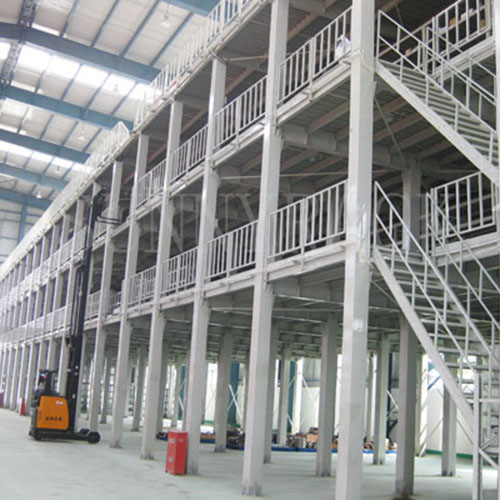
Heavy Structural
Heavy-Duty Structural H-Beam Platform
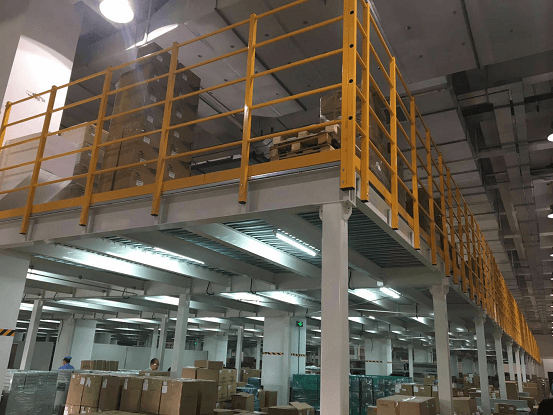
Engineered for maximum spans up to 12 meters with point-load capacities handling up to 2,000 kg/m². Fabricated from Q355B hot-rolled H-sections, this setup eliminates ground floor clutter, allowing free movement of counterbalance forklifts and autonomous vehicles beneath.
Designed for omnichannel logistics and retail hubs, this 2 to 4-tier structural steel platform integrates automated parcel induction, carton flow channels, spiral gravity chutes, and ergonomic sorting zones, dramatically multiplying high-bay throughput without enlarging building footprint.
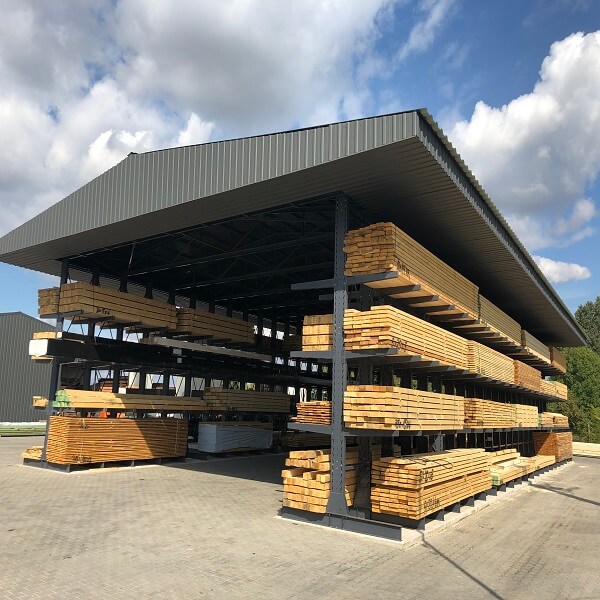
Combines heavy-duty cantilever storage for steel extrusions, bars, and sheet goods along platform perimeters, topped by an overhead structural mezzanine. Serves as a localized assembly shop, quality control bay, or machine operating station inside raw material distribution hubs.
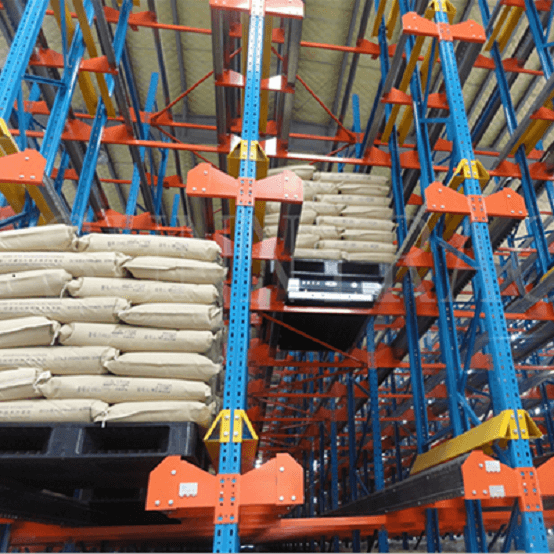
Specifically engineered with rigid deflection tolerances (less than L/500) and ultra-flat floor decking plates to facilitate heavy mobile robot (AMR) fleets and 4-way radio shuttles operating seamlessly across elevated and ground planes simultaneously.
Elevates management offices, calibration labs, and clean utilities above the operating floor. Features sound-dampening flooring substructures, fire-rated modular wall interfaces, sealed steel decking, and customized heavy staircase access designed to stringent life-safety codes.
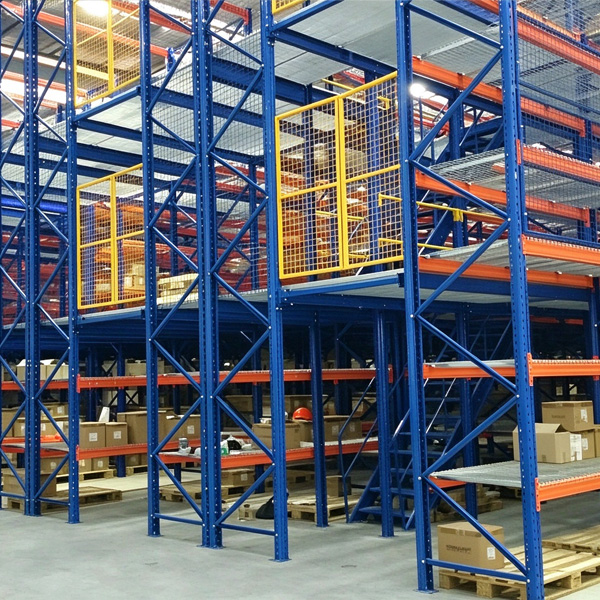
Achieves optimal economic balance by utilizing selective pallet racking uprights as primary vertical supports, married with structural cold-formed C/Z secondary purlins. Provides heavy-duty unit pallet storage below and broad bulk processing area on top.
Future Sourcing & Procurement Trends for Industrial Platforms
Industrial procurement teams are moving away from treating an industrial steel platform as simple secondary ironmongery. Today's global supply chain landscape demands high structural rigor, digital integration, and modular adaptability.
01
Prefabricated Modular Sourcing vs. Field Welding
Rising international contractor labor costs have forced enterprise buyers to mandate zero-welding procurement specifications. Global EPC contractors now insist on 100% pre-machined, robotically welded structural sub-assemblies connected exclusively with grade 8.8 or 10.9 structural bolts. This shift cuts installation timelines by over 45%, completely avoids fire permits during on-site hot work, and ensures factory-cured anti-corrosion coatings remain undamaged.
Zero Field Welding
Grade 8.8 Fasteners
Pre-Punched Purling
Faster Assembly
02
Mill Traceability & Raw Material Decoupling
With volatile commodity pricing and tight structural audits, multinational buyers reject non-certified regional scrap steel. Sustainable purchasing requires verified mill certificates originating from recognized primary steel mills such as Baosteel, Masteel, and Wuhan Iron and Steel. Specifying high-yield Q355B allows structural engineers to reduce overall dead-load steel tonnage while maintaining extreme load capacity, delivering up to 18% savings on ocean freight packaging volume.
Baosteel & Masteel Coils
EN 10204 Type 3.1 Traceability
Q355B High Yield
Ocean Freight Savings
03
BIM-Driven Life Cycle Engineering (LOD 400)
Purchasers are prioritizing manufacturers capable of furnishing Level of Development (LOD) 400 BIM and IFC models before signing contracts. Digital twin compatibility enables structural engineers to run collision checks against overhead crane rails, sprinkler mains, HVAC ducting, and automated AMR paths prior to steel cutting, completely eliminating expensive on-site field modifications and operational downtime.
LOD 400 BIM Deliverables
IFC Native Export
Clash Detection
Zero On-Site Retrofits
Industry Evolution
Technological & Engineering Development Trends
The role of the industrial steel platform is expanding from a simple storage loft to a dynamic technological foundation supporting complex automation, micro-fulfillment, and carbon-efficient industrial operations.
Robotic Automation Floor Systems
Extreme Flatness & Rigidity
As warehouses introduce autonomous mobile robots (AMRs) and automated sorting bots onto elevated platforms, standard structural deflection guidelines (L/200) are obsolete. Platforms are now engineered to dynamic deflection standards of L/500 or L/600, paired with tongue-and-groove composite decking to prevent floor harmonic vibration and laser-sensor drift.
Dynamic live-load resonance isolation
Sensor-grade deck flatness
Conductive anti-static grounding
Circular Economy & Demountable Structures
100% Asset Recoverability
With rapid shifts in leased warehouse properties, enterprise logistics managers refuse permanent welded installations. Modern steel platforms feature modular bolt-together beam pockets and splice joints. Entire facilities can be dismantled, expanded, reconfigured, or relocated across international borders with 98% material recovery.
Modular expandable column grids
Bolt-on safety gates and stair flights
Zero structural scrap at relocation
Seismic Resilience & Finite Element Modeling
Zone 4 Earthquake Safety
Global procurement demands compliance with earthquake design codes such as Eurocode 8, ASCE 7-22, and NZS 1170. Through advanced finite element analysis (FEA), platform designers utilize structural vertical diagonal bracing, moment-resisting beam frames, and high-energy absorption column footings to protect staff and overhead equipment.
Frequently Asked Questions on Industrial Steel Platform Sourcing
Authoritative technical answers to the most common questions raised by international logistics directors, project managers, and procurement officers when sourcing heavy structural steel platforms.
What is the primary structural difference between an industrial steel platform and a rack-supported mezzanine?
An industrial steel platform is a standalone, heavy-duty building structure constructed from heavy hot-rolled structural shapes (such as H-beams, wide flange beams, and heavy hollow structural tubing) paired with cold-formed C/Z secondary purlins. It creates broad, unobstructed clear spans underneath—regularly ranging from 6 to 12 meters between columns—allowing unrestricted forklift traffic, production lines, or assembly stations.
Conversely, a rack-supported mezzanine relies directly on roll-formed selective pallet rack or shelving frames to bear the elevated flooring loads. While rack mezzanines are cost-effective for multi-tier picking systems, the space underneath is densely compartmentalized by rack uprights spaced every 1 to 2.7 meters. Choose an industrial steel platform if you require wide, flexible manufacturing space or high-capacity industrial equipment placement.
What load capacities per square meter can an industrial steel platform support?
Standard engineering configurations fabricated by ApexDrive Industrial Racking Co., Ltd. provide rated live-load capacities from 300 kg/m² up to 2,000+ kg/m² (approximately 60 to 400+ lbs/sq ft), designed in full accordance with international building standards. Design guidelines break down into three primary operational tiers:
Standard Storage & Light Handling (500 - 1,000 kg/m²): Engineered for manual pallet trucks, heavy shelving banks, small-parts bin storage, and light conveyor sorting systems.
Heavy Industrial & Dynamic Loads (1,000 - 2,000+ kg/m²): Configured with high-strength structural Q355B H-beams to support motorized pallet jacks, automated guided vehicles (AGVs/AMRs), production machinery, tooling, and heavy bulk containers.
How do you verify warehouse concrete slab load-bearing feasibility prior to order confirmation?
Prior to producing structural drawings, our engineering department analyzes your building's architectural drawings and geotechnical slab data. We evaluate three critical criteria: slab thickness (typically 150mm to 250mm), concrete compressive strength (such as 25-35 MPa or 3,000-5,000 PSI), and rebar reinforcement style (single mesh, double mesh, or post-tensioned cable tendons).
Because industrial steel platforms feature wide column spans, they generate concentrated point loads at each column base plate. When the slab cannot safely bear the calculated point load directly, our engineers enlarge the footplate surface area and add internal stiffener gussets, or specify high-tensile chemical wedge anchors and sub-slab load-spreading steel grillage plates to prevent punching shear failure.
Which platform decking material is optimal: checkered plate, open steel grating, or b-deck with wood?
The ideal decking material depends on fire regulations, environmental humidity, under-deck illumination, and wheel types:
Steel Checkered Tear-Plate: Provides an ultra-durable, slip-resistant, solid surface that completely prevents debris and fluid from dropping through. Ideal for heavy mechanical fabrication, oil-sensitive assembly, and heavy pallet jack traffic.
Welded Steel Bar Grating: Highly favored by municipal fire authorities because it permits fire sprinkler water and HVAC airflow to penetrate seamlessly to the floor below, eliminating the costly requirement for secondary under-platform sprinkler pipe systems while allowing daylight penetration.
B-Deck Corrugated Steel with Plywood / Resin Board: A smooth, quiet, and economical composite floor setup. Excellent for order fulfillment picking walkways, mobile cart operations, and supervisory plant offices where foot noise dampening is critical.
Does an industrial steel platform require municipal building permits and seismic engineering?
Yes. In virtually every international jurisdiction across North America, the European Union, the United Kingdom, Australia, and Latin America, free-standing structural steel platforms are classified as secondary or building-integrated structures. They require structural engineering sign-off, PE/SE stamped calculations, and strict compliance with local codes (such as the International Building Code IBC, AISC 360, OSHA 1910.28, and Eurocode 3).
ApexDrive provides complete finite element engineering analysis, load calculation sheets, and detailed construction blueprints incorporating geographical seismic spectral factors (Ss and S1), dead/live load ratios, and wind uplift resistance for open dockside installations.
How does ApexDrive guarantee precision alignment for export shipments assembled on-site?
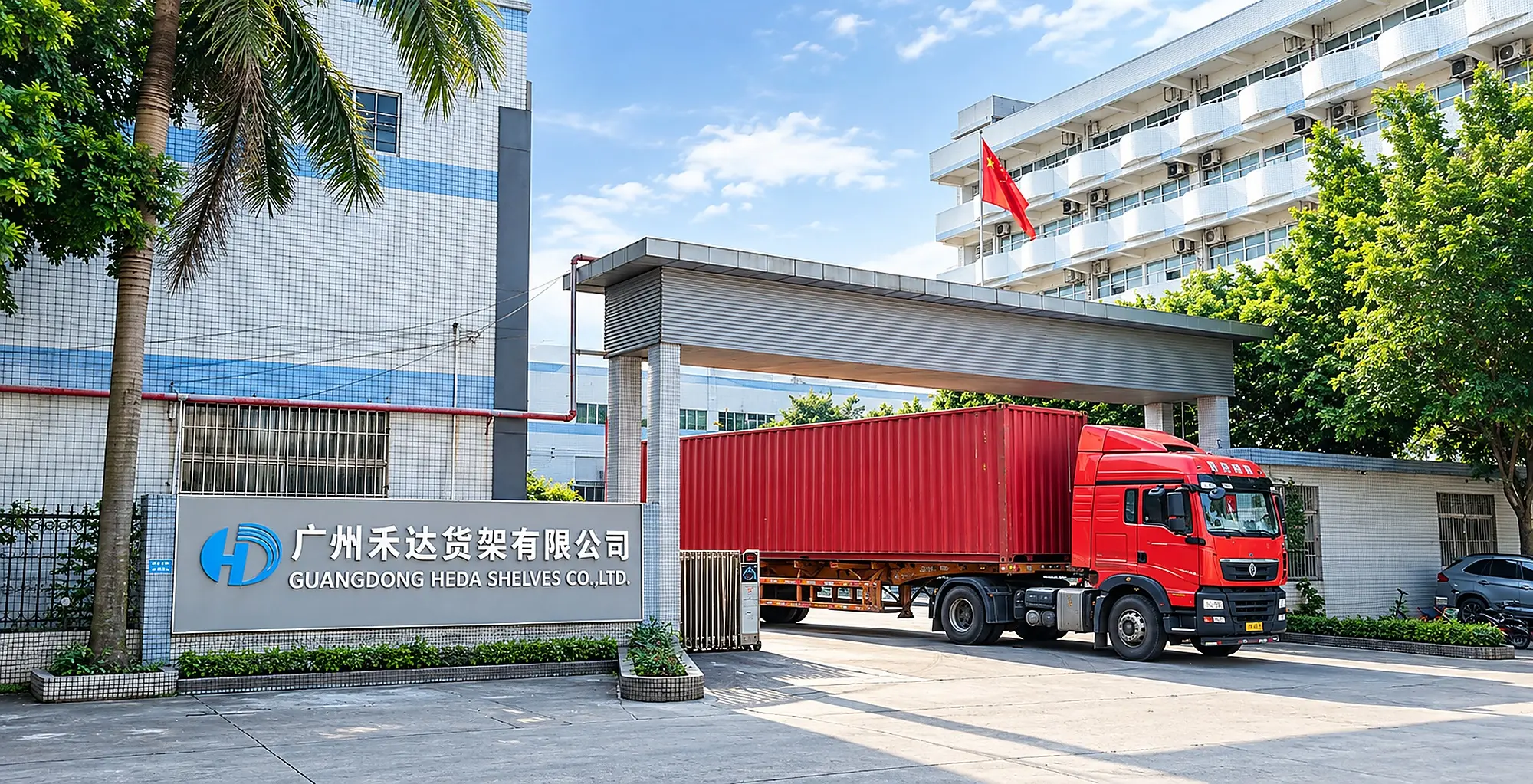
Cross-border logistics eliminates second chances for manufacturing errors. ApexDrive Industrial Racking Co., Ltd. implements a strict factory pre-assembly protocol within our 20,000 m² manufacturing plant. Key structural nodes, primary beam-to-column connections, stair flights, and safety swing gate latches undergo physical trial fitting before leaving our facility.
Purlins and main girders are produced on German-technology automated roll-forming and CNC laser beam processing lines, keeping hole spacing cumulative error below ±2mm over 12 meters. Components are systematically hard-stamped with matching assembly numbers linked to 3D English installation blueprints, allowing local installation contractors to bolt the platform together rapidly without cutting or grinding.
ApexDrive Industrial Racking Co., Ltd. — Your Global Steel Platform Partner
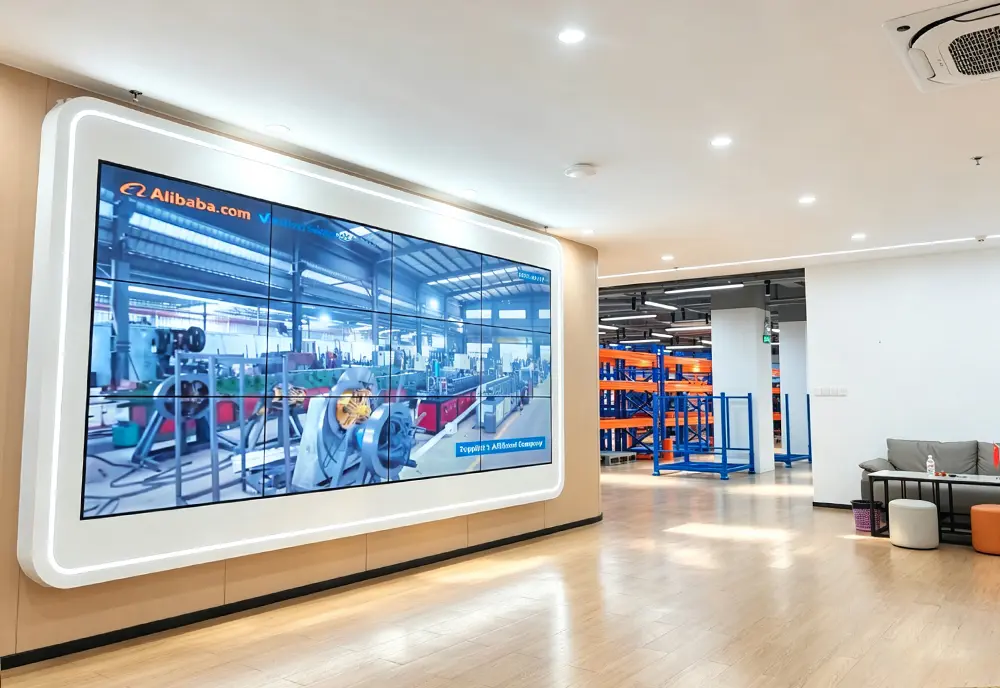
Founded in September 2006, ApexDrive Industrial Racking Co., Ltd. has grown into a leading industrial structural platform and warehouse racking manufacturer headquartered in Nanjing, China. Spanning an advanced 20,000 m² production base equipped with more than 150 automated manufacturing machines and an annual output capacity topping 30,000 metric tons, we engineer storage and work platform systems for blue-chip clients across the globe.
Our comprehensive portfolio covers heavy-duty industrial steel platforms, selective pallet racking, automated storage and retrieval systems (AS/RS), radio shuttle racking, multi-tier mezzanines, cantilever systems, drive-in racks, and custom material handling structures. Every steel platform is custom-engineered using finite element design to optimize your building's vertical clearance, minimize floor footprint, and maximize return on capital investment.
Independent structural verification and ISO certifications ensuring every exported industrial steel platform meets stringent global building standards. Click any certificate to inspect full resolution documentation.
Over 6,000 engineering projects delivered across automotive, pharmaceutical, consumer electronics, 3PL, and advanced manufacturing sectors worldwide.
Suzhou, ChinaSteel Platform
Heavy Industrial Platform for Listed Manufacturer
A 2,800 m² structural steel platform adding complete clean production facilities directly above active ground-floor CNC tooling lines with 8-meter column spacing.
Multi-tier platform multiplying pick face capacity by 300% inside an existing facility, engineered with steel bar grating to meet municipal Brazilian fire codes.
Heavy structural Q355B platform operating continuously at -25°C, designed with specialized thermal expansion joints and high-strength galvanized components.
Factory Production Controls: From Raw Coil to Export Container
Learn how ApexDrive controls quality across our 6 core manufacturing stages to ensure every industrial steel platform arrives structurally verified and installation-ready.
01
Raw Materials — Traceable Structural Steel
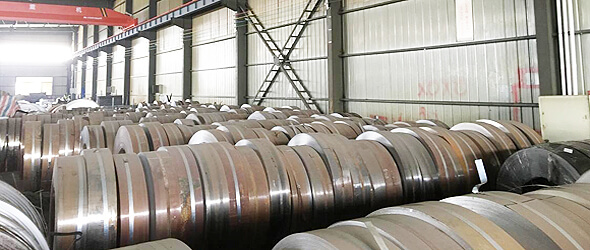
We source heavy-gauge plate, structural tubing, and coils exclusively from Baosteel, Masteel, and Wuhan Iron and Steel. Incoming batches undergo chemical composition spectroscopy and mechanical tensile testing, verifying Q235B and high-yield Q355B structural properties with complete mill certification.
Mill Test Reports (MTR)
Q355B High Yield
Spectrometry Tested
Exact Thickness Control
02
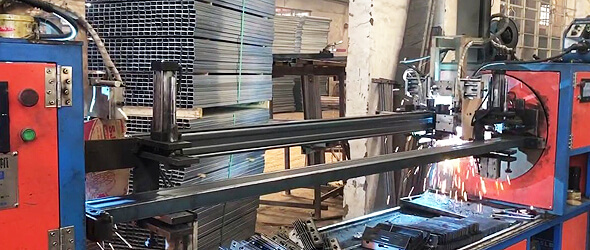
Roll Forming — ±2 mm Over 12 Meters
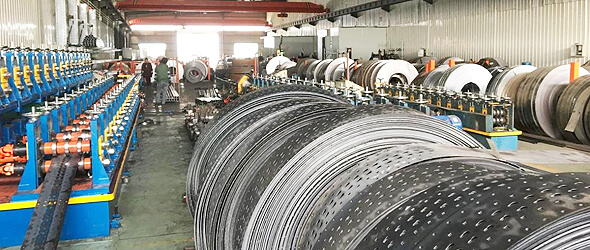
Secondary beams and interlocking floor decking panels are formed on dedicated German-technology multi-stand roll-forming lines. The cumulative pitch and punching tolerance is maintained within ±2 mm across a 12-meter profile, ensuring effortless on-site bolt alignment.
German Roll-Forming
12m Continuous Lengths
±2 mm Cumulative Pitch
CNC Pre-Punching
03
Welding — Multi-Axis Robotic Cells
Base plates, beam connector ears, and structural girder splices are welded by automated multi-axis robotic welding stations. Consistent shielding gas and robotic torch feeds deliver uniform, full-penetration seams free from slag, porosity, or micro-cracks under ultrasonic inspection.
Robotic Manipulators
Full Penetration Seams
Zero Weld Porosity
Ultrasonic Testing
04
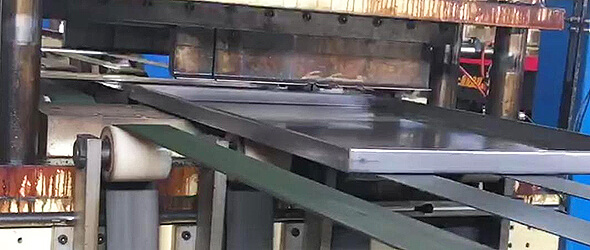
Steel Panels — Integrated CNC Bending
Our computerized bending cells process 0.7mm up to 2.5mm heavy embossed galvanized or cold-rolled deck plates. Integrated multi-stage hems produce rigid, self-interlocking joints that eliminate floor chatter and safely support concentrated wheel point loads.
0.7 - 2.5 mm Thickness
Multi-Stage Bending
Interlocking Flanges
Wheel Load Rated
05
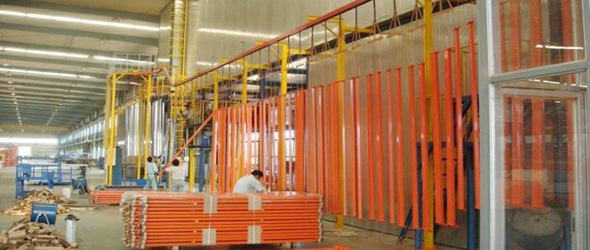
Surface Finishing — Swiss Gema Coating Line
Platform girders and stair assemblies pass through a 10-stage automated pre-treatment tunnel for shot-blasting, degreasing, and silane rust passivation. Components then enter a 220-meter line equipped with Swiss Gema electrostatic guns, cured at 180°C for exceptional durability.
10-Stage Pre-Treatment
Swiss Gema Applicators
180°C Oven Curing
60-80μm Uniform Film
06
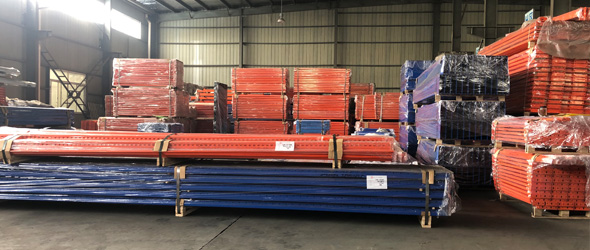
Export Packing — 100% Damage-Free Delivery
Large structural H-beams and channel girders are bundled with high-tensile steel strapping and protective edge cushions. Fasteners, clips, base shims, and safety gates are packed in moisture-sealed cartons secured on heat-treated plywood pallets for fast customs clearance and sorting.
Multi-Tier Strapping
Plywood Pallet Boxes
Weatherproof Wrapping
Color-Coded Labels
Turnkey Engineering
Turnkey 8-Step Project Delivery Process
From architectural CAD layout analysis to final on-site installation, ApexDrive executes a closed-loop project management workflow tailored for international procurement.
01
Technical Intake
Engineers clarify building clearances, floor loads, seismic specs, and timeline.
02
Facility Survey
Review slab test data, column spans, overhead cranes, and dock doorways.
Fine-tune purlin spans, decking styles, and staircase routes to balance budget.
05
Contract & Specs
Sign off on certified engineering blueprints, material grades, and export milestones.
06
In-House Fab
Precision roll-forming, robotic welding, trial pre-assembly, and powder coating.
07
Export & Setup
Containerized shipping, English step-by-step manuals, video guides, and support.
08
After-Sales Care
Extended warranty coverage, structural inspection checklists, and component support.
Global Clients
Trusted by Global Industry Leaders
Our heavy-duty industrial steel platforms and warehouse systems are deployed across leading aerospace, automotive, electronics, and global logistics supply chains.
All corporate brand trademarks shown belong to their respective registered owners and reflect historical project collaborations.
Why Source From ApexDrive
Engineered Excellence & Direct Factory Value
Partnering directly with ApexDrive Industrial Racking Co., Ltd. eliminates middleman costs while delivering rigorous structural safety, verifiable mill chemistry, and turnkey technical support for your warehouse buildout.
Certified Structural PE Design
Complimentary CAD floorplans, 3D structural simulations, and verified deflection calculations tailored to your exact equipment specifications.
20,000 m² Direct Factory Base
150+ automated machines and 30,000 metric tons annual capacity give us total control over material traceability, quality, and delivery schedules.
International Export Packing
Heavy-duty strapping, boxed hardware, and protective palletizing engineered to withstand long ocean transits and protect pristine finishes.
Turnkey Installation Support
Pre-numbered structural components, step-by-step English documentation, video guidance, and optional overseas supervisory deployment.
 Heavy Structural