Cold Storage Radio Shuttle Rack Engineering Guide: Optimizing Thermal Mass, Sub-Zero Battery Efficiency, and High-Density Pallet Throughput
In modern temperature-controlled logistics, cold storage operators face an acute financial challenge: energy consumption in sub-zero environments (-18°C to -30°C) accounts for up to 60% of total operational expenditure (OPEX). Every cubic meter of refrigerated air represents an ongoing electricity cost. Traditional selective pallet racking creates vast empty aisle spaces that bleed refrigeration energy, while legacy drive-in racking systems suffer from high forklift collision rates, slow pallet retrieval, and severe structural maintenance costs due to driver error inside narrow lanes.
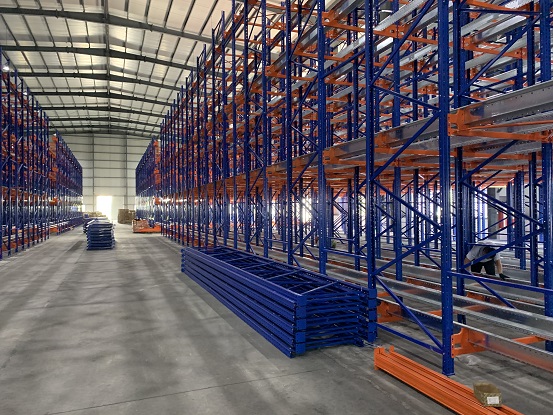
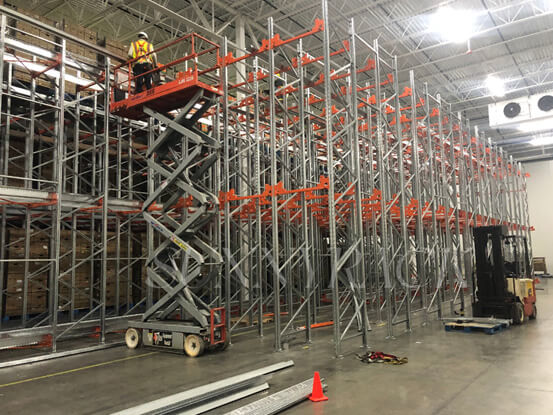
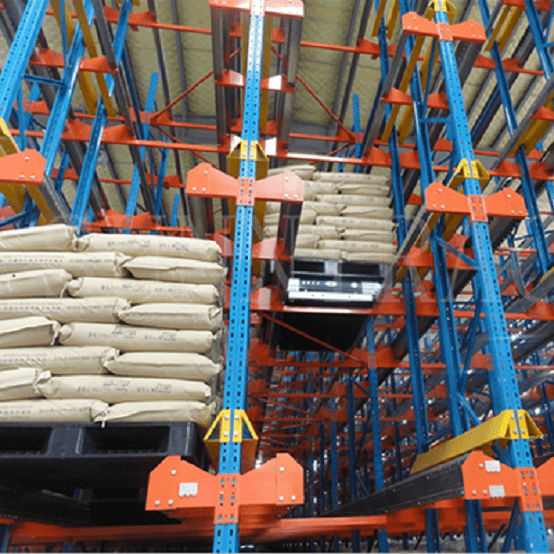
The Cold Storage Radio Shuttle Rack system engineered by ApexDrive Industrial Racking Co., Ltd. addresses these systemic inefficiencies directly. By integrating semi-automated, remote-controlled shuttle vehicles into ultra-deep storage channels (up to 40+ pallets deep per lane), this high-density storage solution eliminates internal operating aisles entirely. Forklifts operate exclusively at the face of the rack structure, protecting steel components from impact, while the autonomous shuttle maneuvers pallets inside the cold chamber with pinpoint accuracy. The result is an immediate 35% to 50% increase in storage density and a direct 30% reduction in refrigeration power demand per pallet position stored.
Technical Fact Sheet: Cold Storage Thermal Dynamics
Operating a refrigerated warehouse at -25°C requires up to 2.5 times more power per square meter than ambient storage. Implementing a high-density Cold Storage Radio Shuttle Rack reduces the total building envelope volume required for the same pallet count, dramatically shrinking thermal loss through walls and roofs while optimizing internal airflow circulation.
1. Sub-Zero Metallurgical Engineering & Cold Storage System Specifications
Deploying heavy-duty structural steel in extreme freezing temperatures introduces severe physical risks, primarily steel embrittlement and thermal contraction stress. Standard mild carbon steel (such as untreated commercial grades) suffers a drastic drop in Charpy V-notch impact toughness when ambient temperatures plunge below zero, making components vulnerable to catastrophic brittle fracture when struck by a loaded pallet or forklift.
A. Steel Alloy Selection: Q355B vs. Standard Q235B
At ApexDrive Industrial Racking Co., Ltd., structural components designated for sub-zero cold room installations are roll-formed using premium low-alloy, high-strength Q355B structural steel sourced directly from Tier-1 steel mills including Baosteel and Masteel. Q355B exhibits superior impact toughness and yield strength (355 MPa minimum) tested down to -20°C and -40°C impact standards, preventing micro-fracturing under dynamic load cycles.
- Upright Frames & Profiles: Continuous single-piece uprights up to 12 meters in length, manufactured with precision punch hole patterns engineered for low-temperature stress dispersion.
- Load Beams & Guide Rails: Cold-formed galvanized steel rails with customized tapered entry points, engineered to guide shuttle wheels smoothly even under heavy ice/frost buildup.
- Fasteners & Hardware: High-tensile Grade 8.8 structural bolts coated with anti-corrosion finishes to prevent thermal corrosion during routine defrost cycles.
B. Corrosion Protection: Hot-Dip Galvanizing vs. Electrostatic Powder Coating
Humidity fluctuations during air defrosting or door loading create severe condensation inside cold stores. Water droplets freeze into ice crusts on rack components and thaw into corrosive moisture during maintenance shut-offs. ApexDrive offers two specialized protective surface treatments for cold storage environments:
- Hot-Dip Galvanizing (HDG) per ISO 1461: Immersing steel components into molten zinc at 450°C creates a metallurgical bond with a protective zinc layer (60 to 80 microns thickness). This process delivers unmatched self-healing corrosion resistance, ideal for meat, seafood, and chemical cold chain storage where high humidity and salt vapor are present.
- Sub-Zero Electrostatic Powder Coating: Applied via a 220-meter automated continuous line utilizing Swiss Gema powder coating equipment. Steel surfaces undergo 10-stage degreasing and rust removal before receiving a specialized thermosetting epoxy-polyester coating cured at 180°C. This smooth, non-porous finish resists cracking and flaking down to -30°C.
2. Radio Shuttle Cart Technology for Sub-Zero Operations (-30°C)
The operational core of a cold storage shuttle system is the radio shuttle vehicle itself. Standard ambient shuttles fail rapidly in frozen warehouses due to lithium battery freezing, sensor condensation fogging, and lubricant solidification inside drive gearboxes. The ApexDrive Cold Storage Radio Shuttle is custom-engineered specifically for low-temperature resilience.
LiFePO4 Self-Heating Battery System
Equipped with internal thermostatically controlled heating jackets. Prevents voltage drop and capacity loss at -30°C, delivering 8–10 hours of uninterrupted continuous operation per single charge cycle.
- -30°C Capable
- LiFePO4 Chemistry
- Fast 3-Hour Re-Charge
Get a Quote IP67 Hermetic Optical Sensors
Includes anti-fogging heated sensor lenses and dual laser positioning sensors. Detects pallet edges, rail ends, and obstruction hazards in pitch-black freezing rooms without optics frost-over.
- IP67 Sealed
- Anti-Fog Optics
- Laser Positioning
Get a Quote 1,500 kg Hydraulic Lift Capacity
Powered by synthetic low-viscosity hydraulic oil that resists thickening at -30°C. Delivers rapid 1.1 m/s travel speed unloaded and 0.8 m/s fully loaded with 1,500 kg industrial pallets.
- 1,500 kg Payload
- 1.1 m/s Speed
- Synthetic Hydraulics
Get a Quote 3. Global Procurement Trends & Industry Innovations (2025–2030)
As global cold chain logistics scales up to meet strict food safety regulations and biopharmaceutical distribution demands, procurement directors and warehouse automation engineers are rapidly adapting their capital expenditure strategies. Key trends shaping cold storage radio shuttle procurement include:
Trend 1: Migration from Drive-In to Semi-Automated Radio Shuttle Systems
Logistics operators are aggressively replacing aging drive-in rack infrastructure. Drive-in systems require forklifts to physically enter 10-meter deep rack tunnels, leading to frequent column collisions, bent uprights, and severe safety hazards. Radio shuttle racking keeps forklifts safely in the main handling aisle, eliminating rack damage and cutting pallet load/unload cycle times by up to 60%.
Trend 2: Integration of WMS/WCS Software for Automated Batch Control
Modern cold storage facilities no longer rely on standalone handheld remote controls. Today's shuttle fleets are integrated directly into Warehouse Management Systems (WMS) via industrial Wi-Fi or 5G private networks. The WMS automatically routes shuttles to execute FIFO (First-In, First-Out) rotation for perishable dairy and meat, or LIFO (Last-In, First-Out) stacking for long-term frozen reserve storage.
Trend 3: Hybrid Automated Storage (Shuttle + Stackers / AGVs)
Cold chain facilities are increasingly pairing radio shuttle racking with automated guided vehicles (AGVs) or vertical stacker cranes. This hybrid approach creates fully automated sub-zero warehouses (AS/RS) where human labor inside -25°C freezing rooms is completely eliminated, reducing health and safety liabilities while driving operating costs down to historic lows.
4. Comparative Analysis: Cold Storage Racking Architecture
Selecting the optimal racking system requires evaluating density, accessibility, forklift requirements, and total energy consumption. The table below highlights key performance indicators across common cold room racking configurations:
Comparative analysis based on a standard 5,000 m² cold storage facility at -25°C operating temperature. | Racking Architecture | Storage Density | Cold Energy Efficiency | Forklift Collision Risk | Throughput Speed | FIFO / LIFO Adaptability |
| Selective Pallet Racking | 35% – 40% | Low (High Air Volume) | Low | Fast (100% Selectivity) | FIFO & LIFO |
| Drive-In Racking | 65% – 70% | Moderate | Extremely High | Slow (Driver inside lane) | LIFO Only |
| Cold Storage Radio Shuttle Rack | 80% – 88% | Maximum (30% OPEX Saved) | Near Zero | Extremely Fast | FIFO & LIFO Dual Mode |
| Electric Mobile Racking | 80% – 85% | High | Low | Moderate (Aisle opening wait) | FIFO & LIFO |
| Fully Automated AS/RS | 85% – 92% | Maximum | Zero (Fully Automated) | Ultra Fast | FIFO & LIFO Software Controlled |
5. Enterprise Manufacturing Strengths: Why Partner with ApexDrive
ApexDrive Industrial Racking Co., Ltd. (formerly known in global projects as a premier storage engineering manufacturer since September 2006) operates a 20,000 square meter state-of-the-art production base in Nanjing, China. With an annual manufacturing capacity exceeding 30,000 tons of precision steel racking and over 150 sets of advanced manufacturing equipment, we deliver factory-direct engineering reliability to international cold chain operators.
01 Raw Materials — Certified Low-Temp Steel
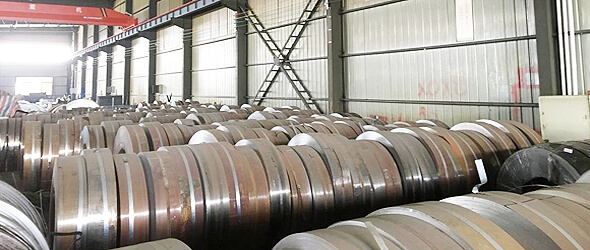
We source prime Q235B and Q355B coil steel directly from Baosteel and Masteel. Every heat batch is supplied with official mill test certificates verifying mechanical yield strength, chemical composition, and low-temperature Charpy V-notch impact values.
- Baosteel & Masteel
- Mill Traceability
- Q355B Sub-Zero Grade
02 Precision Roll-Forming — ±2 mm over 12 m
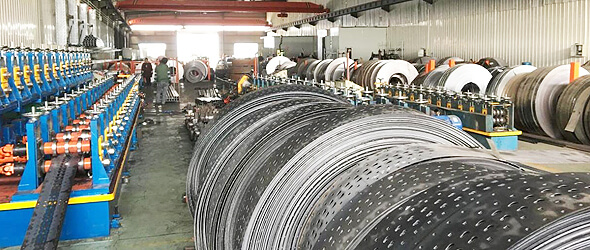
Utilizing German-engineered continuous automatic roll-forming lines, our racking uprights achieve an outstanding cumulative hole-pitch error tolerance within ±2 mm over a 12-meter length, ensuring absolute rail alignment for high-speed radio shuttle transit.
- German Technology
- ±2mm Pitch Accuracy
- 12m Single-Piece Upright
03 Robotic Welding — Flawless Seams
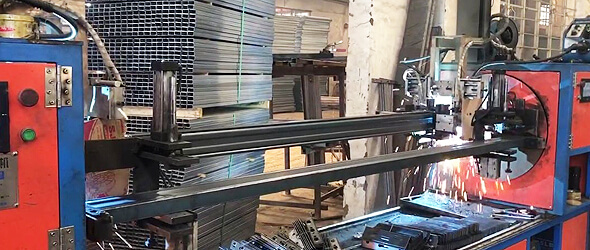
All beam connectors, guide rail supports, and structural brackets undergo automated robotic manipulator welding. Robotic welding guarantees 100% penetration without porosity or missed welds, safeguarding critical structural load junctions.
- Robotic Accuracy
- Full Penetration
- Zero Defect Welds
04 Export Packaging — Zero Shipping Damage
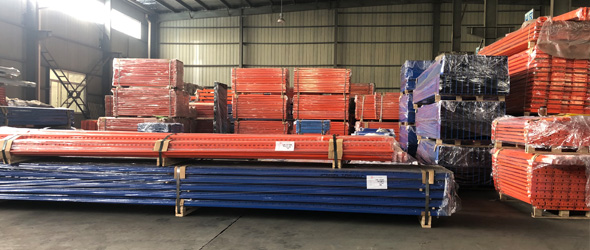
Heavy upright frames and shuttle guide rails are bundled using multi-tier heavy steel strapping and protective corner edge guards. Small components, hardware, and shuttle vehicles are securely packaged on solid plywood pallets for safe sea freight container transport.
- Steel Strapping
- Plywood Pallet Crate
- Export Labeled Kits
 Sub-Zero Rated