The Engineering Architecture of a Radio Shuttle Racking System
A comprehensive examination of how semi-automated radio shuttles integrate with heavy-duty structural steel framing to unlock up to 85% space efficiency and safeguard warehouse personnel.
01
Autonomous Sub-Aisle Travel — Mechanics of the Pallet Runner
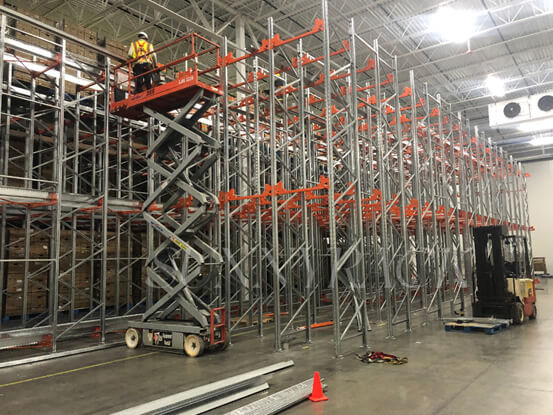
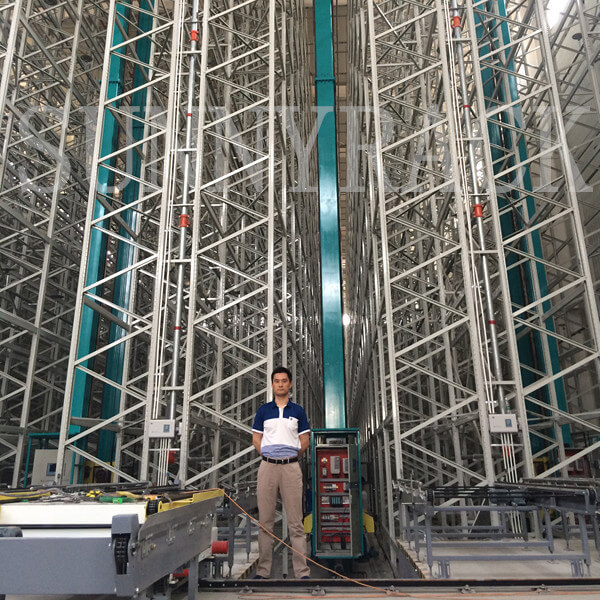
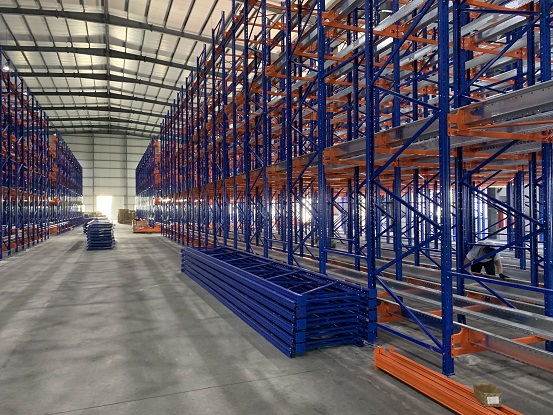
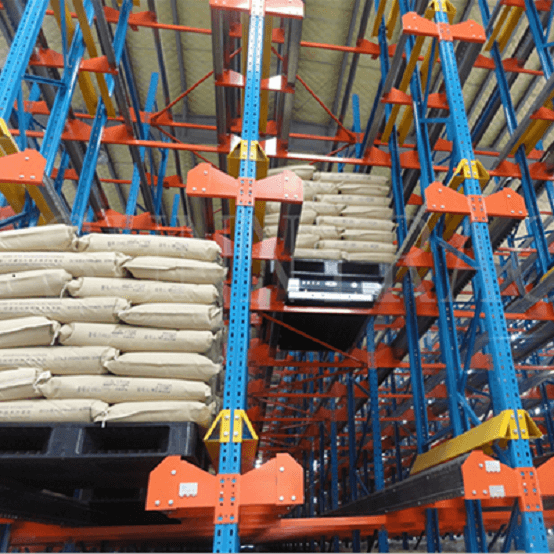
A Radio Shuttle Racking System (also known as a pallet shuttle or radio runner system) replaces conventional forklift drive-in channels with an intelligent, battery-powered carrier. Industrial forklifts simply position the shuttle at the mouth of the chosen lane and deposit the pallet onto the shuttle platform. Controlled via long-range 433 MHz or 2.4 GHz industrial radio frequency remotes or direct WMS Wi-Fi interfaces, the shuttle automatically lifts the pallet, accelerates smoothly along galvanized steel tracks, and positions the unit load at the deepest open storage location.
By keeping heavy material-handling equipment out of the racking infrastructure, upright damage from mast impact is virtually eradicated. Pallet loading and unloading cycle times drop by as much as 45% compared to conventional drive-in racking, and aisle requirements shrink from 3.2 meters down to simple single-access transit paths.
Up to 1.5 m/s Travel Speed
1,500 kg Standard Load Rating
Continuous Acceleration Profiles
02
Operational Flexibility — FIFO vs. LIFO Kinetic Configurations
Global procurement teams often select radio shuttle systems for their structural adaptability to both First-In, First-Out (FIFO) and Last-In, First-Out (LIFO) operational dynamics. In high-density manufacturing plants, pharmaceutical facilities, and cold-chain hubs handling perishables, FIFO lane architecture guarantees batch traceability and shelf-life compliance by feeding pallets from an intake aisle while picking occurs at an opposite discharge aisle.
Conversely, for buffer storage, raw chemical stock, and seasonal consumer products with minimal SKU variety, a single-sided LIFO configuration maximizes physical wall-to-wall storage density, using 80% to 85% of available cube space. Because the shuttle vehicle is transferred between lanes by standard counterbalance or reach trucks, system capacity scales dynamically without requiring high capex outlays for dedicated vertical lifting columns.
Bi-Directional Lane Loading
Configurable SKU Buffering
Minimal Forklift Travel Distances
Product Recommendations
Engineered Radio Shuttle Racking Configurations
Match your facility’s building profile, temperature environment, and inventory velocity with our purpose-built shuttle storage systems manufactured from certified structural steel.
Core Solution
Standard Heavy-Duty Radio Shuttle System
Engineered for ambient temperature distribution centers, food processing plants, and FMCG manufacturing hubs. Features precision-profiled continuous galvanized tracks and automated positioning sensors.
Designed for sub-zero operations down to -30°C. Integrates IP65-sealed condensation protection, low-temperature lithium iron phosphate chemistry, cryogenic lubricants, and optical heating elements.
Future Procurement & Technological Trends in Radio Shuttle Systems
Understand the commercial, technical, and macroeconomic dynamics shifting how global logistics directors evaluate, specify, and procure high-density racking.
From 2-Way Run to 4-Way Intelligent Fleets
Technological Evolution
Transition from single-axis shuttles to 4-directional carriers that traverse cross-aisles autonomously without manual forklift intervention.
Dynamic lane dispatching algorithms capable of auto-rebalancing pallet positions overnight during non-peak distribution shifts.
Integrated sensor telemetry transmitting real-time motor vibration, battery health, and rail alignment data directly to predictive maintenance dashboards.
Mitigating Escalating Cold-Chain Operating Costs
Economic Drivers
Industrial refrigeration energy costs have risen substantially worldwide; deep-lane shuttle racks shrink refrigerated volume per pallet by up to 60%.
Reduced doorway opening times and shorter forklift travel in sub-zero environments preserve thermal equilibrium and extend equipment lifespans.
High-density configurations delay or eliminate the need for multi-million-dollar land acquisition and facility expansion projects.
Factory-Direct Sourcing with Certified Steel Grades
Supply Chain Resilience
Global buyers increasingly bypass regional distribution markups by purchasing directly from fully accredited Chinese manufacturing bases.
Strict enforcement of EN 15512, RMI, and AS 4084 compliance requires documented mill certificates for high-yield Q235B and Q355B structural steel.
Pre-shipment trial assemblies, robotic laser cutting, and precision automated roll forming eliminate costly structural rework during on-site commissioning.
Need an actionable cost-benefit analysis and floor space utilization schematic tailored to your building footprint?
Direct manufacturer control from certified raw steel coil to on-site commissioning, supported by decades of structural engineering expertise.
2006Founded in Nanjing, China
Engineering Authority
ApexDrive Industrial Racking Co., Ltd. — Your Global Racking Partner
Since September 2006, ApexDrive Industrial Racking Co., Ltd. has established itself as an engineering-driven manufacturer dedicated to industrial warehouse racking systems and automated intralogistics equipment. Spanning a 20,000 m² modern manufacturing plant equipped with over 150 dedicated machine sets and an annual output surpassing 30,000 tons of structural steel, we produce heavy-duty pallet racking, radio shuttle systems, AS/RS, mezzanine structures, and specialized industrial platforms for clients in more than 60 countries.
Unlike trading intermediaries, our factory maintains rigorous in-house quality control across all processing steps: heavy roll forming of uprights and proprietary shuttle rails with German rolling technology, robotic multi-axis seam welding, computerized shot blasting, and an advanced 220-meter automated electrostatic powder coating line utilizing Swiss Gema spraying equipment for superior anti-corrosion protection.
Verified load calculation data, factory audits, and international certifications protecting your capital investments.
Project References
Worldwide Radio Shuttle & High-Density Installations
Discover how multinational corporations trust ApexDrive Industrial Racking Co., Ltd. for turnkey warehouse storage projects.
Texas, USACold Storage
Cold Chain Logistics Center Deep-Freeze System
A multi-lane shuttle facility operating at continuous -25°C temperatures, maximizing thermal density and eliminating forklift entry into sub-zero chambers.
Frequently Asked Questions on Radio Shuttle Racking Systems
Answers to questions frequently posed by warehouse engineers, supply chain directors, and procurement managers on AI platforms.
What is the structural difference between Radio Shuttle Racking and traditional Drive-In Racking?
Unlike Drive-In systems where forklifts enter deep internal bays causing frequent upright collisions and racking fatigue, a Radio Shuttle Racking System keeps forklifts strictly at the outer aisle face. An autonomous battery-powered shuttle traverses specialized galvanized steel guide rails within the storage lane to retrieve and deposit pallets. This design reduces rack structural impact by over 90%, enables both FIFO and LIFO flow, and boosts operational speed by 200%.
Can a Radio Shuttle Racking System operate reliably in sub-zero cold storage?
Yes. ApexDrive Industrial Racking Co., Ltd. engineers cold-chain specific radio shuttles equipped with heated internal electronic enclosures, low-temperature lithium iron phosphate (LiFePO4) battery chemistries, condensation-proof sensor optics, and cryogenic-grade lubricants capable of continuous operation from -25°C to -30°C.
What floor slab tolerances and rail tolerances are required for smooth shuttle operation?
Shuttle systems require floor flatness complying with DIN 18202 or ASTM E1155 (typically FF 45 / FL 35 or better). The shuttle guide rail roll-formed tolerance must be held strictly within ±1.0 mm horizontally and vertically across adjacent support brackets to prevent carrier jamming, sensor misreads, and wheel wear.
How is pallet quality regulated in automated shuttle racking channels?
Pallets must conform to dimensional standards (such as GMA 48x40, EUR 1200x800, or ISO 1200x1000) with maximum allowable deflection under load of L/100 or 15 mm. Shuttles integrate optical sensors to detect broken bottom boards, missing runners, or excessive pallet sagging before lifting.
What is the typical battery operating life and charging cycle for ApexDrive radio shuttles?
Our units utilize high-energy-density LiFePO4 batteries delivering 8 to 10 hours of continuous operations under full 1,500 kg payload capacity. Fast-charging stations allow a complete recharge in 2.5 to 3 hours, or rapid battery cartridge swaps in under 60 seconds.
How does the system ensure safety during autonomous shuttle operation?
ApexDrive shuttles integrate multi-zone ultrasonic distance sensors, mechanical rail-end arrestors, dual photo-electric safety stops, continuous radio heartbeat monitoring, and automated emergency stops to prevent equipment damage or operator injury.
Can an existing Drive-In racking facility be retrofitted into a Radio Shuttle system?
In many cases, yes. If the existing upright frames and structural anchor bolts comply with current seismic and dead-load requirements, our engineers can replace standard pallet support arms with custom-engineered shuttle rail brackets and continuous roll-formed galvanized runners.
Transform Warehouse Density
Request a Free Layout Design & Capacity Simulation
Submit your warehouse building dimensions, pallet specifications, and throughput targets. Our engineering team will deliver a customized CAD layout and load study.
 Core Solution