ApexDriveRACKING
0%
Choosing the right Standard Pallet Racking system can shape an entire warehouse operation. It affects storage density, picking speed, forklift movement, and worker safety. A rack may look efficient on a floor plan, yet create delays when pallets arrive in mixed sizes. That gap between design and daily use deserves attention.
F. Edward Frazelle, a respected warehouse design expert and author of World-Class Warehousing and Material Handling, wrote, “The objective of warehouse operations is to provide the right product, at the right time, in the right condition, and at the right cost.” His principle fits pallet racking closely. Storage should support reliable access, not simply hold the largest possible number of pallets.
This guide examines seven widely used Standard Pallet Racking systems for modern warehouses. It considers selective racking, drive-in designs, push-back units, pallet flow racks, and other practical options. Each system offers a different balance between accessibility, capacity, selectivity, and investment.
The best choice depends on inventory turnover, pallet dimensions, ceiling height, aisle width, and handling equipment. Cold storage creates different demands. Fast-moving goods create others. Even a strong design can disappoint when operators ignore loading discipline or inspection routines.
No system is perfect.
A warehouse may need more than one rack type. This can improve performance, but it also adds training and maintenance demands. The following comparison focuses on real operating conditions, including the small details that often decide whether a racking investment succeeds.
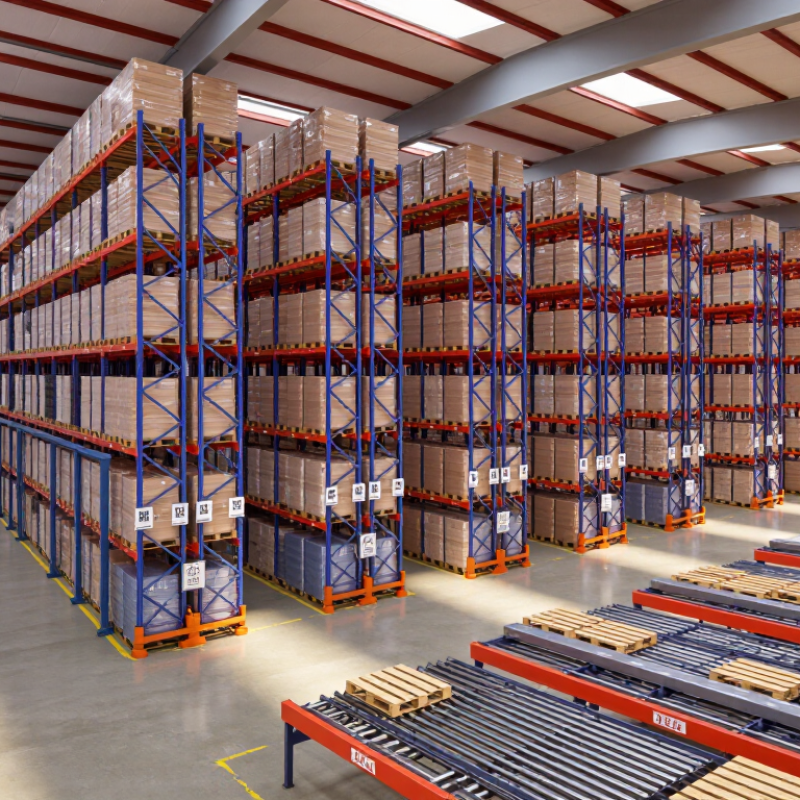
Table of Contents
[Hide]
What Standard Pallet Racking Systems Are and How They Work
Standard pallet racking systems use upright frames, horizontal beams, and pallet supports to create adjustable storage levels. Forklifts place loads from the aisle side, while each beam transfers weight into the frames and floor. The basic design supports direct access to every pallet, making selective racking the most flexible option among seven common systems.
Other configurations change the movement pattern. Drive-in racks store pallets deeply, using last-in, first-out rotation. Drive-through racks allow entry from both ends and can support first-in, first-out handling. Push-back racks use inclined rails, while pallet-flow racks use rollers and gravity. Mobile racks move along floor rails. Cantilever racks suit long goods, not ordinary pallets. Automated systems add software and cranes, but they demand stronger controls.
Safety is not a minor detail. OSHA estimates that powered industrial trucks cause about 35,000 serious injuries annually in the United States. Rack layout must therefore include clearances, impact protection, rated loads, and regular inspections. OSHA’s storage guidance also requires materials to remain stable against sliding or collapse. A practical design begins with pallet dimensions, load weights, forklift turning space, and inventory rotation. It should not begin with a catalogue picture.
In real warehouses, the neat calculation can fail. Damaged pallets, uneven floors, and rushed replenishment change daily performance. A technically correct rack may still create awkward travel paths. Careful site observation matters.
7 Best Standard Pallet Racking Systems for Warehouses – What Standard Pallet Racking Systems Are and How They Work
| Racking System | How It Works | Storage Density | Pallet Selectivity | Stock Rotation | Best-Fit Inventory | Key Advantages and Limitations |
|---|---|---|---|---|---|---|
|
Selective Pallet Racking Most versatile |
Pallets are stored on individual beam levels and accessed directly from warehouse aisles by a forklift or reach truck. Each pallet position is independent. | Low to medium. Typically uses approximately 35%–50% of the available floor area for pallet storage, depending on aisle design and building constraints. |
Every pallet position is directly accessible. |
FIFO or LIFO, depending on the operating procedure and inventory controls. | Many stock-keeping units, mixed products, frequent picking, and operations requiring immediate access to individual pallets. | Simple to configure, easy to expand, and cost-effective. It requires more aisle space than high-density systems and usually stores fewer pallets per square metre. |
|
Double-Deep Pallet Racking Higher density |
Two rows of selective rack are positioned back to back in depth, allowing pallets to be stored two positions deep. A reach truck with suitable reach capability loads and retrieves the rear pallet. | Medium to high. It increases storage density by reducing the number of access aisles compared with single-deep selective racking. | Medium. The front pallet normally needs to be moved before the rear pallet can be accessed. | Primarily LIFO; FIFO is possible only with careful stock planning and controlled access. | Medium-turnover products with several pallets per SKU and relatively stable inventory quantities. | Provides more pallet locations in the same footprint. It needs specialized handling equipment and may create additional pallet movements during retrieval. |
|
Drive-In Pallet Racking High density |
Forklifts drive into supported storage lanes and place pallets on rails running along both sides of the lane. The rack structure removes the need for a separate aisle at every row. | High. It minimizes aisles and is designed for maximum pallet density rather than maximum access. | Low. Each lane is generally dedicated to one SKU or a narrow product group. | LIFO in typical drive-in operation, because the last pallet loaded is usually the first pallet retrieved. | Large quantities of similar products with low to medium turnover and limited SKU variety. | Makes excellent use of floor space and is suitable for bulk storage. It has lower selectivity, requires disciplined forklift operation, and can experience greater rack-impact risk. |
|
Drive-Through Pallet Racking Two-sided access |
Forklifts can enter the storage lanes from both ends. Pallets are loaded from one side and retrieved from the opposite side when the layout and operating process support two-way access. | High. The shared lane structure reduces aisle requirements and supports dense block storage. | Low to medium. Access is better than drive-in storage, but individual pallets within a lane are not fully independent. | Better suited to FIFO than drive-in racking when loading and unloading are performed from opposite ends. | High-volume, uniform products requiring batch storage and a planned receiving-to-dispatch flow. | Supports more orderly stock rotation and two-sided access. It requires suitable building layout, traffic control, and careful management of lane sequencing. |
|
Push-Back Pallet Racking Fast loading |
Pallets are placed on nested carts or inclined rails. Loading a new pallet pushes previously stored pallets toward the back of the lane; unloading allows the next pallet to roll or move forward. | Medium to high. It stores multiple pallets deep while using fewer aisles than selective racking. | Medium. Pallets are accessible by lane, but rear pallets are retrieved after the front pallets. | LIFO is the normal operating pattern. | Medium-turnover products, batch inventory, and warehouses needing compact storage with relatively quick pallet handling. | Faster loading and unloading than drive-in systems and no need for forklifts to enter the lanes. It generally costs more than basic selective racking and is not ideal for strict FIFO requirements. |
|
Pallet Flow Racking FIFO specialist |
Pallets are loaded at the rear of inclined roller lanes and move by gravity toward the picking face. Brakes, separators, and lane controls regulate pallet movement. | Medium to high. It reduces aisle duplication and creates dedicated loading and unloading faces. | Medium. The front pallet is accessible, while subsequent pallets move forward in sequence. | FIFO, making it suitable for date-sensitive or age-sensitive stock. | Food, beverages, pharmaceuticals, and other products requiring controlled rotation and repeatable batch handling. | Delivers predictable stock rotation and efficient order picking. It requires level installation, lane maintenance, compatible pallet quality, and higher initial investment. |
|
Mobile Pallet Racking Space optimization |
Rack rows are installed on motorized bases that move along floor-mounted rails. The system opens an access aisle only where it is needed, while the remaining rows stay compacted. | Very high. It can substantially reduce permanent aisle space compared with fixed-rack layouts, subject to safety and access requirements. | High when the required mobile aisle is opened, although access is sequential rather than simultaneous to every row. | FIFO or LIFO, depending on the rack configuration and warehouse procedures. | High-value, low-to-medium-turnover inventory where building space is expensive or limited. | Maximizes storage capacity and can improve environmental efficiency in temperature-controlled facilities. It has higher capital and maintenance costs, slower simultaneous access, and greater dependence on controls and safety systems. |
Note: Storage-density, selectivity, and stock-rotation performance are typical planning characteristics rather than guaranteed results. Actual capacity depends on pallet dimensions and weight, rack height, aisle width, forklift type, building clear height, fire-protection requirements, seismic conditions, and applicable local safety standards.
FAQS
How should a warehouse begin choosing a pallet racking system?
Start with inventory behavior, not appearance. Measure pallet dimensions, weights, turnover, aisle width, ceiling height, floor condition, and turning space. Watch a real retrieval during the busiest hour. A spreadsheet can mislead.
Which racking system provides direct access to every pallet?
Selective racking provides direct access to each pallet. It suits warehouses with many product types. It may require wider aisles than denser systems. Access can matter more than capacity.
When does drive-in racking work well?
Drive-in racking suits similar products with limited variety. It creates dense storage and reduces aisle space. However, forklift access becomes less flexible. Retrieval may slow when product demand changes.
What are push-back and pallet-flow systems best suited for?
Push-back racking supports last-in, first-out storage. It works well when several pallets share one product. Pallet-flow racking uses rollers and gravity. It supports first-in, first-out rotation for dated goods.
When should a warehouse consider double-deep, mobile, or cantilever racking?
Double-deep racking saves aisle space but requires accurate forklift positioning. Mobile racking increases capacity where floor space is limited. Cantilever racking suits long products. Each choice can slow access in different ways.
Is the densest racking system always the best option?
No. Higher density can reduce picking speed and create forklift congestion. A warehouse may gain storage space but lose daily efficiency. Our first layout looked efficient. It was not.
What safety details should be checked before installation?
Confirm documented load ratings for beams, frames, and connectors. Check floor strength, sprinkler clearance, ceiling height, aisle width, and turning space. Protect upright columns near active traffic. A neat installation is not automatically safe.
What should regular rack inspections include?
Look for bent uprights, loose parts, missing safety pins, damaged anchors, and broken pallets. Photograph each defect and record the repair date. Small defects matter. Do not rely only on visual tidiness.
How can a warehouse test its design before expanding?
Install a small trial bay first. Observe picking heights, blocked sightlines, forklift delays, and awkward movements. Ask operators what feels difficult. Recheck the layout after seasonal inventory changes. Human error remains easy to underestimate.
Conclusion
Standard Pallet Racking systems are structured storage solutions designed to organize palletized goods, improve warehouse capacity, and support efficient loading and retrieval. This overview explains how these systems work and highlights the main criteria for evaluating them, including load capacity, available space, accessibility, adjustability, durability, and compatibility with material-handling equipment. It also introduces seven common racking options suited to different warehouse needs, such as high-density storage, fast product turnover, limited floor space, and varying inventory sizes.
Choosing the right Standard Pallet Racking system requires balancing storage density, selectivity, workflow, budget, and future expansion plans. Proper installation is equally important and should include level positioning, secure anchoring, correct load distribution, and clear operating procedures. Regular inspections and maintenance can help identify damage, loose components, or overloaded beams before they affect safety. With thoughtful planning and consistent upkeep, pallet racking can create a safer, more organized, and more productive warehouse environment.
Updated:

Elowen
Elowen is a professional marketing specialist with a deep understanding of the company’s products, customer needs, and evolving market trends. With a strong combination of strategic insight, industry knowledge, and clear communication skills, Elowen helps translate complex product features into......