ApexDriveRACKING
0%
Choosing the right Adjustable Pallet Rack begins with understanding your operation, not copying a warehouse photograph. Every facility has different pallet weights, aisle widths, ceiling heights, and handling equipment. A rack that performs well in cold storage may fail your workflow. That difference matters.
Experienced warehouse planners measure the floor, inspect slab conditions, and record actual load dimensions before recommending a configuration. They also observe daily movement, including awkward turns, rushed replenishment, and seasonal volume changes. This practical experience often reveals problems that drawings cannot show.
This guide explains how to compare upright frames, beam levels, load capacities, and safety accessories. It considers forklift reach, pallet overhang, clearance, rack height, and future expansion. Capacity labels should match verified engineering data and the intended loading pattern. Do not estimate. Qualified suppliers can provide layout drawings, product specifications, installation guidance, and inspection recommendations. Reliable advice should also reflect recognized industry practices and manufacturer instructions.
A low purchase price can become expensive when damaged beams, poor access, or unused space slow operations. Still, no guide can replace a site assessment. Your inventory may change. A practical decision balances safety, accessibility, density, budget, and long-term adaptability. We will examine common rack choices, expose overlooked planning mistakes, and explain which questions deserve clear answers. Some recommendations may need revision after measurements are taken. That is not a weakness; it is responsible planning. With accurate information and professional review, your Adjustable Pallet Rack can support safer, more efficient storage.
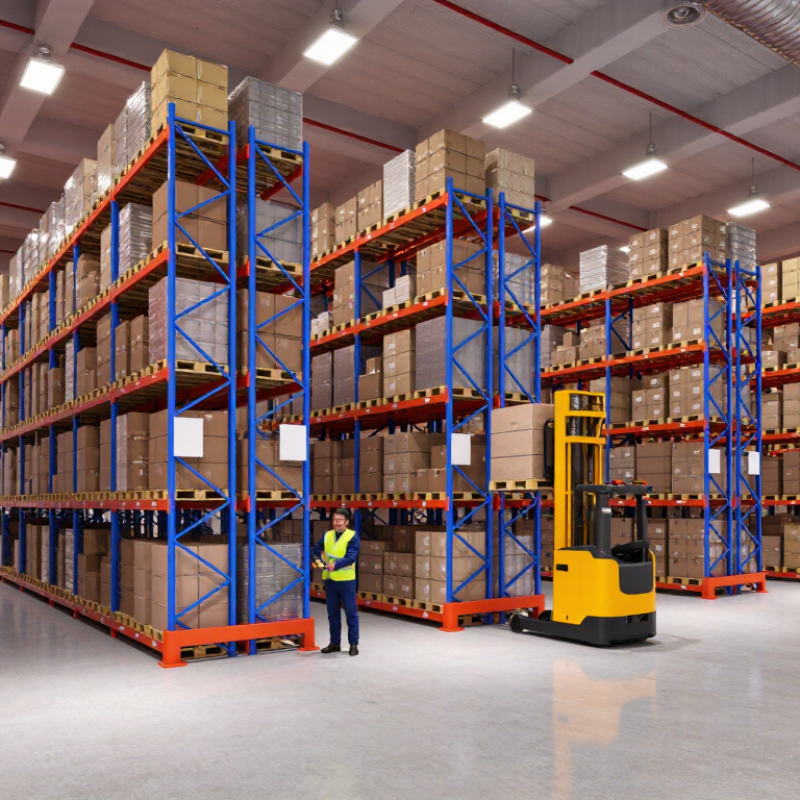
Table of Contents
[Hide]
Understanding Adjustable Pallet Rack Structure and Functions
How to Choose the Right Adjustable Pallet Rack?
Understanding Adjustable Pallet Rack Structure and Functions
An adjustable pallet rack uses vertical frames and horizontal beams to store palletized goods at changing heights. Uprights carry the main load. Beams connect across the aisles and support pallets through decking or pallet rails. Diagonal bracing keeps each frame stable, while baseplates transfer forces into the floor. Beam connectors must engage fully. Small gaps or damaged locking pins deserve immediate attention.
During a warehouse assessment, I measure pallet dimensions, load weights, aisle width, and forklift clearance. Beam levels can move vertically, but adjustment does not increase safe capacity. Capacity depends on frame height, beam span, steel profile, load distribution, floor conditions, and anchoring. Load signs should remain visible. Guards protect uprights from common forklift impacts, although they cannot excuse careless driving. Wire decking improves support for uneven pallets and helps prevent small items from falling.
A practical inspection checks bent members, missing pins, loose anchors, corrosion, and overloaded beams. Compare actual loads with the rated design and local engineering requirements. Never mix unverified components. That shortcut can fail quietly. I also leave modest clearance above each pallet, even when space feels scarce. Not foolproof. In real facilities, rushed changes create mistakes. A second-person review of revised beam levels is worthwhile, especially after forklift routes change.
How to Choose the Right Adjustable Pallet Rack? - Understanding Adjustable Pallet Rack Structure and Functions
| Rack Component or Decision Factor | Structure or Typical Specification | Primary Function | Selection Considerations | Recommended Inspection Point |
|---|---|---|---|---|
| Upright Frames | Two vertical columns connected by horizontal and diagonal braces; commonly produced from formed steel profiles. | Carry vertical loads from the beams and transfer them to the floor. | Choose a frame height and depth that match the building clearance, pallet dimensions, forklift reach, and required storage levels. | Check for bent columns, damaged bracing, corrosion, loose anchors, and visible impact damage. |
| Adjustable Beams | Horizontal beams with locking connectors; storage levels can usually be repositioned in regular vertical increments. | Support pallets and allow the rack layout to be adjusted as inventory requirements change. | Select beam length according to the number and width of pallets per bay. Confirm the rated load for the actual beam span and pallet arrangement. | Verify that every connector is fully seated and that safety locks are installed and undamaged. |
| Beam Connectors and Safety Locks | Mechanical connectors engage with holes or slots in the upright columns; retaining pins or locking devices prevent accidental disengagement. | Secure the beam-to-frame connection and resist unintentional beam movement. | Use a compatible connector and locking system designed for the selected upright profile. Do not mix unapproved components. | Inspect for missing pins, incomplete engagement, deformation, cracking, or unauthorized modifications. |
| Pallet Support Bars | Steel bars fitted between front and rear beams; used when pallet boards do not provide adequate support. | Improve pallet stability and distribute load across the storage position. | Consider support bars for damaged, flexible, or non-standard pallets, and for applications requiring a defined minimum support condition. | Confirm that bars are correctly positioned, secured, and not bent or overloaded. |
| Row Spacers | Horizontal members connecting adjacent upright frames in back-to-back rows. | Maintain row spacing and improve the stability of connected rack lines. | Use spacing that is compatible with the rack design, fire-protection requirements, building rules, and access for inspection. | Check for loose fasteners, distortion, impact damage, and inadequate clearance between back-to-back loads. |
| Base Plates and Floor Anchors | Base plates distribute forces at the bottom of each upright; anchors connect the rack to the concrete floor. | Provide a stable bearing surface and help resist movement, sway, and accidental impact. | Confirm that the concrete floor, anchor type, embedment, and layout are suitable for the rack loads and local requirements. | Check anchor tightness, cracked concrete, damaged base plates, uneven floors, and missing washers or fasteners. |
| Frame Depth | The front-to-back dimension of the upright frame; commonly selected to suit the pallet depth while maintaining safe overhang. | Provides sufficient support for the pallet load without unnecessarily reducing aisle or storage space. | Match frame depth to pallet dimensions, load orientation, pallet overhang limits, and forklift operating conditions. | Ensure pallets are fully supported and do not protrude into aisles or contact rear members. |
| Bay Length | The clear horizontal distance between two adjacent upright frames; determined by beam length and pallet positions. | Defines the number of pallets stored in each rack bay. | Allow safe clearance between pallets and uprights. Account for pallet width, load variation, forklift placement accuracy, and aisle visibility. | Check for beam deflection, pallet contact with frames, and insufficient clearance between stored loads. |
| Storage Level Spacing | Vertical distance between beam levels; adjustable to accommodate different load heights. | Maximizes usable warehouse height while allowing safe pallet placement and retrieval. | Include pallet height, load height, beam depth, handling clearance, sprinkler clearance, and the highest safe lifting position. | Confirm that loads do not obstruct sprinklers, lights, beams, roof structures, or forklift travel paths. |
| Rated Load Capacity | Capacity is normally stated separately for each beam pair, bay, and upright frame under defined loading conditions. | Defines the maximum permitted load for safe operation. | Use the manufacturer’s engineering data or a qualified rack design. Capacity depends on beam span, frame height, bracing, load distribution, and floor conditions. | Display load plaques and confirm that actual pallet weights and positions remain within the stated ratings. |
| Pallet Type and Condition | Pallets may be timber, plastic, metal, two-way, or four-way entry designs with different stiffness and support requirements. | Determines how loads interact with beams, support bars, and the rack deck. | Choose the rack deck and support arrangement for the weakest pallet used. Do not rely on damaged or poorly supported pallets. | Remove pallets with broken boards, cracked blocks, missing components, excessive deflection, or contamination. |
| Aisle Width | Clear operating width between rack faces; varies with forklift type, load size, turning radius, and handling method. | Provides safe access for loading, unloading, and inspection. | Base the aisle on the actual forklift specification and operating practice rather than rack dimensions alone. | Keep aisles free of pallets, packaging, equipment, and obstructions; maintain required pedestrian separation. |
| End-of-Aisle Protection | Guardrails, bollards, upright protectors, or other impact barriers installed at exposed rack locations. | Reduce damage caused by forklifts and other material-handling equipment. | Install protection where vehicles approach rack ends, corners, drive paths, or vulnerable upright positions. | Inspect regularly for impact marks, displacement, loose anchors, and reduced clearance. |
| Back and Side Protection | Mesh panels, wire guards, pallet stops, or other barriers may be fitted where loads could fall or extend beyond the rack. | Help prevent goods from falling into work areas, walkways, or adjacent rack rows. | Consider load stability, pedestrian traffic, back-to-back configuration, and the risk of small items passing through the rack. | Check that panels and stops are secure and that they do not create unintended load contact or overload. |
| Finish and Environment | Painted or powder-coated steel is common for dry indoor storage; corrosion-resistant finishes may be needed in damp or chemically exposed areas. | Protect the steel structure and support service life. | Match the coating and material to humidity, temperature, chemicals, outdoor exposure, wash-down procedures, and fire-safety requirements. | Look for coating failure, rust, chemical attack, water accumulation, and damage around joints and floor connections. |
| Configuration Type | Single-row, back-to-back, drive-in, or mixed configurations can be created from different rack systems; adjustable pallet rack is generally designed for direct access to each pallet position. | Determines accessibility, selectivity, storage density, and handling method. | Choose adjustable selective rack when frequent access and pallet selectivity are more important than maximum density. | Confirm that the layout supports the required stock rotation method, forklift travel, emergency access, and inspection routes. |
| Compliance and Documentation | Includes layout drawings, load calculations, installation instructions, inspection records, and visible capacity information. | Supports correct installation, operation, maintenance, and traceability. | Use applicable local regulations and recognized storage-rack guidance. Have unusual, heavily loaded, or modified systems reviewed by a qualified professional. | Keep current drawings, inspection reports, repair records, and capacity notices available to operators. |
Note: Actual rack capacity and dimensions must be confirmed from the engineered design for the specific components, loads, floor conditions, seismic requirements, and material-handling equipment. Never exceed the posted capacity or modify the rack without qualified approval.
FAQS
How should I choose the right adjustable pallet rack?
Start with pallet height, weight, forklift reach, and aisle clearance. Selective rack suits varied inventory. The catalog is not enough.
When is selective rack a practical choice?
Selective rack gives direct access to every pallet. It works well when products change frequently. Access matters more than maximum density.
Can drive-in rack increase warehouse storage capacity?
Yes, drive-in rack can store more pallets in less floor space. It works best with consistent pallet sizes. Access becomes more limited.
What should I check before choosing rack dimensions?
Measure building height, pallet depth, beam length, and load distribution. Leave space for sprinklers, lights, and forklift movement. A 96-inch beam may not provide 96 inches of usable capacity.
How wide should warehouse aisles be?
Size aisles for the actual forklift, including turning space. Do not rely on the smallest equipment specification. Paper layouts can be misleading.
Which rack accessories improve daily safety?
Wire decking supports smaller cartons and improves visibility. Column protectors, row spacers, and back guards help control impact areas. These details are easy to overlook.
What safety information should be reviewed before installation?
Check applicable national and local safety requirements. Request load tables, test records, and inspection guidance. A qualified engineer should review unusual loads or seismic risks.
How can rack durability and installation quality be maintained?
Inspect locking pins, welds, connectors, anchors, and braces regularly. Watch for bent uprights and rust near wet floors. Recheck the system after the first loaded week.
Conclusion
Choosing the right Adjustable Pallet Rack begins with understanding how its upright frames, beams, connectors, and safety components work together to support stored goods. Before selecting a system, evaluate the warehouse layout, available ceiling height, aisle width, floor conditions, inventory turnover, and the weight and dimensions of each load. These factors help determine the appropriate rack height, beam length, load capacity, and storage density.
It is also important to compare rack configurations, including single-deep, double-deep, and specialized layouts, while considering accessibility and handling equipment. Check that the system meets applicable safety requirements, uses durable materials, and can be installed securely by qualified professionals. A well-planned Adjustable Pallet Rack should support efficient organization, safe daily operations, and future changes in inventory or warehouse design. By balancing performance, flexibility, maintenance needs, and long-term expansion potential, businesses can choose a reliable storage solution that delivers lasting value.
Updated:

Elowen
Elowen is a professional marketing specialist with a deep understanding of the company’s products, customer needs, and evolving market trends. With a strong combination of strategic insight, industry knowledge, and clear communication skills, Elowen helps translate complex product features into......