0%

Choosing Double Deep Pallet Racking can create more storage positions without expanding your warehouse footprint. It places two pallets deep on each side of an aisle, reducing the number of aisles required. That change can be valuable when floor space is tight. It also changes how operators reach stored goods. A standard forklift may not access the rear pallet safely; many installations require a reach truck or a suitable deep-reach attachment. That matters.

The right choice depends on more than rack price or advertised capacity. Start with your pallet dimensions, actual load weights, aisle widths, and available ceiling height. Then review SKU variety, inventory turnover, and how often workers need the rear pallet. Double-deep layouts can improve density, but they generally offer less direct access than selective racking. Small errors compound. A few centimeters can affect clearances, handling, and usable capacity.

This guide will explain how to compare rack layouts, equipment needs, load ratings, and warehouse constraints. It will also consider practical details, such as floor condition, upright protection, and safe operating clearances. These checks should be based on site measurements and confirmed by a qualified rack designer or supplier. Do not assume a published capacity applies to every configuration. I have seen storage plans look efficient on paper, yet create awkward picking routes in daily use. That trade-off deserves an honest review. The best system is not always the densest one; it is the one your team can operate reliably.
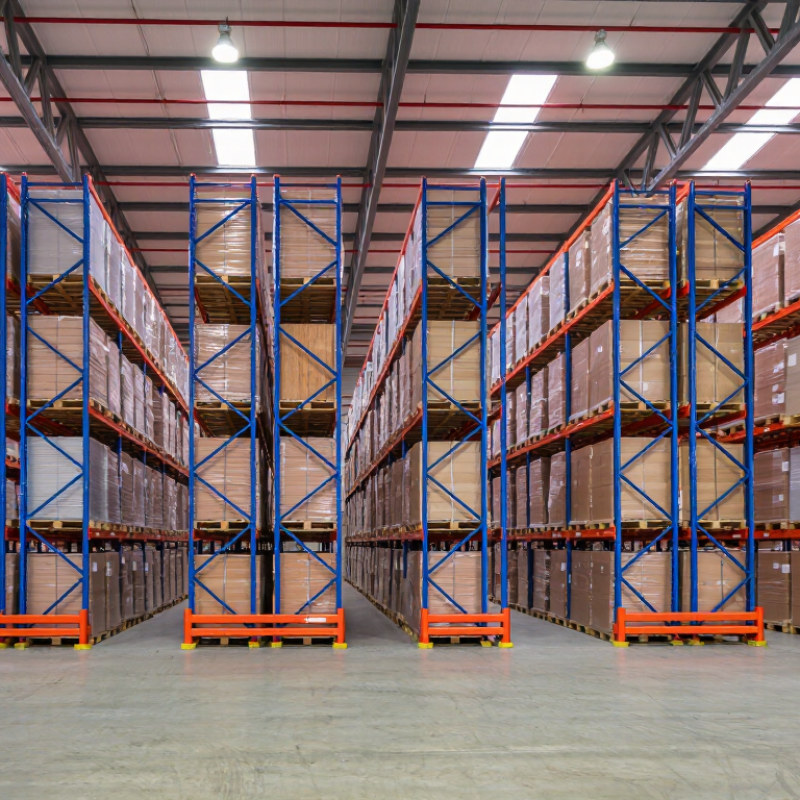
How to Choose Double Deep Pallet Racking?

Understand How Double Deep Pallet Racking Works

How to Choose Double Deep Pallet Racking?
Understand How Double Deep Pallet Racking Works

Double deep pallet racking stores two pallets behind one another on each side of an aisle. A specially designed deep-reach truck places and retrieves the rear pallet beyond the front position. The front pallet must move before the rear one can be accessed. In practice, this creates a last-in, first-out sequence within each lane. It suits operations holding several pallets of the same product, rather than many single-pallet products.

More density. Less direct access. That trade-off is easy to underestimate. Compared with single-deep racks, double-deep layouts can reduce the number of aisles and increase storage capacity within the same floor area. However, they may require a suitable truck, trained operators, and careful coordination of pallet sizes. Check that the truck can reach the rear position safely, including with the actual load dimensions and weight. Rack beams, uprights, and floor conditions also need to match the planned loads.

Before choosing this system, map how pallets move through the warehouse. If staff frequently need a specific pallet buried behind another, retrieval can slow down. A simple trial using real SKU and order data may reveal problems that a floor plan misses. Measurements matter. Leave enough clearance for handling and account for pallet overhang, damaged pallets, and turning space. Double deep can work well, but it is not automatically the best fit for every storage area.

Assess Your Inventory and Storage Requirements

Assess Your Inventory and Storage Requirements

Before selecting double deep pallet racking, map your inventory by SKU, pallet size, weight, and weekly movement. This system stores two pallets deep, increasing storage density but reducing direct access to rear pallets. It works best when each lane holds the same SKU or when stock moves in predictable batches. If many SKUs turn over slowly, rear pallets may sit hidden longer than expected. That trade-off is easy to underestimate.

Check your records, too. WERC’s 2023 DC Measures report gives a 99.0% median benchmark for inventory accuracy. Accurate locations matter when the front pallet blocks access to the one behind it. Compare your actual pallet dimensions and loads with rack specifications, then confirm that your lift truck can reach the second position safely. Leave room for turning and load handling. A neat layout on paper may feel tight in a busy aisle.

Tips: Review a month of pick data and mark fast-moving SKUs. Keep those items in accessible positions where practical. Ask a qualified rack designer to verify load capacity and layout. If you cannot explain how workers will retrieve a specific rear pallet, revisit the plan before installation.

How to Choose Double Deep Pallet Racking? - Assess Your Inventory and Storage Requirements Example assessment data for evaluating inventory fit, access needs, and warehouse constraints
Assessment Dimension Example Requirement or Inventory Profile Double-Deep Racking Implication Fit Assessment
SKU count and pallet quantity 240 active SKUs; approximately 1,800 pallet positions, with several pallets held per SKU Works best when multiple pallets of the same SKU can be stored together. Each lane is accessed from the aisle at the front position. Good potential fit if lane quantities are sufficient
Inventory turnover Most stock turns every 30–60 days; a smaller group of seasonal SKUs turns less frequently Lower-turn or replenishment stock is generally easier to manage in the less-accessible rear positions. Frequently picked stock may need front positions or another storage area. Segment fast-moving and slow-moving stock before assigning lanes
SKU-level selectivity Each SKU must remain identifiable, and pallets are normally retrieved by SKU rather than by arrival sequence Access to a rear pallet may require moving the front pallet first. This can increase handling when both positions contain different SKUs. Check lane assignment and retrieval sequence
Pallet dimensions Typical loaded pallet: 1,200 mm × 1,000 mm footprint; confirm actual load overhang and pallet condition Rack depth, beam spacing, clearances, and equipment reach must be designed around the actual unit load—not just the nominal pallet footprint. Measure representative loaded pallets and confirm design clearances
Loaded pallet weight Typical load: 800 kg; maximum planned load: 1,000 kg per pallet Beam, frame, and floor-loading calculations must use the maximum intended load and the planned number of pallet positions per level. Obtain a rack design based on verified maximum loads
Product stability and handling Loads are stretch-wrapped and reasonably stable, with no fragile products protruding beyond the pallet Two-deep storage requires controlled placement and retrieval. Unstable, damaged, or irregular loads can make rear-position handling more difficult. Standardize pallet quality and inspect loads before put-away
Forklift capability Reach truck operation is planned; aisle layout and lift height have not yet been confirmed Double-deep positions commonly require a reach truck fitted with a suitable double-deep reach mechanism or telescopic forks. Confirm reach, load capacity at height, and aisle width with the equipment supplier. Verify truck specifications before fixing the rack layout
Available building height Clear height: 9.5 m; sprinkler, lighting, and structural obstructions must be surveyed Usable storage height depends on the tallest load, required handling clearance, rack design, and building services—not on clear height alone. Complete a site survey and coordinate with fire-protection requirements
Inventory accuracy and rotation Warehouse records track SKU, pallet quantity, and location; FIFO is required for selected products Double-deep access can make strict FIFO harder if rear pallets are blocked by newer front pallets. Location rules and stock-rotation procedures are important. Use only where the required rotation method can be maintained
Storage density objective The goal is to increase pallet storage within the existing floor area while retaining forklift access aisles Storing two pallets deep can reduce the number of access aisles compared with single-deep selective racking, but the actual gain depends on the building, aisle widths, and operating plan. Compare a dimensioned layout against the current system
Picking method Most orders are picked by full pallet; a small portion requires case picking Full-pallet storage is a more natural fit. Case-picking stock may be better placed in a separate forward-pick area to avoid extra pallet moves. Suitable for reserve pallet storage with a separate pick face
Fire, seismic, and safety requirements Local building codes, sprinkler design, rack protection, and operating procedures apply Rack configuration and clearances must be reviewed for the site and jurisdiction. Protect rack uprights where exposed to vehicle impact and follow the approved design. Confirm with qualified rack and fire-protection professionals
Planning note: The figures above are illustrative examples, not a rack specification. Confirm pallet dimensions, maximum loads, equipment capability, building conditions, and applicable codes before selecting or installing a system.

Check Forklift Access and Warehouse Layout

Double deep pallet racking places two pallets behind each other, so forklift access must be checked before the layout is fixed. A standard counterbalance truck usually cannot reach the rear pallet directly. Many sites use a reach truck with a double-deep attachment. Confirm the truck’s rated capacity at the required reach, not just its headline lifting capacity. A loaded pallet may be heavier than expected.

Measure the actual aisle width needed for turning and placing loads. Use the forklift manufacturer’s specifications, then allow practical clearance for pallet overhang, floor variation, and operator visibility. Tight on paper? Often tighter in real life. Walk the proposed route with a tape measure and mark columns, doors, sprinkler lines, and staging areas. Check that the truck can approach each bay without blocking picking or dispatch traffic.

Warehouse layout also affects whether double deep is worthwhile. It can increase storage density, but the rear pallet is less accessible until the front one is moved. That works best when pallets have consistent dimensions and stock rotation is planned. Mixed pallet sizes can create awkward gaps. It is easy to overestimate usable space from a drawing; test a representative aisle and load pattern before committing. Include charging or parking areas for the selected truck, and have a qualified racking and material-handling professional review the final clearances.

Compare Rack Capacity, Safety, and Operating Costs

How to Choose Double Deep Pallet Racking?

Compare Rack Capacity, Safety, and Operating Costs

Compare Rack Capacity, Safety, and Operating Costs

Double deep racking stores pallets two positions deep, reducing the number of aisles needed. Compare usable pallet positions, not just rack height. A layout drawing should account for columns, sprinklers, turning space, and the actual pallet overhang. The extra density can be valuable. But it also reduces direct access to rear pallets, so slow-moving stock usually suits the deeper positions better. Check beam and frame capacities against your heaviest loads, and keep load notices visible. ANSI MH16.1 provides design criteria for industrial steel storage racks; have a qualified professional verify the site-specific design.

Safety and operating costs belong in the same comparison.

OSHA estimates that powered industrial truck incidents cause about 85 fatalities and 34,900 serious injuries each year in the United States. Double deep layouts require suitable reach equipment and trained operators. Measure aisle clearances, pallet condition, visibility, and retrieval time during a real operating trial. Then compare equipment purchase or rental, maintenance, energy use, and labor against the space saved. A narrow aisle may look efficient on paper. It can slow picking when operators must move a front pallet to reach stock behind it. That detail is easy to underestimate. Recheck the calculation when your SKU mix changes.

Select a System That Fits Future Storage Needs

Double deep pallet racking can increase storage density, but the right design should leave room for tomorrow’s inventory. Start with a three-to-five-year forecast covering pallet volume, SKU count, product dimensions, and seasonal peaks.

MHI’s 2024 Annual Industry Report found that 55% of surveyed supply-chain professionals planned to increase technology investment.

This does not predict pallet growth directly. It does suggest operations may change, so avoid designing around today’s picking process alone.

Check whether future loads will fit the rack’s beam capacity, clearances, and floor limits. Double deep systems place one pallet behind another, requiring compatible reach equipment and access to rear pallets.

That trade-off matters. A site with growing SKU variety may lose picking flexibility even as it gains positions. Map the proposed layout, including turning aisles, staging areas, and sprinkler clearances.

Then test it against a realistic peak-day order profile, not an average week. Slightly awkward? Perhaps. Better to find the constraint on paper than after installation.

Record current pallet heights and weights, too; small differences can affect beam selection and usable capacity. Keep some room for change.

FAQS

What is double-deep pallet racking?

It stores two pallets one behind the other. This can add storage positions, but rear pallets are less accessible.

What forklift is usually needed?

A reach truck with a double-deep attachment is commonly used. Check its rated capacity at the required reach, not only its headline lifting capacity.

Can a standard counterbalance forklift reach the rear pallet?

Usually, it cannot reach the rear pallet directly. Confirm equipment suitability before fixing the layout.

How should aisle width be measured?

Use the truck specifications, then allow clearance for turning, pallet overhang, uneven floors, and operator visibility. Measure the actual route.

What should we check along the forklift route?

Mark columns, doors, sprinkler lines, and staging areas. Make sure trucks can approach each bay without obstructing picking or dispatch traffic.

Which inventory works best in a double-deep system?

Consistent pallet dimensions and planned stock rotation help. Mixed sizes may leave awkward gaps. That trade-off matters.

How can we check whether the layout will work?

Test a representative aisle and load pattern before committing. A drawing can overstate usable space; walk the route with a tape measure.

What future needs should the design account for?

Forecast pallet volume, SKU count, product dimensions, and seasonal peaks over three to five years. Keep some room for change.

What other limits should be reviewed?

Check beam capacity, floor limits, clearances, and sprinkler space. Include truck charging or parking areas, and ask a qualified professional to review final clearances.

Conclusion

Choosing Double Deep Pallet Racking starts with understanding how the system stores pallets two positions deep, allowing more goods to fit within the same floor area. Consider the types, sizes, weights, and turnover rates of your inventory to determine whether this arrangement suits your daily picking needs. Because the rear pallet is less directly accessible, it is especially important to assess how often each item is needed and how stock rotation will be managed.

Next, check whether your forklifts can safely reach and handle pallets in the deeper positions, and review aisle widths, ceiling height, and the overall warehouse layout. Compare the system’s load capacity, safety features, installation requirements, and ongoing operating costs with your storage goals. Finally, think ahead: a suitable Double Deep Pallet Racking setup should support expected changes in inventory volume and workflow, giving you a practical balance of storage density, accessibility, and long-term flexibility.

Rosalie

Rosalie

Rosalie is a professional marketing specialist dedicated to helping businesses understand products, markets, and customer needs through clear, practical, and insightful communication. With extensive knowledge of the company’s product portfolio, she transforms complex features, technical details,......