ApexDriveRACKING
0%
Choosing Heavy Duty Pallet Racking is not simply a matter of comparing prices or selecting the tallest frame. It is a warehouse design decision that affects safety, storage density, workflow, and future expansion. A rack may look strong on a specification sheet, yet perform poorly when forklifts, uneven floors, damaged pallets, or changing load patterns enter the picture.
As warehouse safety specialist David A. Smith explains, “A safe rack system begins with accurate information about the loads, equipment, and people using it.” That principle deserves attention. Before selecting a system, measure pallet dimensions, loaded weights, aisle widths, ceiling height, and forklift turning space. Check the floor condition too. Small cracks can become serious concerns under concentrated loads.
This guide presents seven practical tips for choosing Heavy Duty Pallet Racking. It covers load capacity, steel quality, frame configuration, beam levels, accessibility, compliance, and supplier support. Each factor matters. Together, they determine whether the installation remains stable and useful after years of daily handling.
Do not ignore ordinary details.
A warehouse manager may focus on maximum capacity but overlook pallet overhang. Another may choose narrow aisles without confirming forklift compatibility. These mistakes are understandable, but they deserve correction before installation begins. Reliable decisions come from site measurements, documented calculations, competent engineering review, and regular inspections.
The perfect rack rarely exists.
The right system is the one that fits the actual operation, including its limitations. With careful planning and honest evaluation, businesses can improve storage density without sacrificing access, durability, or worker protection.
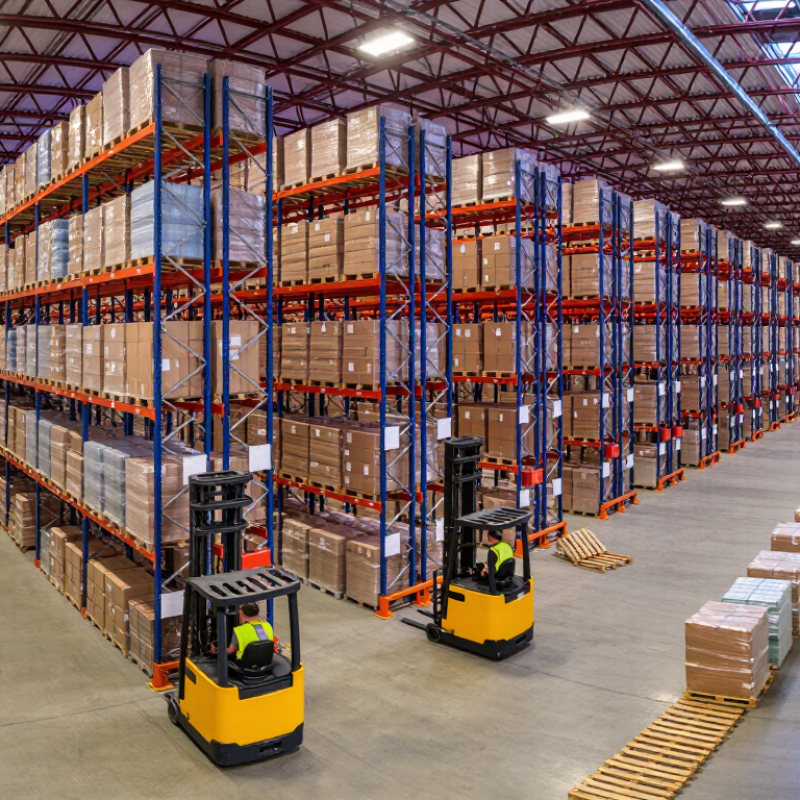
Table of Contents
[Hide]
Define Load Requirements and Storage Objectives
Choosing heavy duty pallet racking starts with a clear load profile, not a catalog photograph. Record each pallet’s weight, dimensions, height, and center of gravity. Include seasonal peaks and damaged packaging. The 2024 MHI Annual Industry Report surveyed more than 1,000 supply chain professionals. It found that 55% expect artificial intelligence to create competitive advantage within five years. Better data will guide those decisions. However, a spreadsheet cannot replace a site inspection.
Tip: Define the storage objective before selecting the rack. High-density storage may reduce travel space, but it can limit product access. Fast-moving goods need direct access. Reserve stock may justify deeper storage. Measure aisle widths, clear heights, floor conditions, sprinkler positions, and equipment turning paths. A 2,000-kilogram pallet is not automatically a 2,000-kilogram rack load. Beam capacity depends on span, frame design, connection details, and load distribution.
Tip: Build a conservative loading table. List the heaviest planned pallet, not the average one. The Rack Manufacturers Institute’s ANSI MH16.1 standard provides structural design guidance for industrial steel storage racks. Request documented capacities from a qualified designer. Then verify them after installation. I have seen teams calculate pallet weight correctly but overlook uneven loading. That small mistake can change the risk picture. Review the design when products, forklifts, or stacking patterns change.
FAQS
What should be measured before selecting a pallet rack system?
Measure ceiling height, aisle width, doors, columns, sprinklers, and floor changes. Leave clearance for forklifts, lighting, and emergency access. Maximum ceiling height is not fully usable.
Why must pallets be measured with their packaging and loads?
Real pallet dimensions determine suitable bay width and depth. Include the load, wrapping, and actual stacking height. Standard assumptions can create costly fitting problems.
How should beam levels match forklift operations?
Check beam heights against forklift reach, turning paths, and load height. Test the layout with the actual equipment. Small errors matter.
How much space should remain around pallets and rack frames?
Leave space between pallets, frames, walls, and nearby equipment. Tight layouts may store more pallets, but handling can become difficult. Efficient drawings sometimes fail during busy shifts.
What floor conditions need checking before installation?
Review floor capacity, anchoring requirements, and local safety expectations. Existing concrete may not support concentrated rack loads. Ask a qualified professional to assess it.
What load information should be verified before comparing rack prices?
Record pallet weight, dimensions, stacking height, and storage levels. Include uneven loading, forklift impact, and future inventory changes. Cheap capacity claims can be misleading.
How can a rack’s stated capacity be confirmed?
Request clear data for beam levels, upright frames, connectors, and allowable deflection. Check whether the rating assumes evenly distributed pallets. One heavy pallet near the front edge can change the risk.
What should be checked after pallet racks are installed?
Confirm that frames are plumb, aligned, anchored, and protected at exposed corners. Inspect connectors and anchors carefully. A rushed installation can hide damage.
How often should pallet racks be inspected?
Use trained inspectors after installation and at scheduled intervals. Record bent uprights, missing pins, overloaded beams, and layout changes. Replace damaged components promptly.
Why should warehouse space be reserved for future changes?
Inventory may change in size, weight, or volume. Keep flexible aisles and adjustable storage areas. Fewer pallets today may prevent expensive rearrangement later. That trade-off deserves reflection.
Conclusion
Choosing the right Heavy Duty Pallet Racking system begins with clearly defining your load requirements, pallet weights, storage goals, and expected inventory turnover. Evaluate the available warehouse space carefully, including ceiling height, aisle width, floor conditions, and equipment clearance, so the rack dimensions support both efficient storage and safe movement. Select durable materials, suitable frames and beams, and essential safety features such as column protection, locking mechanisms, and beam supports.
Before installation, verify the system’s load capacity and ensure its design follows applicable industry and workplace safety standards. Professional installation and accurate labeling can help prevent overloading and improve daily operations. Accessibility should also be considered, allowing workers and handling equipment to reach pallets easily. Finally, establish a maintenance routine to identify damage, loose components, or wear early, and leave enough flexibility for future expansion. A well-planned system can improve space utilization, organization, safety, and long-term warehouse performance.
Updated:

Rosalie
Rosalie is a professional marketing specialist dedicated to helping businesses understand products, markets, and customer needs through clear, practical, and insightful communication. With extensive knowledge of the company’s product portfolio, she transforms complex features, technical details,......