ApexDriveRACKING
0%
In 2026, Drive-In Pallet Racking remains a practical choice for warehouses storing many pallets of the same product. Forklifts enter storage lanes, placing pallets on rails rather than accessing each position from an aisle. This design can use floor space efficiently, especially where inventory changes slowly. But dense storage is not automatically better.
The main configurations include single-entry drive-in racks, double-entry drive-through racks, and shuttle-assisted systems. Single-entry lanes typically follow last-in, first-out handling. Drive-through lanes allow access from both ends and can support first-in, first-out rotation when operations are organized accordingly. Shuttle-assisted designs use a powered cart to move pallets within lanes, reducing forklift travel inside the rack. Each option has trade-offs. Some are easy to overlook.
Choosing among them requires more than comparing storage capacity. Consider pallet dimensions, load weights, lane depth, forklift clearance, product rotation, and replenishment patterns. A deep lane may look efficient on a drawing, yet cause delays when a fast-moving pallet sits behind slower stock. That matters.
Reliable planning starts with verified load data and a site assessment by qualified storage professionals. Rack design, installation, and inspection should follow applicable manufacturer guidance and local requirements. No layout is perfect. The best system is the one that fits actual inventory behavior, equipment, and operating routines—not simply the one holding the most pallets.
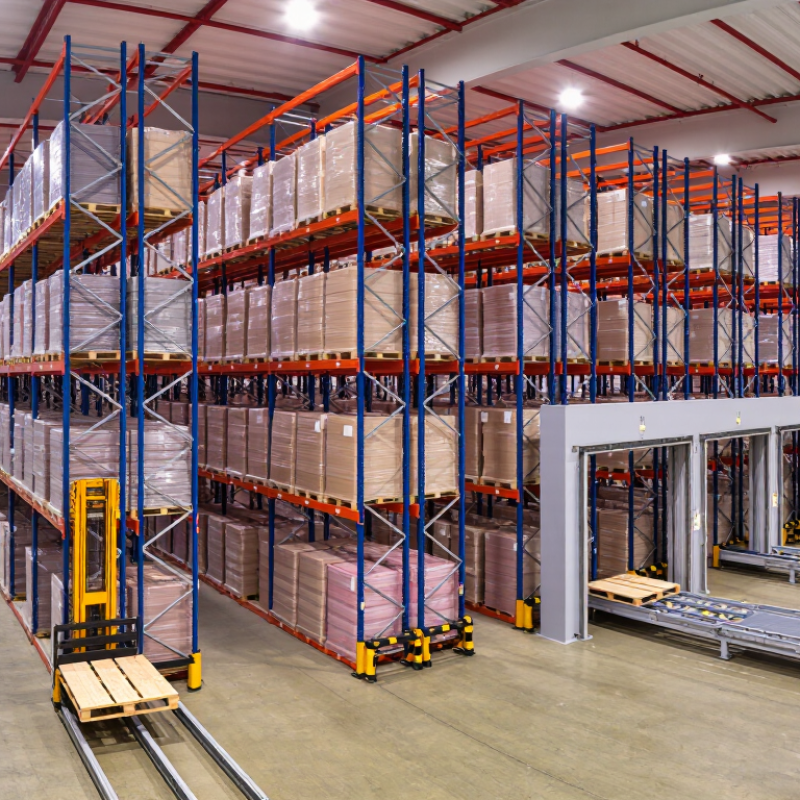
Table of Contents
[Hide]
How Drive-In Pallet Racking Works
What Are the Top Types of Drive In Pallet Racking in 2026?
How Drive-In Pallet Racking Works
Drive-in pallet racking stores pallets deep within compact lanes, reducing the number of aisles needed. A forklift enters a lane and places each pallet on support rails. The first pallet goes to the back; later pallets fill the space toward the aisle. During retrieval, the operator removes the front pallet first and works inward. This makes drive-in systems well suited to storing large quantities of the same product. It also means the usual flow is last in, first out.
A single-entry drive-in lane is accessed from one end. A drive-through layout has openings at both ends, allowing separate loading and unloading access. With suitable procedures, drive-through lanes can support first-in, first-out rotation. The forklift must travel carefully inside the structure, where clearance is limited. In practice, the neat diagram does not show every awkward pallet. Damaged loads, inconsistent pallet sizes, or rushed handling can reduce usable capacity and raise the chance of contact with rails.
Tips: Check pallet dimensions and load condition before choosing a lane depth. Train operators to enter slowly and keep forks level. Leave clear access at the aisle, and inspect rails and uprights regularly. Small alignment errors matter.
What Are the Top Types of Drive-In Pallet Racking in 2026? - How Drive-In Pallet Racking Works
| System Type | How It Works | Pallet Access and Flow | Best Suited For | Key Operational Considerations |
|---|---|---|---|---|
| Single-Entry Drive-In | A forklift enters a storage lane from one end and places pallets on support rails, loading the lane from the back toward the entrance. | One access end; typically operates on a last-in, first-out (LIFO) basis. | Large quantities of the same product, especially when strict stock rotation is not required. | Lane depth and forklift clearances must be designed around the pallet and truck. The deepest pallet is generally the first one retrieved. |
| Double-Entry Drive-In | Two single-entry blocks are positioned back to back, with forklifts accessing each block from its own aisle. | Each lane is accessed from one side and generally follows LIFO; the two blocks have separate access aisles. | Facilities seeking dense storage while retaining access to more than one bank of lanes. | Requires careful aisle and building-layout planning. It does not provide through access across a lane. |
| Drive-Through Racking | Forklifts can enter a lane from either end and place pallets on continuous support rails. | Two access ends; can support first-in, first-out (FIFO) when loading and retrieval are managed from opposite ends. | Products that benefit from FIFO rotation and are stored in larger, repeat quantities. | Both ends need suitable access aisles. FIFO depends on operating procedures and correct loading and picking practices. |
| Shallow-Lane Drive-In | A drive-in lane is configured for a relatively small number of pallet positions in depth. | Usually one access end and LIFO; fewer pallet positions must be passed to reach stored loads. | Operations balancing dense storage with easier access and shorter forklift travel inside lanes. | “Shallow” is a layout description, not a fixed industry-wide depth. The appropriate depth depends on inventory, equipment, and site constraints. |
| Deep-Lane Drive-In | A lane holds multiple pallet positions behind one another, with the forklift driving into the rack structure to store and retrieve loads. | Typically one access end and LIFO; storage density rises as lane depth increases. | High-volume, low-SKU storage where many pallets share the same product and rotation requirements are compatible with LIFO. | Deeper lanes require suitable forklifts, precise operation, and protection against rack impact. Retrieval access to interior pallets is more limited. |
How drive-in pallet racking works: Pallets rest on rails running along the sides of each lane rather than on individual shelf beams. A forklift drives into the lane to deposit or retrieve a load. Because pallets within a lane can block access to one another, drive-in layouts are commonly used for concentrated quantities of similar products. Final lane depth, load capacity, clearances, and rack protection should be determined by a qualified designer using the site conditions, pallet loads, and applicable requirements.
FAQS
How does drive-in pallet racking work?
A forklift enters a lane and places pallets on support rails. The first pallet goes to the back, and later pallets fill spaces toward the aisle. Retrieval starts with the front pallet.
What inventory suits drive-in racking?
It works well when a warehouse stores many pallets of a few products. Its usual rotation is last in, first out. Dated goods may need another setup.
How does drive-through racking differ?
Drive-through lanes have openings at both ends for separate loading and unloading access. With an orderly process, they can support first-in, first-out rotation.
What should be checked before choosing lane depth?
Measure pallet dimensions and check load condition. A damaged or uneven pallet can reduce usable space and contact the rails. Small errors matter.
How does drive-in compare with push-back and pallet-flow systems?
Drive-in stores pallets deep in lanes, while push-back uses nested carts accessed from the aisle. Pallet-flow systems use rollers to move loads toward the picking face. Each needs compatible pallets and suitable handling.
What factors affect whether a system fits a warehouse?
Consider daily pallet movements, product variety, inventory rotation, load weight, and forklift turning space. Check floor condition and rack clearances, too.
What should forklift operators do inside a drive-in lane?
Enter slowly and keep the forks level. Clearance is limited, so rushed handling can lead to contact with rails. Real pallets are not always perfectly aligned.
How can a warehouse test a proposed layout?
Ask operators to test travel paths during a realistic shift. Leave space for aisle access, inspections, and maintenance. A plan may look efficient on paper but feel awkward in practice.
Conclusion
Drive-In Pallet Racking is a high-density storage system that allows forklifts to enter dedicated lanes and place pallets on supporting rails. By reducing the number of access aisles, it can make better use of available warehouse space. Its key components include upright frames, load-bearing rails, entry guides, and protective elements, while its storage principles typically favor grouping similar products and arranging pallets for controlled, lane-based access.
In 2026, choosing the right configuration depends on inventory rotation, access requirements, and operating practices. Single-entry systems load and retrieve pallets from the same end, while double-entry layouts provide access from both ends of a lane. Drive-through racking supports loading and retrieval at opposite ends, and shuttle-assisted variants use powered equipment to move pallets within lanes, reducing forklift travel inside the structure. Comparing these options involves weighing storage density against selectivity, throughput, safety, and the types of inventory being stored.
Updated:

Elowen
Elowen is a professional marketing specialist with a deep understanding of the company’s products, customer needs, and evolving market trends. With a strong combination of strategic insight, industry knowledge, and clear communication skills, Elowen helps translate complex product features into......