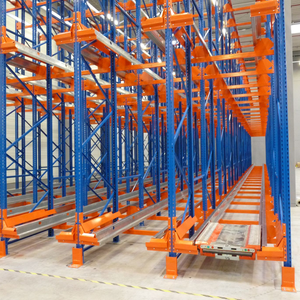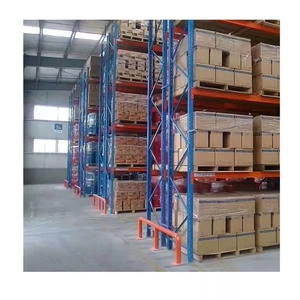
CE Certified Compact Pallet Racking Manufacturers & Exporters

High-Density Industrial Storage Engineering | ISO 9001:2015 Quality Verified | Q235B & Q355B Cold-Rolled Steel

EN 15512 Standard CE Compliant Max Density Optimization

Industrial Compact Pallet Racking Showcase

Engineered for high load-bearing capacity, seismic compliance, and high volumetric storage efficiency. Select a configuration to request customized engineering calculations.
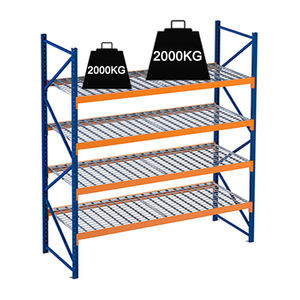
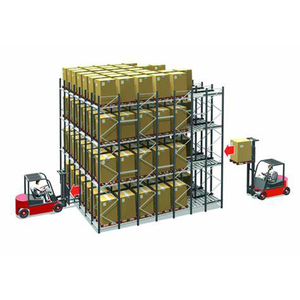
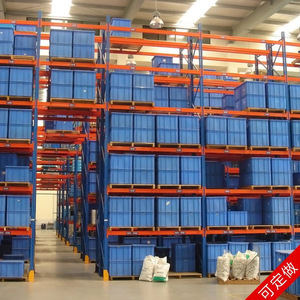
Heavy Duty Adjustable Metal Shelves Racking System Stacking Warehouse Storage Pallet Metal Racking

Heavy Duty Adjustable Metal Shelves Racking System Stacking Warehouse Storage Pallet Metal Racking

Capacity: 1000–4500 kg/level | Beam Pitch: 75mm Adjustable
Manufacturer Pallet Shelf Systems European Standard Warehouse Squat Rack Racks for Factory

Manufacturer Pallet Shelf Systems European Standard Warehouse Squat Rack Racks for Factory

Standard: FEM 10.2.02 / EN 15512 | Finish: Epoxy Powder Coating
Warehouse High Density Gravity Roller Pallet Flow Racking

Warehouse High Density Gravity Roller Pallet Flow Racking

Flow Control: FIFO Dynamic Braking | Gradient: 3% Roller Incline
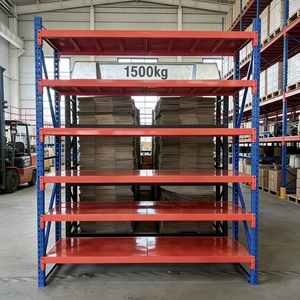
Heavy Duty Storage Rack Pallet Rack System with Multi-Level Shelves Pallet Storage

Heavy Duty Storage Rack Pallet Rack System with Multi-Level Shelves Pallet Storage

Structure: Multi-Tier Integrated | Steel Grade: High Tensile Q355B
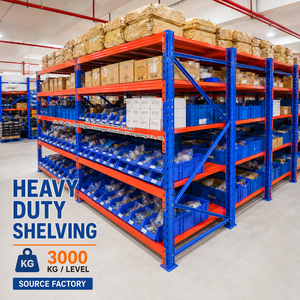
3000KG Custom Steel Deck Storage Rack For Plastic Bins And Small Parts Warehouse Shelves Racking System

3000KG Custom Steel Deck Storage Rack For Plastic Bins And Small Parts Warehouse Shelves Racking System

Decking: Heavy-Duty Ribbed Steel | Load Class: 3000kg Heavy Span
Heavy-Duty Durable Steel 3 Layer Industrial Pallet Racks Adjustable Bolt Structure Powder Coated Corrosion Protection Warehouse

Heavy-Duty Durable Steel 3 Layer Industrial Pallet Racks Adjustable Bolt Structure Powder Coated Corrosion Protection Warehouse

Fastener Grade: 8.8 High Strength | Salt Spray Resistance: 500+ Hours
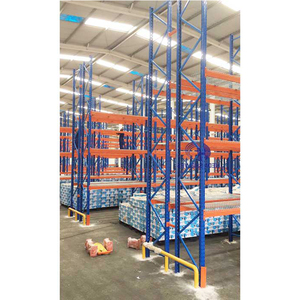
Heavy Duty Cold Rolled Steel Multi-Layer Pallet Racking High Bay Warehouse Storage System Epoxy Powder Coated Construction

Heavy Duty Cold Rolled Steel Multi-Layer Pallet Racking High Bay Warehouse Storage System Epoxy Powder Coated Construction

High-Bay Max Height: Up to 15 Meters | Precision Tolerance: ±2mm
Customized Radio Shuttle Pallet Racking Automated Semi-Automatic Storage Racking for Logistics Centers

Customized Radio Shuttle Pallet Racking Automated Semi-Automatic Storage Racking for Logistics Centers

Automation: Radio Shuttle Shuttle Car | Cold Chain Compatible (-25°C)
20,000 m²
Production Base
30,000 Tons
Annual Capacity
6,000+
Global Projects Delivered
100%
CE & ISO 9001 Compliance

Engineering Whitepaper: Structural Optimization & Compliance Standards for Compact Pallet Racking Systems

In modern industrial logistics, warehouse floor space represents one of the highest ongoing capital expenditure metrics. As global land acquisition costs escalate and urban fulfillment hubs demand greater throughput density, structural engineers and supply chain directors are increasingly migrating toward high-density compact pallet racking architecture. Compact pallet racking systems—encompassing Selective Pallet Racking, Drive-In, Push-Back, Gravity Pallet Flow, and Semi-Automated Radio Shuttle configurations—redefine spatial efficiency by maximizing vertical height utilization and minimizing redundant fork-truck aisle widths.

However, elevating storage density introduces complex mechanical considerations: heightened structural deflection under maximum pay-load, dynamic sway during rapid fork-truck engagement, localized shear stress at beam-to-upright connectors, and stringent seismic resistance requirements. This technical whitepaper explores the material engineering parameters, certification mandates, global procurement trends, and structural validation standards essential for deploying CE-certified compact pallet racking in high-throughput enterprise facilities.

Information Gain Technical Insight: Under European standard EN 15512 and FEM 10.2.02, structural racking design cannot rely on simplified static beam equations. It requires non-linear structural analysis taking into account semi-rigid connector stiffness (Cd value), beam-to-upright joint play, second-order (P-Delta) structural effects, and structural cold-formed cross-sectional stability.

1. Metallurgical Mechanics: Q235B vs. Q355B Steel Structural Performance

The structural integrity of heavy-duty pallet storage systems originates at the steel mill. High-performance racking manufacturers utilize continuous cold-roll forming processes executed on prime structural carbon steel coils supplied by tier-one metallurgical foundries (e.g., Baosteel, Masteel, Wuhan Iron & Steel).

Two primary steel grades dominate international racking engineering: Q235B and Q355B (corresponding to European grades S235JR and S355JR under EN 10025). The structural distinction between these materials dictates structural weight efficiency, safety factors, and high-bay rack stability:

  • Q235B Structural Carbon Steel: Yield strength ($\sigma_y \ge 235 \text{ MPa}$), ultimate tensile strength ($370–500 \text{ MPa}$). Highly ductile with excellent roll-forming properties, making it optimal for standard beam levels, shelf decking, frame bracing, and medium-height upright profiles under standard ambient conditions.
  • Q355B Low-Alloy High-Strength Steel: Yield strength ($\sigma_y \ge 355 \text{ MPa}$), ultimate tensile strength ($470–630 \text{ MPa}$). Delivering a 51% higher yield threshold than Q235B, Q355B enables thinner wall profiles while sustaining elevated axial loads. It is engineered for heavy-load upright columns exceeding 10 meters, high-bay AS/RS systems, cold-storage environment racks subject to low-temperature brittleness, and seismic zone deployments.
Mechanical Property / Characteristic Q235B Structural Steel (S235JR) Q355B High-Tensile Steel (S355JR) Engineering Impact on Compact Racking
Minimum Yield Strength ($\sigma_y$) 235 N/mm² 355 N/mm² Q355B permits 30–40% higher column buckling capacity under heavy axial loads.
Tensile Strength ($\sigma_u$) 370–500 N/mm² 470–630 N/mm² Superior resistance against sudden overload impact from forklift tines.
Elongation at Fracture ($A_5$) $\ge 26\%$ $\ge 22\%$ Both grades deliver high energy dissipation during seismic acceleration events.
Impact Energy ($KV_2$ at 20°C) $\ge 27 \text{ J}$ $\ge 27 \text{ J}$ Crucial for cold-storage racking (-25°C) to prevent catastrophic brittle fracture.
Recommended Application Standard Beams & Light Bracing High-Bay Uprights & Shuttle Rails Optimizes deadweight-to-payload ratio while ensuring structural safety compliance.

2. CE Certification & Structural Compliance Standard Framework

Procuring industrial racking for global supply chain operations requires absolute adherence to strict safety standards. In the European Union and associated market jurisdictions, racking systems are classified as structural safety equipment. Manufacturers must validate their products through comprehensive compliance testing to earn CE Certification and align with international design codes:

  • EN 15512:2020 (Steel static storage systems - Adjustable pallet racking systems - Principles for structural design): Defines mathematical modeling protocols for semi-rigid beam-column joints, second-order sway calculations, and partial safety factors ($\gamma_M$) for steel material properties and applied payloads.
  • FEM 10.2.02 (Fédération Européenne de la Manutention): The international benchmark for calculating structural deflections, beam connector stiffness, and structural stability limits for industrial storage systems.
  • EN 15620 (Tolerances, deformations and clearances): Establishes strict dimensional tolerances during manufacturing and erection to ensure automated guided vehicles (AGVs), reach trucks, and stacker cranes operate without mechanical binding.
  • EN 15635 (Application and maintenance of storage equipment): Mandates operational safety protocols, load display notices, and regular structural inspection criteria.
  • ISO 9001:2015 Quality Assurance: Guarantees that raw material traceability, robotic welding consistency, and electrostatic powder coating thickness (60–80 microns) are audited systematically across every manufacturing batch.

3. Technical Analysis of Compact Storage Typologies

Choosing the correct compact pallet racking design requires evaluating storage density against operational selectivity (access speed to individual SKUs). Below is a comprehensive engineering breakdown of the leading high-density racking configurations:

A. Selective Heavy-Duty Pallet Racking (100% Direct Selectivity)

Selective pallet racking remains the foundational baseline for industrial warehousing. Configured with single or double-entry rows, it provides 100% immediate access to every pallet position. Utilizing tear-drop or European 75mm/50mm pitch frame profiles, beam levels adjust vertically to accommodate fluctuating load profiles. While offering full selectivity, floor area utilization is moderate (typically 35–40% of building footprint due to standard 3.0 to 3.5-meter forklift aisles).

B. Drive-In & Drive-Through Racking (Deep-Lane Storage)

Drive-In racking eliminates inner forklift aisles by allowing counterbalanced or reach trucks to enter the storage lanes directly, resting pallets on continuous side cantilever rails. Operating on a Last-In, First-Out (LIFO) inventory sequence, Drive-In systems increase spatial utilization to 75–80%. Structural engineering requires heavy-duty top-bracing frames, floor-mounted guide rails, and high-tensile upright columns to withstand accidental forklift impacts inside narrow drive-in channels.

C. Dynamic Gravity Pallet Flow Racking (FIFO Automation)

Pallet Flow systems integrate inclined roller tracks (typically set at a 3% to 4% gradient) with speed-controlling magnetic centrifugal brakes. Pallets are loaded from the higher charge end and move automatically under gravity toward the discharge face. When a pallet is picked, the trailing pallet rolls forward safely into position, delivering automated First-In, First-Out (FIFO) stock rotation. This configuration is widely deployed in high-throughput food, beverage, and perishable goods fulfillment centers.

D. Radio Shuttle Semi-Automated Pallet Racking

Radio Shuttle technology represents the pinnacle of compact, high-density warehousing. An autonomous, battery-powered shuttle vehicle travels along specialized rails inside deep storage lanes, lifting and transporting pallets under remote radio control or WMS integration. Forklifts remain outside the racking structure, dramatically reducing cycle times, enhancing operator safety, and elevating storage density up to 85%. Radio Shuttle racking operates flawlessly in sub-zero cold storage facilities down to -25°C.

4. Global Procurement & Structural Technology Trends (2025–2030)

The global industrial storage manufacturing landscape is undergoing a technological shift driven by automation, material science, and sustainability imperatives. Enterprise procurement departments must align their capital investments with these emerging industry trajectories:

  1. Convergence of AMR/AGV Robotics with Compact Racking: Traditional racking is evolving to interface seamlessly with Autonomous Mobile Robots (AMRs) and automated forklift fleets. Racking bases now incorporate precision optical reflection targets, laser-guided positioning plates, and reinforced bottom-tier entry guides to support uncrewed 24/7 material handling.
  2. Transition to Eco-Conscious Surface Finish Coatings: Advanced production facilities have phased out traditional solvent-based painting in favor of zero-VOC, heavy-metal-free thermosetting epoxy-polyester powder coating lines. Utilizing 10-stage automatic pre-treatment (degreasing, phosphating, and deionized water rinsing) coupled with 220-meter automated powder spraying loops cured at 180°C–200°C, modern racking achieves over 500 hours of continuous salt-spray corrosion resistance while minimizing manufacturing carbon footprint.
  3. Structural Digital Twins & IoT Load Sensing: Smart storage installations are adopting real-time load cell sensors embedded at critical beam connectors and baseplate anchor assemblies. Connected via wireless IoT gateways to facility management software, these sensors monitor structural deflection, dynamic load overcapacity, and seismic acceleration, providing predictive maintenance alerts prior to structural failure.
  4. Modular Bolted Upright Construction for Global Export Logistics: To maximize ocean shipping container space and lower transport carbon emissions, exporters are transitioning from fully welded frame structures to precision-engineered bolted frame assemblies. High-tensile 8.8-grade galvanised fasteners ensure structural frame rigidity while reducing freight volumetric bulk by up to 60%.

Manufacturing Capabilities & Technical Advantages

Direct factory engineering from Nanjing industrial manufacturing bases. Controlled quality from raw steel coil to export container loading.

20,000 m² Advanced Production Hub

Equipped with over 150 sets of specialized equipment, including German-technology cold roll-forming lines, automated robotic welding manipulators, and high-speed CNC punching stations delivering 30,000 tons annual production capacity.

Free Layout & Structural Design

In-house structural engineers provide complimentary CAD layout drafting, 3D spatial simulation, and FEM static deflection reports tailored to your building height, floor slab capacity, and SKU turnover profile.

Strict ±2mm Roll-Forming Precision

Uprights up to 12 meters formed in a single continuous process. Cumulative hole-pitch location tolerance kept within ±2mm over full vertical length, guaranteeing perfect beam locking and force distribution.

Swiss Gema Automatic Coating Line

Operating a 220-meter automated electrostatic powder coating loop. 10-stage pre-treatment ensures superior paint adhesion, uniform film thickness, and long-term protection against industrial abrasion and moisture.

Export-Grade Steel-Strapped Packaging

Uprights and beams bundled with heavy-duty steel strapping and plastic film protection. Hardware, bolts, and baseplates securely packed in cartons on export-grade plywood pallets to prevent container transit damage.

End-to-End Installation & Site Support

Every shipment is accompanied by detailed English structural assembly manuals and step-by-step video guides. Remote online engineering guidance or on-site installation supervision available worldwide.

Frequently Asked Racking Engineering Questions

Essential guidance for logistics managers, facility directors, and procurement specialists.

What core technical information is required to generate a custom warehouse racking layout?
To prepare an optimized CAD drawing and structural quotation, our engineering team requires: (1) Building architectural layout showing clear ceiling height, pillar locations, door positions, and overhead sprinkler/lighting clearances; (2) Pallet dimensions (Length x Width x Stacking Height including goods) and maximum unit load weight; (3) Required total pallet storage capacity or SKU mix count; (4) Forklift specifications (minimum aisle turning radius, maximum lift height, mast profile); and (5) Operational flow priority (FIFO or LIFO stock rotation).
How does CE certification protect our warehouse safety compliance?
CE certification verifies that the racking structure adheres to European standard EN 15512 for structural static calculations, deformation limits, and material safety margins. This guarantees that frame column profiles, beam connector brackets, and safety locking pins have undergone rigorous laboratory destruction testing. Operating CE-certified racking protects facility owners against structural collapse risks, regulatory compliance fines, and insurance claim rejections.
What structural measures are taken to prevent beam connector dislodgement caused by forklift tines?
Every beam connector hook is equipped with an automatic spring-loaded steel safety pin (or heavy-duty bolt-locking pin). According to European standards, safety pins must withstand an upward vertical shear force of at least 5.0 kN without disengaging. This prevents accidental upward beam lifting when forklift operators unload pallets in high-speed operations.
What is the difference between Hot-Dip Galvanized and Powder Coated surface treatments for industrial racking?
Powder Coating (60–80 microns electrostatic epoxy finish) is ideal for standard indoor ambient warehouses, dry grocery storage, and ambient fulfillment centers, offering excellent scratch resistance and custom color coding. Hot-Dip Galvanizing (HDG) involves immersing fabricated steel components into molten zinc at 450°C, forming a 65–85 micron zinc-iron alloy layer. HDG is specifically recommended for outdoor storage yards, high-humidity processing facilities, chemical environments, and sub-zero cold-storage rooms subject to continuous condensation.
How are structural racking components packed and protected during ocean container shipping?
Upright frames and horizontal beams are organized into compact steel-strapped bundles lined with protective cardboard corner cushions and plastic wrap to eliminate metal-on-metal friction. Small accessories including baseplates, row spacers, column protectors, bolts, and safety pins are sorted into heavy-duty cartons and film-wrapped on export plywood pallets. Clear packing lists and color-coded labels facilitate rapid customs clearance and organized on-site sorting.

Ready to Optimize Your Warehouse Storage Space?

Consult with our senior structural engineers today. Receive a free warehouse CAD layout design, structural load calculation report, and competitive factory-direct pricing within 24 hours.