ApexDriveRACKING
High-Performance Equipment
Featured Industrial Storage & Racking Systems
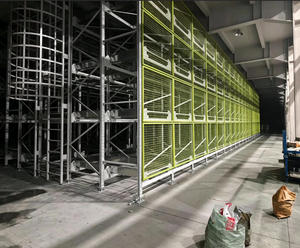
Kaku ASRS Smart Pallet Racking 6-Layer Automated Storage Retrieval System Galvanized Steel Construction 1300kg/Pallet Capacity
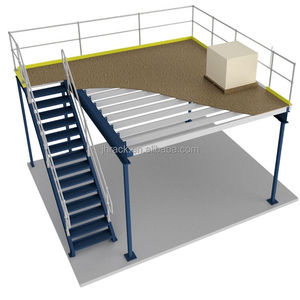
Mezzanine Design Platform Steel Mezzanine Structures Warehouse Storage Racking Mezzanine Floor For Warehouse Office
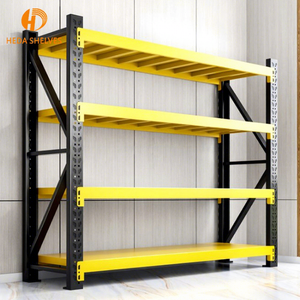
Boltless Adjustable Heavy Duty Load-Bearing 500kg/Layer Steel Racks Warehouse Industrial Stack Storage Racking Shelving System
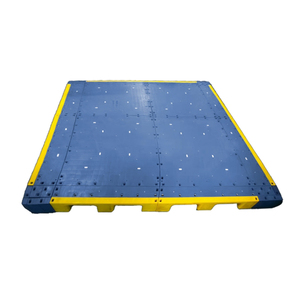
Oversize Industrial Storage Assembled 2500x2500mm Closed Deck Plastic Pallet For Solar Panel And Warehouse Use
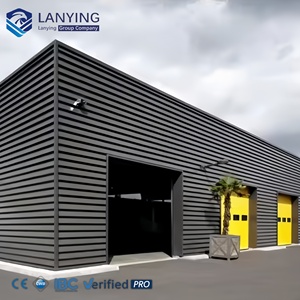
Prefabricated Steel Structure Logistics Warehouse Workshop Industrial Building Commercial Building Steel Structure Warehouse
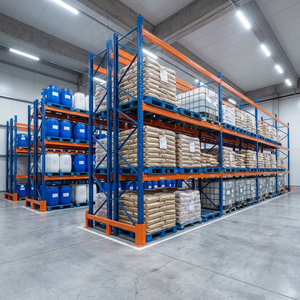
Palettenregal Warehouse Storage Rack Pallet Rack Heavy Duty Q235B Pallet Racking System With Free Design Services
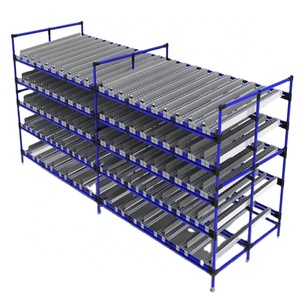
High Storage Capacity Gravity Carton Flow Racking From Best Storage System
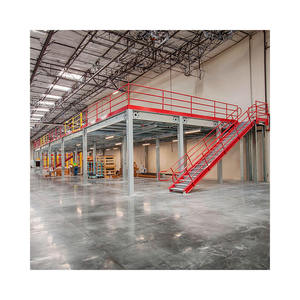
ISO CE Certified Heavy Duty Steel Mezzanine Floor Racking System Multi-level Warehouse Storage Platform Factory Supplier
Technical White Paper
Engineering & Architectural Fundamentals of Crane Supported Pallet Racking
In modern industrial logistics, Crane Supported Pallet Racking—often designed as fully automated Clad-Rack Systems (Rack-Supported Buildings)—represents the pinnacle of structural efficiency, high-density storage, and mechanical automated integration. Unlike traditional standalone selective racking placed inside a pre-built warehouse shell, a crane-supported racking matrix serves a dual engineering purpose: it acts as the primary structural storage framework for heavy unit loads while simultaneously serving as the load-bearing super-structure supporting the exterior wall cladding, roof trusses, and environmental wind/snow loads.
At the core of a crane-supported high-bay AS/RS infrastructure is the seamless interaction between cold-formed structural steel upright profiles and top-guided or bottom-guided Stacker Cranes (Automated Storage and Retrieval Systems - AS/RS). Operating at vertical heights exceeding 30 to 45 meters, stacker cranes exert concentrated dynamic loads, acceleration-induced horizontal thrusts, and braking torque directly onto the racking structure. Consequently, designing these systems demands stringent structural compliance under EN 15512 (European Standard for Steel Static Storage Systems) and FEM 10.2.02 / FEM 9.831 guidelines.
Clad-Rack Structural Mechanics
By integrating wall purlins and roof trusses directly onto racking uprights, clad-rack systems eliminate the need for concrete building columns. This design reduces civil construction timelines by up to 25% and maximizes land footprint utilization by over 85%.
Ultra-Tight Deflection Control
Stacker cranes operating at high speeds (up to 240 m/min horizontally) require structural sway limits as strict as L/300 to L/500. Advanced Finite Element Analysis (FEA) ensures minimal elastic deformation during simultaneous crane movement.
Seismic & Wind Mitigation
Integrated dynamic bracing networks, heavy-duty floor anchorages, and high-tensile Q355B structural steel elements guarantee stability against zone-4 seismic activity and wind uplift speeds up to 180 km/h.
Metallurgical Integrity: Q235B vs. Q355B Structural Steel Selection
To guarantee the structural reliability of crane-supported racking under continuous 24/7 operating cycles, material selection is non-negotiable. ApexDrive sourcing protocols utilize premium-grade structural steel coil supplied exclusively by premier steel mills including Baosteel, Masteel, and Wuhan Iron and Steel.
For standard pallet racking uprights, high-ductility Q235B cold-rolled steel delivers optimal strain energy absorption. However, for crane-supported high-bay structures exceeding 18 meters, high-yield strength Q355B structural steel (equivalent to European S355JR) is mandatorily integrated into lower upright sections, heavy beam profiles, and guide rail ties. Q355B provides a minimum yield strength of 355 MPa, delivering superior resistance against column buckling, localized flange crippling, and dynamic impact forces from high-speed crane positioning.
Strategic Procurement
Future Procurement Trends in Automated Storage Infrastructure
Global supply chains are undergoing a structural shift driven by e-commerce expansion, rising land costs, labor shortages, and stringent decarbonization mandates. Supply chain directors and enterprise procurement teams must align their capital expenditure (CapEx) with next-generation intralogistics trends:
- Transition from Standalone Buildings to Clad-Rack Systems: Industrial developers are increasingly bypassing traditional pre-engineered metal buildings (PEMB) in favor of rack-supported clad-rack buildings. This shift reduces total tax assessments in many jurisdictions where racking is categorized as equipment rather than real estate asset tax.
- AI-Driven WMS/WCS Micro-Interactions: Modern crane-supported pallet racking systems are equipped with embedded IoT sensors, optical positioning reflectors, and rack-mounted barcoding arrays. Real-time integration with Warehouse Execution Systems (WES) optimizes crane acceleration profiles, reducing mechanical wear on racking beams.
- Cold Chain Energy Footprint Optimization: High-density crane-supported racking in cold storage facilities (-25°C to -30°C) cuts refrigerated volume per pallet position by up to 60%. Cold-rolled galvanized steel coatings prevent ice-adhesion oxidation while lowering thermal loss.
- CE and EN 15512 Regulatory Enforcement: International buyers are shifting away from non-certified, low-cost fabricators toward verified OEM manufacturers possessing full factory production control (FPC) certificates and CE markings to meet global safety audit criteria.
Technical Data
Crane Supported Racking System Design Criteria
| Parameter | Standard Specification | High-Bay AS/RS Specification | Compliance Standard |
|---|---|---|---|
| System Structural Height | 6,000 mm – 15,000 mm | 15,000 mm – 45,000 mm (Clad-Rack) | EN 15512 / FEM 10.2.02 |
| Pallet Load Capacity | 500 kg – 1,500 kg / pallet | 1,000 kg – 3,000 kg / pallet | RMI / ANSI MH16.1 |
| Steel Material Grade | Q235B (S235JR Equivalent) | Q355B (S355JR High-Tensile) | GB/T 1591 / EN 10025 |
| Upright Pitch Adjustment | 50 mm / 75 mm / 100 mm pitch | Custom Punching for Top Rail Ties | ISO 9001:2015 QC |
| Beam Deflection Limit | L / 200 of clear beam length | L / 300 to L / 400 (Crane Spec) | FEM 9.831 Guidance |
| Surface Finishing | Electrostatic Powder Coating (60-80μ) | Hot-Dip Galvanized / Swiss Gema Line | ISO 12944 Corrosion Cat. |
| Fastener Grade | Grade 4.8 / 8.8 Structural Bolts | High-Tensile Grade 8.8 / 10.9 Bolts | DIN 933 / ISO 4017 |
Enterprise Advantage
ApexDrive Industrial Racking Manufacturing Excellence
Established in September 2006 in Nanjing, China, ApexDrive Industrial Racking Co., Ltd. has grown into a global leader in high-precision warehouse racking manufacturing. Operating from a modern 20,000 m² state-of-the-art production base equipped with over 150 sets of advanced machinery, ApexDrive delivers an annual output capacity exceeding 30,000 tons of structural racking components.
Our modern factory utilizes six tightly controlled manufacturing steps that ensure every crane-supported component, upright frame, and load beam exceeds international quality parameters:
1. German-Tech Roll Forming
Dedicated automated roll-forming lines ensure continuous profile accuracy. Cumulative hole-pitch error over a 12-meter single-piece upright stays strictly within ±2.0 mm, guaranteeing flawless top-guide rail alignment for stacker cranes.
2. Robotic Manipulator Welding
Beam connectors, floor baseplates, and structural portal braces are welded using fully automated robotic manipulators. This process eliminates weld porosity, cold laps, and stress concentration points under heavy dynamic loads.
3. 220m Swiss Gema Coating Line
Components undergo a 10-stage chemical degreasing, pickling, and phosphating treatment before entering our 220-meter automated electrostatic line equipped with Swiss Gema spray guns. Thermosetting powder cures at 180°C for exceptional impact and wear resistance.
4. Pre-Shipment Trial Assembly
To safeguard against field delays during overseas installation, complex structural connection nodes, beam-to-column interlocking joints, and stacker crane guide brackets undergo physical pre-assembly inspections inside our factory.
Procurement Guidance
Frequently Asked Questions by Industrial Buyers
Q1: What structural input data is required to design a CE certified crane-supported pallet racking system?
To generate structural calculations and CAD layouts, our engineering team requires: (1) Building site CAD drawings detailing floor dimensions, clear building height, column grids, and underground utility paths; (2) Pallet specifications including overall dimensions (W x D x H), gross unit weight, pallet bottom configuration (2-way or 4-way entry), and SKU handling metrics; (3) Stacker crane operational parameters including maximum acceleration, wheel loads, top-guide rail clearance, and safety buffer zones; (4) Local environmental codes including wind load velocity, seismic zone coefficient, and ambient temperature ranges.
Q2: How does a crane-supported racking system differ from standard selective pallet racking?
Standard selective pallet racking relies on manually operated forklifts navigating wide aisles (2.5m to 3.5m) and supports only the stored inventory. In contrast, crane-supported pallet racking (or Clad-Rack AS/RS) is served by automated stacker cranes operating in narrow aisles (1.4m to 1.6m) and serves as the structural building shell itself—supporting roof loads, wall cladding, and wind resistance without needing exterior building columns.
Q3: What certifications prove structural compliance for European and North American projects?
ApexDrive racking products are certified under ISO 9001:2015 for quality management and possess official CE Certification for structural steel racking systems. Design engineering strictly conforms to EN 15512, EN 15620, FEM 10.2.02 standards for European compliance, as well as ANSI/RMI MH16.1 standards for North American industrial facilities.
Q4: What floor slab tolerances are necessary for high-bay stacker crane racking?
High-bay automated racking demands strict concrete slab levelness and flatness (typically conforming to DIN 15185 or VDMA floor guidelines). Slab deflection under full live load must not exceed 1/1000 of the span, and anchor bolt pull-out force capacities are engineered based on dynamic wheel load stress distributions calculated by our engineering software.
Q5: How are overseas shipments packaged to prevent corrosion and transit damage?
Heavy structural uprights and load beams are bundled with multi-tier heavy-duty steel strapping and plastic film wrapping. Small hardware elements, safety locks, baseplates, and anchor bolts are packed in reinforced wooden crates or heavy-duty cartons on export-grade plywood pallets. Every bundle is tagged with detailed piece-marks to simplify customs clearance and site sorting.
Q6: Does ApexDrive offer on-site installation support outside China?
Yes. Every project includes comprehensive 3D assembly drawings, piece-mark schematics, and English installation manuals. Furthermore, our senior structural engineers provide remote video assistance, or can be dispatched directly to your international installation site to direct local assembly teams, supervise alignment tolerances, and perform load testing before system commissioning.
Request Your Free Structural Engineering Layout & Quote Today
Connect directly with our senior racking design engineers. We deliver customized CAD layout drawings, structural load calculations, and competitive factory-direct pricing within 24 hours.
Get Catalog