ApexDriveRACKING
30,000+
Metric Tons Annual Output
Q355B
Certified High-Yield Steel
ISO & CE
Verified Quality Assurance
60+
Global Export Markets
Product Catalog
Featured Industrial Pallet Racking Systems
Engineered for structural resilience, high-bay throughput, and maximum cubic space utilization. Direct factory production certified under international standards.
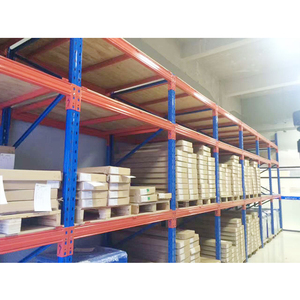
Selective Industrial Pallet Racking System
100% direct pallet access for multi-SKU inventory environments. Features adjustable box beam connections and roll-formed cold-rolled steel columns.
100% Selectivity
Q235B / Q355B
Up to 4500kg/layer
Send an Inquiry
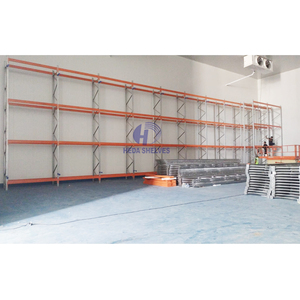
Double Deep High-Density Steel Pallet Rack
Increases storage density by storing pallets two-deep in back-to-back configurations. Reduces aisle requirement by 50% while maintaining fast inventory throughput.
50% Aisle Reduction
1000-3000kg/Layer
Deep-Reach Forklift
Send an Inquiry
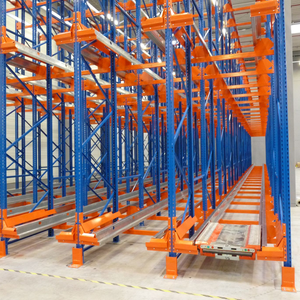
Automated Radio Shuttle Dynamic Racking
Semi-automated deep-lane pallet storage using wireless radio-controlled shuttles. Delivers maximum space consolidation for cold chain and bulk distribution.
FIFO / LIFO
Radio Controlled
Cold-Storage Ready
Send an Inquiry
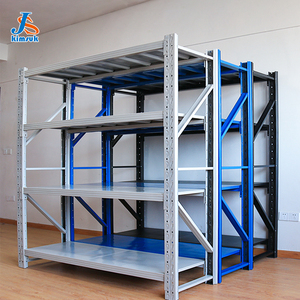
Adjustable Medium Duty Boltless Metal Shelving
Versatile clip-in steel shelving system designed for manual bin-picking, piece-part logistics, and light-to-medium carton storage with zero bolt assembly.
Boltless Assembly
200-800kg/Level
Adjustable Pitch
Send an Inquiry
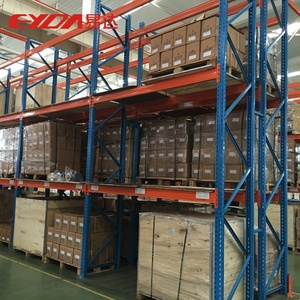
Heavy Duty Bulk Cargo Industrial Racking
Heavy-gauge structural frame racking engineered specifically for heavy bulk pallets, oversized machinery components, and industrial logistics centers.
High Deflection Limit
Custom Column Profile
M7 Seismic Rated
Send an Inquiry
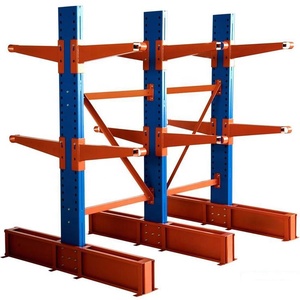
Heavy Duty Cantilever Storage System
Unobstructed horizontal arm system purpose-built for long, bulky materials including lumber, steel pipes, plastic extrusions, and sheet metals.
Long Goods Storage
Single/Double Sided
Heavy Load Arms
Send an Inquiry
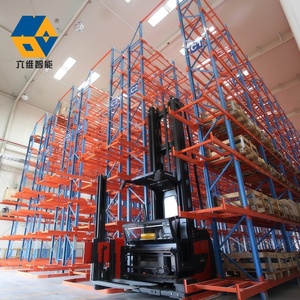
Very Narrow Aisle (VNA) High-Bay Racking
Utilizes floor-to-ceiling space with narrow operating aisles (1.5m–1.8m). Maximizes warehouse cubic space while guaranteeing 100% pallet accessibility.
1.5m Aisle Width
Up to 15m Height
Turret Truck Guided
Send an Inquiry
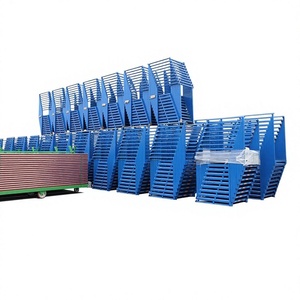
Cold Storage & Freezer Pallet Racking
Specially coated anti-corrosive rack structures engineered to withstand temperatures as low as -30°C without low-temperature steel embrittlement.
Down to -30°C
Hot-Dip Galvanized
Food Grade Powder
Send an Inquiry
Technical Engineering Whitepaper
Dynamic Pallet Racking: Engineering Fundamentals & Structural Optimization
In modern industrial material handling, Dynamic Pallet Racking represents a pivotal shift from static storage to motion-assisted, high-density warehouse optimization. Unlike conventional static beam racking—where forklift travel consumes up to 60% of cycle time—dynamic systems utilize kinetic mechanisms, gravity inclines, or battery-powered mechanical shuttles to move pallets within specialized lanes.
Kinetic & Mechanical Motion Mechanics
Dynamic pallet storage systems rely on distinct physical principles to automate unit-load movements. In Gravity Pallet Flow Racks, inclined roller tracks (typically 3% to 4% grade) allow pallet loads to flow automatically under gravity from the loading face to the picking face (FIFO order). Self-energizing brake rollers control velocity to keep motion under 0.3 m/s, preventing structural impact.
In Push-Back Racking (LIFO flow), nested carts ride on inclined structural steel rails. As a new pallet is loaded, it pushes existing pallets back into the lane. Upon retrieval, gravity advances remaining pallets forward to the aisle face.
Structural Metallurgy: Q235B vs. Q355B Steel
The structural integrity of dynamic racking depends heavily on raw material composition. ApexDrive Industrial Racking utilizes cold-formed structural steel cold-rolled from certified Chinese state mills like Baosteel and Masteel.
While basic secondary racking manufacturers rely exclusively on Q235B steel ($f_y = 235 \text{ MPa}$), our high-bay dynamic uprights incorporate high-strength Q355B low-alloy steel ($f_y = 355 \text{ MPa}$). This yields a 51% increase in nominal yield strength, permitting taller upright configurations up to 15 meters while reducing overall rack deadweight and seismic inertia forces under FEM 10.2.02 and EN 15512 international standards.
Strategic Procurement Analysis
Future Procurement Trends in Dynamic Storage Systems (2025–2030)
As global supply chains navigate labor scarcity, skyrocketing industrial real estate costs, and strict ESG compliance standards, enterprise buyers must align their infrastructure investments with long-term technological trajectories.
1. IoT & Smart Pallet Shuttle Integration
The procurement of static racks is giving way to semi-automated Radio Shuttle Systems equipped with IoT sensor arrays. Modern shuttles communicate directly via Wi-Fi/5G to Warehouse Management Systems (WMS), monitoring real-time battery diagnostics, load detection, laser distance sensing, and automated inventory cycle counts without manual forklift intervention.
2. AGV / AMR Interface Compatibility
Future-proof dynamic racking must feature engineered dock guides and specialized baseplate anchor layouts designed for direct interaction with Autonomous Mobile Robots (AMRs) and Automated Guided Vehicles (AGVs). Procurement specifications increasingly mandate tighter structural tolerances ($\pm 1.5 \text{ mm}$) to accommodate robotic pickers.
3. Cold Chain & Energy Optimization
With global cold-chain logistics expanding rapidly, dynamic storage systems in refrigerated and deep-freeze facilities (-25°C to -30°C) reduce cooling energy costs by up to 40%. By minimizing building cubic volume per pallet position, enterprise operators significantly shrink thermal dissipation footprints.
Decision Support Matrix
Industrial Storage Systems Technical Comparison
Comprehensive technical matrix evaluating storage density, accessibility, operational speed, CAPEX, and handling equipment compatibility for key racking architectures.
| Racking System Architecture | Storage Density | Direct Selectivity | Flow Principle | Space Utilization | Relative CAPEX |
|---|---|---|---|---|---|
| Selective Pallet Racking | Baseline (1.0x) | 100% Direct | FIFO / LIFO | 40% - 45% | Low (1.0x) |
| Double Deep Pallet Rack | Medium (1.3x) | 50% Direct | LIFO | 55% - 60% | Low-Medium (1.2x) |
| Very Narrow Aisle (VNA) | High (1.5x) | 100% Direct | FIFO / LIFO | 65% - 75% | Medium (1.4x) |
| Radio Shuttle Dynamic Rack | Very High (2.2x) | Lane Dependent | FIFO or LIFO | 80% - 85% | Medium-High (2.0x) |
| Gravity Pallet Flow Rack | Ultra High (2.4x) | Lane Dependent | Strict FIFO | 85% - 90% | High (2.5x) |
| AS/RS Automated High-Bay | Maximum (3.0x+) | Automated | Programmed FIFO | 90% - 95% | Capital Intensive |
Enterprise Authority & Quality Standards
ApexDrive Racking: Manufacturing & Export Supremacy
As one of East China's premier racking exporters based in Nanjing, ApexDrive Industrial Racking Co., Ltd. operates a 20,000 m² state-of-the-art manufacturing facility equipped with over 150 automated roll-forming and robotic welding centers.
Strict Quality Control & Automated Manufacturing
- Traceable Steel Coils: Mill test certificates (MTC) verified for yield, tensile, and chemical composition on every batch of Q235B / Q355B steel.
- Precision Roll Forming: German-engineered continuous roll-forming lines guarantee a cumulative hole-pitch tolerance within $\pm 2 \text{ mm}$ across a 12-meter continuous upright.
- Robotic Welding Manipulators: Automatic robotic welding arms deliver complete, pore-free weld beads at all beam connector bracket junctions, eliminating human error.
- 220-Meter Automated Coating Line: 10-stage automatic pre-treatment degreasing followed by Swiss Gema electrostatic powder coating cured at 180°C for superior impact and scratch resistance.
Global Project Turnkey Service Chain
- Free CAD Layout & Structural Design: Experienced storage engineers calculate beam deflections ($L/300$) and seismic loads free of charge.
- Pre-Shipment Trial Assembly: Mock-up trial assembly of frames and beam connectors prior to container loading ensuring effortless on-site assembly.
- Export Packaging Standards: Multi-tier heavy steel strapping, edge corner protectors, and sealed plywood palletization for damage-free sea freight transit.
- Worldwide Field & Remote Support: Comprehensive English manuals, 3D installation drawings, and optional overseas installation engineering crews.
Sourcing Intelligence
Frequently Asked Sourcing & Technical Questions
Key technical considerations, structural requirements, and procurement guidelines for global project managers and warehouse operators.
What essential warehouse parameters are required to generate a custom layout drawing?
To provide an accurate CAD layout design and structural cost proposal, our engineering team requires:
- Building architectural drawing or sketch showing clear usable height under roof trusses, column grids, fire sprinkler drops, and building access doors.
- Pallet dimensions (Length x Width x Height including cargo overhang) and maximum gross weight per pallet load.
- Total target pallet storage capacity and required throughput flow (FIFO vs LIFO).
- Forklift model specifications, maximum fork lift height, and minimum right-angle stacking aisle width.
How do you prevent steel corrosion in cold storage and high-humidity environments?
For standard ambient environments, our 220-meter automated powder coating line applies an electrostatic thermosetting epoxy-polyester powder coat (60–80 $\mu\text{m}$ dry film thickness). For deep-freeze environments (-30°C) or high-humidity coastal facilities, we supply Hot-Dip Galvanized (HDG) racking components treated according to ISO 1461 standards, delivering zinc coating thicknesses exceeding 65–85 $\mu\text{m}$ for lifelong rust prevention.
What international seismic and structural engineering codes do your racking systems fulfill?
ApexDrive racking systems are designed in strict accordance with European FEM 10.2.02 (Design of Static Steel Pallet Racking), EN 15512, and American Rack Manufacturers Institute (RMI) MH16.1 specifications. Structural finite element analysis (FEA) modeling is performed to calculate beam deflection limits ($L/300$) and seismic frame stability under local peak ground acceleration (PGA) ratings up to M7 earthquakes.
How are long structural rack components protected against damage during ocean container shipping?
Uprights and beams are bundled with high-tensile steel strapping and protective plastic wrapping around bundle ends. Structural feet, row spacers, beam safety clips, and hardware are packed in reinforced, labelled triple-wall cartons secured on export-grade plywood pallets. This container-loading procedure minimizes volume loss while preventing scratch damage and customs inspection delays.
What is the practical difference between Radio Shuttle racking and Gravity Pallet Flow racking?
Radio Shuttle racking uses an autonomous, battery-powered vehicle controlled via wireless remote to travel beneath pallets in deep storage channels. It allows both FIFO and LIFO operation, requires no incline pitch, and incurs zero continuous roller maintenance. Gravity Flow racking relies on mechanical roller beds on a 3-4% incline with friction brake rollers; it operates strictly under FIFO rules and requires physical gravity motion for pallet travel.
Ready to Optimize Your Industrial Warehouse Footprint?
Connect directly with ApexDrive senior racking structural engineers for a complimentary 2D/3D CAD warehouse layout design, load calculation, and factory-direct price quotation.
Send an Inquiry