ApexDriveRACKING
Featured Heavy Duty Pallet Racking Systems
Factory-direct high-density storage configurations custom-engineered for international industrial standards, rigorous load demands, and maximum volumetric throughput.
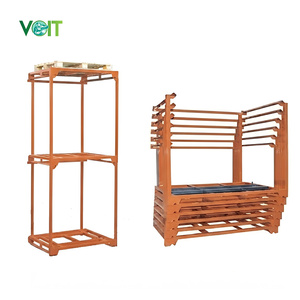
Cost Effective Heavy Duty Warehouse Industrial Detachable Stackable Racking Pallets
Inquire Now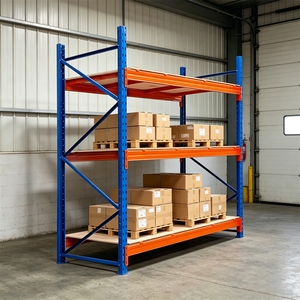
Powder Coated Heavy Duty Rack Industrial Warehouse Storage Pallet Racking Adjustable Industrial Shelves
Inquire Now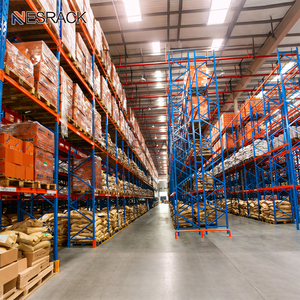
High Density Heavy Duty Galvanized Steel Adjustable Durable Double Deep Industrial Warehouse Pallet Racking System
Inquire Now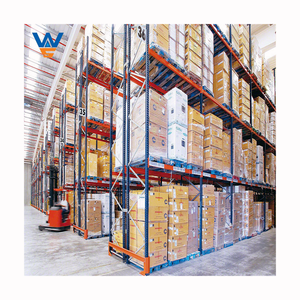
Heavy Duty High Capacity Selective Pallet Racking Drive in Through Rack Metal Storage Pallet Racking System
Inquire Now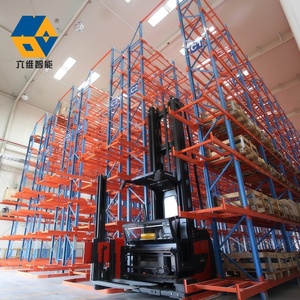
High Loading Crossbeam Racks Warehouse Heavy Duty Vna Racking Steel Structures Storage Unit Pallet Narrow Aisle Rack
Inquire Now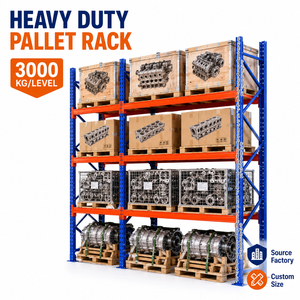
3000KG Heavy Duty Warehouse Shelf Rack for Pallet and Carton Storage 4 Levels for Pallet Storage
Inquire Now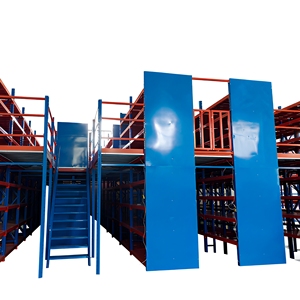
Custom Corrosion Protected Adjustable Pallet Rack Steel Structure Mezzanine Floor Heavy Duty Warehouse Loft Platform Racking
Inquire Now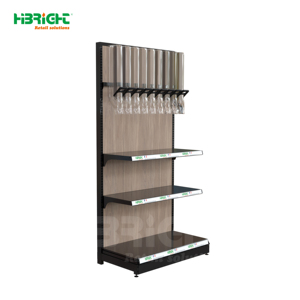
Direct Factory Export Pallet Racking System Space-saving Efficiency 120kg/Tier Loading Turnkey Shopfitting Solution
Inquire Now20,000 m²
Modern Production Base
30,000 Tons
Annual Steel Output
6,000+
Global Completed Cases
150+ Sets
Advanced Automated Machinery
Heavy Duty Pallet Racking Engineering & Manufacturing Whitepaper
An in-depth technical analysis of structural integrity, metallurgy, load calculations, and procurement optimizations for modern industrial storage infrastructure.
1. Structural Metallurgy: Raw Material Selection & Load-Bearing Physics
In modern supply chain engineering, the structural performance of heavy-duty pallet racking is fundamentally dictated by raw material metallurgy and cold-roll forming precision. Premier Chinese manufacturing facilities leverage certified high-tensile structural steel grades—primarily Q235B and Q355B—sourced directly from tier-one state metallurgy conglomerates such as Baosteel, Masteel, and Wuhan Iron and Steel Corporation.
Q355B steel provides a minimum yield strength of 355 MPa and tensile strength ranging from 470 to 630 MPa, rendering it highly resilient against permanent deformation under extreme static and dynamic structural loading. For multi-tier high-bay selective pallet racking and automated storage systems (AS/RS), selecting Q355B structural steel for bottom-tier upright frames reduces column weight while maintaining structural safety factors exceeding 1.8 under full capacity ratings.
Advanced structural analysis utilizes Finite Element Method (FEM) modeling to calculate stress distribution across beam-to-column connector claws. Under maximum beam deflections limited strictly to L/300 (where L represents span length), the physical racking integrity conforms strictly to international design standards including ANSI MH16.1, FEM 10.2.02, and EN 15512.
2. Manufacturing Precision & Surface Preservation Processing
The manufacturing life cycle of heavy-duty industrial racking involves zero-tolerance cold-roll forming, automated robotic welding, and automated surface chemical treatment:
Precision Cold-Roll Forming: Continuous roll-forming lines engineered with up to 24 shaping passes process structural steel strips into continuous upright columns measuring up to 12 meters in a single continuous section. Cumulative pitch alignment tolerances across teardrop or 75mm/50mm pitch perforations are maintained within ±2 mm over a 12-meter span, preventing axial column twisting during site erection.
Robotic Manipulator Welding: Beam end-connectors (3-hook or 4-hook heavy claws) are fused to roll-formed box beams or interlocking C-beams using multi-axis robotic arc welding manipulators. This guarantees full penetration fillet welds, completely eliminating human welding defects, porosity, or cold-joint failures under severe heavy forklift impact.
220-Meter Automated Powder Coating Line: Racking components undergo a rigorous 10-stage chemical surface treatment consisting of warm degreasing, acid rust removal, zinc-phosphate conversion coating, and DI water rinsing. Parts then move into a Swiss Gema electrostatic powder spraying booth where pure epoxy-polyester thermosetting powder is applied uniformly (60–90 microns thickness) and cured in gas ovens at 180°C to 200°C. For sub-zero cold storage facilities or humid marine environments, hot-dip galvanizing per ISO 1461 standards provides permanent anti-corrosion barrier protection.
Industrial Racking Engineering Decision Matrix
A comparative benchmark analysis designed for warehouse logistics managers, procurement directors, and civil engineering consultants.
| Racking Architecture | Storage Density | Pallet Selectivity | Max Load per Level | Forklift Operating Aisle | Optimal Logistics Application |
|---|---|---|---|---|---|
| Selective Pallet Racking | Medium (40-50%) | 100% Direct Access | Up to 4,500 KG | 3.0m - 3.5m (Standard Counterbalance) | High SKU diversity, fast turnover 3PL fulfillment centers. |
| Very Narrow Aisle (VNA) | High (65-75%) | 100% Direct Access | Up to 3,500 KG | 1.5m - 1.8m (Turret Truck / Wire Guided) | High-ceiling distribution hubs requiring maximum floor efficiency. |
| Radio Shuttle Racking | Very High (80-85%) | LIFO / FIFO (Lane-based) | Up to 1,500 KG / Pallet | Driven by Automated Battery Shuttle | Cold storage facilities, food & beverage bulk SKU warehousing. |
| Drive-In / Drive-Through | High (70-80%) | LIFO (Drive-In) / FIFO | Up to 2,000 KG / Pallet | Forklift drives inside racking channels | Uniform seasonal inventory, low SKU volume storage. |
| Mezzanine Platform Racking | Volumetric (200-300%) | Manual & Pallet Access | 300 - 1,000 KG / m² | Multi-tier manual floor access | E-commerce order picking, spare parts, garment loft handling. |
Factory Engineering Capabilities & Export Advantages
Why leading global fortune-500 industrial brands partner with our manufacturing ecosystem in China.
ISO 9001 & CE Certified
Full compliance with international quality management systems and European CE structural safety accreditations across all export production batches.
End-to-End In-House Control
From raw steel coil slitting, roll forming, and robotic welding to automated powder coating and export packing—zero sub-contracting risk.
Free CAD & 3D Layout Design
In-house structural engineers engineer optimal warehouse layout drawings, 3D renderings, and load safety reports within 24 hours.
Heavy Export Packaging
Uprights and beams bundled with multi-tier steel strapping and protective edge cornering; accessories secured in plywood export pallets.
Future Procurement Trends in Warehouse Storage (2025–2030)
Key evolutionary vectors shaping global logistics infrastructure, automated material handling, and sustainable industrial procurement.
1. Migration Towards Hybrid Automated Systems (AS/RS & AMR Integration)
Traditional manual selective pallet racking is increasingly being retrofitted or replaced by modular automation interfaces. High-density warehouse operations are shifting toward Radio Shuttle systems integrated with Autonomous Mobile Robots (AMRs) and automated vertical stacker cranes. Procurement plans now prioritize rack structural tolerances capable of accommodating sensor-guided shuttles, floor-embedded magnetic strip guidance, and wireless WMS/WCS telemetry.
2. Cold Chain Logistics Expansion & Sub-Zero Structural Resilience
With rapid growth in fresh food distribution, pharmaceuticals, and biologics, demand for cold-storage racking is surging globally. Steel structures operating in temperature regimes down to -30°C require specialized micro-alloyed steel compositions to prevent low-temperature hydrogen embrittlement. Future-proof procurement dictates mandatory Charpy V-notch impact testing for structural steel grades and specialized moisture-resistant electrostatic powder formulations.
3. Sustainable Circular Production & Decarbonized Steel Supply
International ESG (Environmental, Social, and Governance) compliance standards are compelling warehouse developers to evaluate carbon footprints across supply chains. Top Chinese rack manufacturers are transitioning to closed-loop water recovery systems during chemical pretreatment, zero-VOC powder coatings, and utilizing steel manufactured via Electric Arc Furnace (EAF) recycling routes, dramatically lowering embedded carbon metrics per pallet position.
Heavy Duty Pallet Racking Procurement FAQ
Technical answers addressing essential structural, logistics, and installation queries for international procurement teams.
Q: What precise structural parameters are required for a free engineering rack design?
A: To generate an authoritative engineering design and CAD layout, our structural team requires: (1) Warehouse building CAD drawings indicating clear overhead clearance height, column grid matrix, floor slab load capacity, door locations, and fire sprinkler positions; (2) Pallet dimensions including width, depth, overall cargo height, and maximum unit load mass (KG); (3) Total SKU count and required pallet positions; (4) Forklift specifications including model, turning radius, and maximum mast reach height; (5) Required stock rotation principle (FIFO vs. LIFO).
Q: How do Q235B and Q355B steel grades compare in structural racking design?
A: Q235B (yield strength 235 MPa) is the standard structural steel utilized for light-to-medium payload applications and moderate height pallet racks. Q355B (yield strength 355 MPa) is a high-strength micro-alloyed structural steel engineered for high-bay racking systems exceeding 8 meters in height, heavy load beams (>3,000 KG per level), and high-density AS/RS structures. Utilizing Q355B optimizes column wall thickness while maintaining structural compliance with FEM 10.2.02 standards.
Q: How do you guarantee anti-corrosion protection for export shipments?
A: Steel components pass through an automated 10-stage chemical pretreatment line (degreasing, descaling, phosphating) prior to receiving a 60–90 micron thick thermosetting epoxy-polyester powder coating cured at 180°C–200°C. For extreme cold-chain freezer environments (-30°C) or outdoor coastal operations, we offer hot-dip galvanizing per ISO 1461, yielding a zinc coating layer of 65–85 microns for long-term corrosion prevention.
Q: What international seismic and safety design criteria are applied?
A: All structural racking systems are calculated using advanced 3D finite element structural software following ANSI MH16.1 (USA), FEM 10.2.02 (Europe), and EN 15512 codes. Seismic load calculations consider localized peak ground acceleration (PGA) factors, ensuring dynamic seismic stability capable of withstanding zone 4 / Magnitude 7.0 seismic events without structural frame collapse.
Q: How is overseas installation managed for large-scale projects?
A: Every export project ships with comprehensive English installation manuals, step-by-step assembly drawings, structural torque specifications for anchor bolts, and 3D installation guide videos. For large distribution centers or automated AS/RS installations, our factory can dispatch certified installation engineers directly to the client site for on-site management and assembly oversight.
Q: What packaging protocols prevent transit damage inside sea containers?
A: Upright frames and beams are organized into reinforced bundles using high-tensile multi-tier steel strapping, heavy plastic film wrapping, and thick cardboard corner protectors. Small hardware items including floor anchor bolts, safety pins, column guards, and leveling shims are packed into heavy-duty corrugated cartons mounted on fumigation-free plywood export pallets.