ApexDriveRACKING
Factory Direct Catalog
Reach Truck Compatible Storage Racking Systems
Explore high-capacity, precision-engineered industrial shelving and heavy-duty pallet racking systems manufactured to international ISO 9001:2015 & CE safety standards.
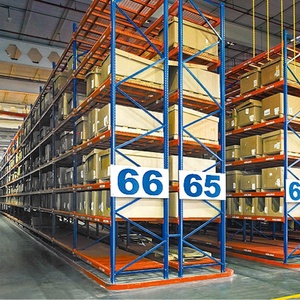
Narrow Aisle VNA Pallet Racking System Adjustable Heavy Duty Cold Rolled Steel Powder Coated High-Density Logistics E-commerce
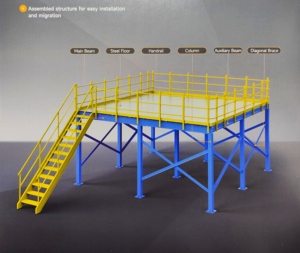
Nova Steel Customized Heavy-Duty Industrial Mezzanine Metal Floor Rack For Warehouse Storage For Manufacturers' Shelves
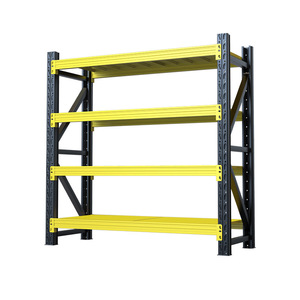
Light-duty High Capacity Storage Racks for E-commerce Warehouses, Multi-layer Adjustable Storage Hardware Racks
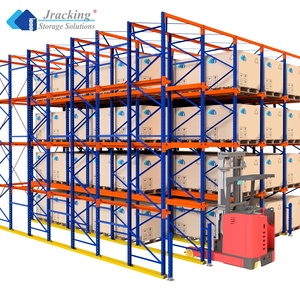
Warehouse Heavy Duty Industrial Shelves Steel EU Blue and Orange Selective Pallet Racking Shelving System CE Certified
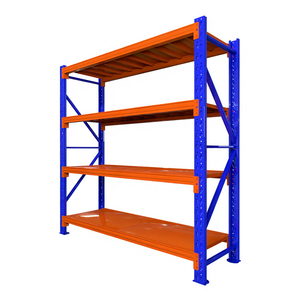
Garage Warehouse Rack Adjustable Bolts Storage Stacking Racks Pallet Steel Metal Shelving Shelves Unit
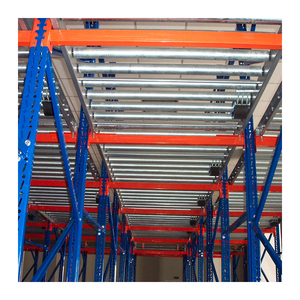
Pallet Flow Rack High Quality Fifo Warehouse Storage Racks Gravity Pallet Flow Racking First In First Out Rack System
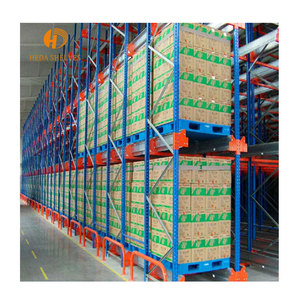
High Density Storage Rack Heavy Duty Drive In Pallet Racking System Design Double Deep Pallet Racks
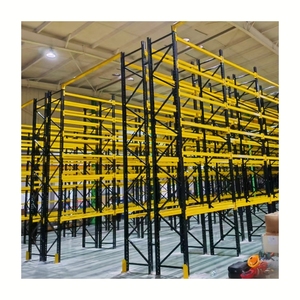
Customized Colors Storage Shelf High Density Pallet Racking Warehouse Racks Steel Heavy Duty Shelving For Warehousing
Technical Engineering Whitepaper
Optimizing Reach Truck Storage Racking: Architecture, Kinematics & Structural Design
A comprehensive analysis of reach truck integration with industrial heavy-duty pallet racking systems for maximum volumetric efficiency.
1. Kinematic Interface Between Reach Trucks and High-Bay Racking Architecture
Modern distribution centers, 3PL fulfillment hubs, and cold-storage facilities continuously face the structural challenge of balancing high pallet storage density against immediate SKU accessibility. Reach trucks—specifically standard pantograph reach trucks, moving-mast reach trucks, and double-deep reach configurations—serve as the critical operational bridge between wide-aisle counterbalance forklift systems and ultra-narrow aisle (VNA) turret trucks.
When engineering high-bay reach truck racking, structural engineers must precisely factor in the operational envelope of the reach truck. Unlike standard counterbalance trucks requiring aisle widths of 3.5 to 3.8 meters, reach truck racking systems compress operational aisles to between 2.7 meters and 3.2 meters (depending on chassis size, pallet dimensions, and outrigger positioning). This aisle reduction immediately increases floor space utilization by 25% to 35%.
Engineering Rule of Thumb: High-bay reach truck racking systems operating above 8.0 meters require beam deflection limits set strictly to L/300 or L/400 (under full nominal load) according to FEM 10.2.02 standards, preventing mast tilt and ensuring smooth scissor-pantograph engagement.
2. Structural Racking Configurations Tailored for Reach Truck Operations
Choosing the correct racking configuration depends heavily on your SKU profiles, inventory velocity (FIFO vs. LIFO), and mast reach capabilities. China's premier racking manufacturers engineer three dominant Reach Truck Racking formats:
A. Selective Reach Truck Pallet Racking (100% Direct Selectivity)
Selective pallet racking combined with reach trucks represents the most flexible storage topology. Utilizing single-deep pallet positions, every single pallet is instantly accessible without moving adjacent stock. Reach truck outriggers roll directly underneath the bottom beam level (or inside outrigger channels), allowing the truck to maneuver flush against the rack frame before extending its pantograph mechanism to lift or place loads.
B. Double-Deep Pallet Racking Systems (50% Density Increase)
Double-deep racking stores pallets two deep in a back-to-back structure, accessed via specialized double-deep reach trucks equipped with pantograph extenders or telescopic forks. By eliminating every second aisle, double-deep racking boosts storage density by up to 50% over conventional selective racking. It requires precise beam alignment, heavy-duty column protectors, and optional laser positioning aids on reach truck masts to assist drivers with upper-tier blind placement.
C. Narrow Aisle (VNA) Guided Reach Racking
By fitting reach trucks with side-guided floor rails or inductive wire guidance, aisle widths can be narrowed down to 2.3–2.5 meters. VNA Reach Racking utilizes high-grade Q355B cold-rolled steel uprights engineered with tight cumulative hole-pitch tolerances (±2mm over 12m vertical spans) to withstand heavy lateral dynamic forces when reach trucks operate at maximum elevation.
System Performance & Engineering Specifications Matrix
| Racking Configuration | Aisle Width Required | Storage Density Rating | SKU Selectivity | Recommended Steel Grade | Throughput Velocity |
|---|---|---|---|---|---|
| Standard Selective | 2.8m - 3.2m | Base (100%) | 100% Immediate | Q235B / Q355B | High (45-60 pallets/hr) |
| Double-Deep Reach | 3.0m - 3.3m | High (+45% to +50%) | 50% (Last-In, First-Out) | Q355B Structural | Medium (30-40 pallets/hr) |
| VNA Guided Reach | 2.3m - 2.6m | Very High (+60%) | 100% Immediate | Q355B High-Yield | High (40-50 pallets/hr) |
| Drive-In Racking | 3.0m (Entry Lane) | Maximum (+80%) | Low (LIFO Batch) | Q235B Heavy Profile | Moderate (20-30 pallets/hr) |
| Radio Shuttle Racking | 3.0m (Front Aisle) | Maximum (+85%) | High Batch (FIFO/LIFO) | Q235B / Q355B Hybrid | Very High (55-70 pallets/hr) |
Industry Insight
Future Procurement & Technology Trends in Reach Truck Storage
How global supply chain automation, structural material science, and green manufacturing are redefining warehouse storage standards.
1. Automated Reach AGVs & AMR Integration
The global warehousing industry is rapidly transitioning toward autonomous reach forklifts (Reach AGVs/AMRs). Unlike human drivers who compensate intuitively for structural variations, automated reach trucks demand ultra-precise racking manufacturing tolerances. Racking beam connectors, target retroreflective markers, and vertical column plumbs must maintain tolerances under ±1.5mm. Leading Chinese suppliers are adopting automated robotic laser-cutting and continuous roll-forming lines to satisfy AGV positioning requirements.
2. High-Strength Q355B Steel Optimization
Modern structural racking design is shifting away from low-grade mild steel toward high-yield Q355B steel coils. Sourcing Q355B cold-rolled steel from premium mills (such as Baosteel and Masteel) enables manufacturers to reduce steel profile gauge thickness without sacrificing frame load-bearing capacity. This lowers raw material weight, decreases international shipping container costs, and enhances overall seismic resilience during dynamic earthquake events.
3. Cold-Chain Electrostatic Powder Coating
With global cold-chain pharmaceutical and frozen food logistics expanding exponentially, reach truck racking systems must withstand continuous sub-zero operation (down to -30°C) without brittle paint flaking or steel degradation. Advanced Chinese factories utilize 220-meter automated powder coating lines featuring 10-stage degreasing and rust removal processes, finishing components with specialized thermosetting epoxy-polyester coatings cured at 180°C.
Why Partner With Us
ApexDrive Industrial Racking: Manufacturing & Quality Control
Combining state-of-the-art production machinery with verified engineering standards to deliver world-class warehouse racking solutions.
Strict Mill-Traceable Raw Steel Sourcing
We source prime Q235B and Q355B structural steel directly from premier state-owned mills, including Baosteel, Masteel, and Wuhan Iron and Steel. Every coil batch includes certified material mill test reports (MTR), guaranteeing verifiable tensile yield strength, chemistry composition, and precise wall thickness compliance.