ApexDriveRACKING
Featured Cold Storage & Heavy-Duty Pallet Racking Systems
Precision-manufactured with Q355E low-temperature high-yield steel, finished with hot-dip galvanizing or structural powder coating for sub-zero warehouse reliability.
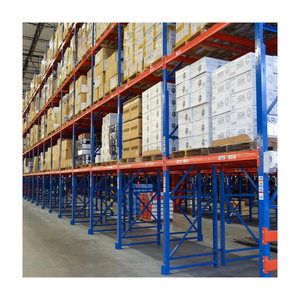
Wholesale Heavy Duty Selective Steel Pallet Rack System
Temp Rating: -30°C to +40°C
Load Capacity: Up to 4,500 kg/level
Steel Grade: Q235B / Q355E Structural
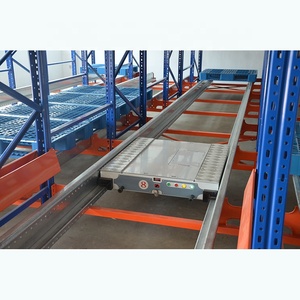
High-Density Radio Shuttle Freezer Pallet Racking System
Temp Rating: -25°C Deep Freeze
Mode: FIFO / LIFO Automated
Space Gain: +85% Utilization
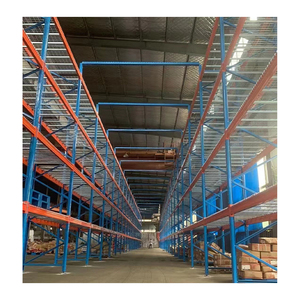
Customized Heavy Duty Storage Pallet Racking System
Finish: Hot-Dip Galvanized / Epoxy
Pitch Adjustment: 50mm / 75mm Beam Pitch
Certification: ISO 9001 / CE / EN15512
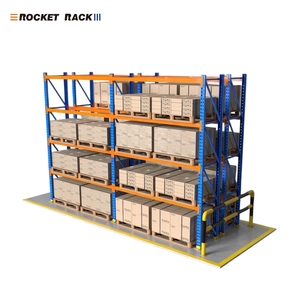
European Standard CE Certified Heavy Duty Industrial Racks
Safety Factor: 1.65 - 1.8 Structural
Height: Up to 15m Continuous
Beam Profile: Box Beam / Step Beam
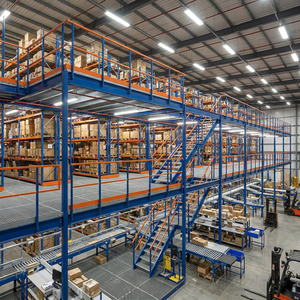
Integrated Sub-Zero Industrial Warehouse Pallet Rack System
Design: Free CAD / 3D Modeling
Seismic Rating: Zone 4 Heavy Structural
Upright Section: 80/90/100/120mm Widths
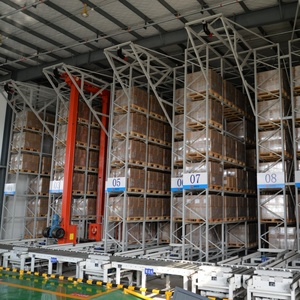
Automated Storage Retrieval System (AS/RS) Cold Storage
Automation: Full WMS / WCS Integration
Operational Temp: Down to -35°C
Efficiency: 24/7 Continuous Operation
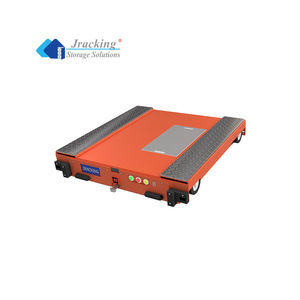
Automated 4-Way Radio Shuttle Deep-Freezer Racking
Traverse: 3D Matrix 4-Directional
Battery: Low-Temp Lithium-Ion
Storage Ratio: 90% Cube Volume
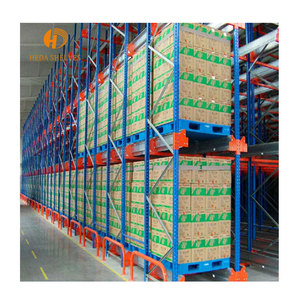
Heavy-Duty Drive-In & Double-Deep Cold Storage Racks
Access Type: Deep-Lane LIFO Storage
Protective Feature: Floor Guide Rails Included
Cost Impact: Lowest CapEx per Pallet
Engineering Science of Sub-Zero Storage: Metallurgical Physics & Structural Mechanics
Operating a cold storage facility or sub-zero blast freezer presents rigorous physical challenges to structural steel. When structural carbon steel is exposed to temperatures below 0°C—and particularly in deep freeze environments ranging from -18°C down to -40°C—it undergoes a critical phenomenon known as the ductile-to-brittle transition. Standard structural steel (such as generic Q235B) experiences a reduction in impact toughness, making it susceptible to micro-fractures, stress cracking, and catastrophic structural collapse under dynamic forklift impacts or heavy pallet loads.
Information Gain Insight: As a premier Chinese manufacturer and exporter of freezer pallet racking, ApexDrive solves cold-chain embrittlement by utilizing specialized high-strength steel grades (Q355D and Q355E) verified via Charpy V-Notch Impact Testing at -20°C and -40°C. This ensures that every upright, beam, and connector retains structural elasticity and energy absorption capacity under high static loading and sudden mechanical shocks.
Low-Temp Metallurgy (Q355E)
We mandate clean-steel chemistry with strict limits on Phosphorus (P ≤ 0.025%) and Sulfur (S ≤ 0.020%). This prevents grain boundary embrittlement and maintains tensile integrity down to -40°C.
Hot-Dip Galvanizing (ISO 1461)
For high-humidity freezer environments, components undergo hot-dip galvanizing with a minimum zinc coating thickness of 65µm–85µm, preventing sub-surface oxidation under continuous freeze-thaw cycles.
Thermal Expansion Modeling
Structural calculation accounts for coefficient of linear thermal expansion ($\alpha = 12 \times 10^{-6} /\text{K}$). Beam connector tolerances are engineered to avoid locked-in thermal stress during ambient assembly to sub-zero chilling.
Freezer Racking System Selection: Volumetric Efficiency vs. Direct Selectivity
In cold storage operations, energy consumed to maintain refrigerated space represents over 60% of total warehouse operating expenses. Maximizing volumetric utilization (cubic meter density) directly correlates with lowering operating costs per pallet position. Choosing the correct pallet rack architecture requires balancing throughput velocity against storage density.
| Racking Architecture | Volumetric Storage Density | SKU Selectivity Ratio | Forklift Exposure in Cold | Optimal Application Profile |
|---|---|---|---|---|
| Selective Pallet Racking | 40% - 50% (Standard) | 100% Direct Access | High (Constant entry) | High SKU variety, fast-moving consumer cold goods (FMCG). |
| Double-Deep Pallet Rack | 60% - 65% (Medium High) | 50% Immediate Access | Moderate | Batch production, identical SKU pairs, medium-turnover food storage. |
| Drive-In Freezer Racking | 70% - 75% (High Density) | LIFO (Lane Specific) | Extreme (Drives inside rack) | Bulk seasonal storage, low SKU count, raw material freezing. |
| Radio Shuttle System | 85% - 90% (Maximum Density) | FIFO or LIFO Automated | Low (Stays at rack face) | Cold chain distribution, high-density food & beverage hubs. |
| Sub-Zero AS/RS Automation | 90% - 95% (Ultimate Height) | 100% Computerized Access | Zero (Fully Automated Crane) | 24/7 continuous operations, high labor cost regional cold centers. |
Future Trends in Cold Storage Racking Procurement (2025–2030)
The global cold chain logistics market is rapidly transforming driven by stringent pharmaceutical temperature compliance, fresh food delivery e-commerce, and soaring energy tariffs. As a technical leader among Chinese racking exporters, ApexDrive highlights four macro trends shaping warehouse equipment procurement over the coming decade:
1. Shift Toward Automated Deep-Lane Shuttle & 4-Way Shuttle Technology: Traditional Drive-In racking is being systematically replaced by semi-automated and fully automated Radio Shuttle racking. Eliminating forklift driving inside sub-zero racks reduces structural impact damage by over 90% while cutting forklift driver turnover caused by harsh freezing conditions.
2. Integration of Thermal Airflow Dynamics in Racking Design: Modern rack design no longer focuses solely on mechanical load carrying. Intelligent racking layouts incorporate vertical and horizontal cold air circulation channels. By optimizing spatial gaps between pallet rows, cooling energy from evaporators penetrates palette cores uniformly, reducing pull-down cooling times by 18%–25%.
3. Advanced Corrosion Protection via Hybrid Duplex Coatings: Standard powder coating often suffers micro-cracking at cold temperatures if moisture penetrates tiny flaws during defrosting cycles. Global buyers are migrating toward Duplex Coatings—combining continuous hot-dip galvanizing with an exterior electrostatic epoxy-polyester powder layer for 25+ years of zero-maintenance lifespan in high-humidity ambient-to-freezer ante-rooms.
4. Structural Health Monitoring & Smart IoT Sensors: High-bay AS/RS systems operating down to -35°C are increasingly fitted with integrated strain gauges and wireless tilt sensors. These IoT modules monitor beam deflection, post alignment, and seismic vibration in real-time, feeding predictive maintenance alerts into the facility WMS (Warehouse Management System).
Enterprise Manufacturing Capabilities & Global Export QA Standard
ApexDrive Industrial Racking Co., Ltd. has established itself as an authoritative manufacturing benchmark for global logistics engineering. Based in Nanjing, China, our facilities integrate advanced rolling mill technology, robotic fabrication, and rigorous raw material certification protocols.
Traceable Mill Certification
Raw coil steel is supplied exclusively by tier-1 state-owned steel mills (Baosteel, Masteel, Shougang). Every coil batch is verified for chemical composition and yield strength before entering production.
Precision CNC Roll Forming
German-designed continuous multi-station cold roll-forming machinery delivers pitch tolerances within ±0.5mm over 12-meter upright lengths, guaranteeing seamless beam engagement and load balance.
Factory Pre-Assembly & Trial Fitting
Before container packaging, sample racks undergo trial assembly and dynamic load testing to verify lock-in safety pin tolerance, beam hook engagement, and floor baseplate alignment.
Seismic Design & Compliance: All ApexDrive freezer racking solutions conform strictly to European EN 15512, FEM 10.2.02, American RMI (Rack Manufacturers Institute), and Australian AS4084-2012 structural standards. Structural engineering reports complete with Finite Element Analysis (FEA) are provided for high-seismic zone approvals globally.
Frequently Asked Technical Questions (Procurement FAQ)
Essential guidance for cold storage project engineers, warehouse directors, and industrial equipment importers.
Why is Q355E steel recommended over standard Q235B steel for freezer racking below -20°C?
At sub-zero temperatures (specifically below -15°C), standard structural carbon steels undergo a drop in notch toughness, moving from a ductile failure mode to a brittle failure mode. Q355E steel is specifically alloyed and micro-treated to guarantee high Charpy V-notch impact absorption energy at -40°C. Using Q355E prevents sudden stress-fractures under heavy loading or accidental forklift collision inside cold stores.
Should I choose Hot-Dip Galvanized (HDG) or Electrostatic Powder Coating for cold storage racks?
For dry, continuously frozen environments (-18°C to -30°C with controlled humidity), premium powder coating over iron-phosphate pre-treatment offers excellent performance and cost efficiency. However, if the rack is installed in high-humidity ante-rooms, blast freezers subject to frequent wash-downs, or environments with frequent defrosting cycles, Hot-Dip Galvanizing (ISO 1461 compliant, 65-85µm zinc depth) is strongly recommended to prevent moisture from causing rust beneath the finish.
How does high-density Radio Shuttle racking operate reliably in sub-zero freezers?
ApexDrive Radio Shuttles engineered for freezer applications utilize specialized low-temperature lithium-iron-phosphate (LiFePO4) battery packs with integrated internal heating elements, low-viscosity synthetic hydraulic fluids rated down to -40°C, and IP65-sealed electronic controllers. This prevents thermal condensation from freezing internal relays and ensures continuous 8 to 10-hour operating shifts per charge in deep freeze conditions.
What engineering data is required for ApexDrive to design a custom freezer rack layout?
To produce an optimized CAD layout and structural load design, our engineering team requires: (1) Architectural CAD building floor plan showing clear undersidemember height, column grid matrix, and door/evaporator locations; (2) Pallet specifications (Length x Width x Height including cargo, gross weight per pallet); (3) Required temperature operating range; (4) Preferred forklift model and maximum lift height; and (5) Stock rotation preference (FIFO or LIFO).
How are racking shipments packed to prevent corrosion and damage during ocean transport?
Export racking components are packaged according to strict international shipping standards. Heavy upright frames and beams are nested with protective plastic spacers, securely banded with heavy-duty steel strapping, and wrapped in industrial moisture-barrier stretch film. Small hardware components, baseplates, and beam safety pins are packed into heavy-duty corrugated cartons anchored to wooden export pallets.
What installation support does ApexDrive provide for overseas warehouse projects?
Every shipment is accompanied by comprehensive 3D assembly drawings, component mark lists, and step-by-step English installation manuals. For large-scale projects, ApexDrive offers complete installation support: we can deploy experienced installation supervisors to site, or provide remote real-time video guidance to manage local assembly crews, ensuring full compliance with structural tolerances.
Ready to Optimize Your Cold Storage Volumetric Capacity?
Connect with ApexDrive senior structural engineers today. Get a complimentary warehouse layout CAD design, structural load analysis, and direct factory pricing.