ApexDriveRACKING
Featured High-Density Racking Systems
Explore our export-grade semi-automated shuttle systems, AS/RS structures, and heavy-duty structural steel storage equipment designed for global distribution hubs.
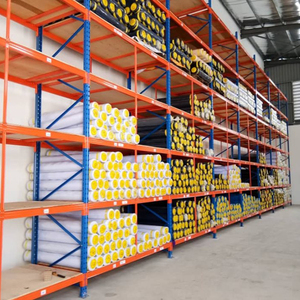
Factory Heavy Duty Racking 2000KG 3000KG Galvanized Pallet Rack
Get Catalog
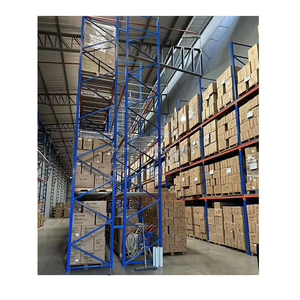
Logistics Center Pallet Rack Warehouse Q235B Steel Storage Custom System
Get Catalog
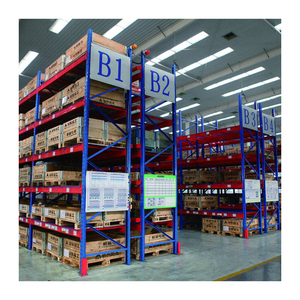
Industrial Pallet Racking System Spliced Steel Drop-Over Deck Panel 2000kg
Get Catalog
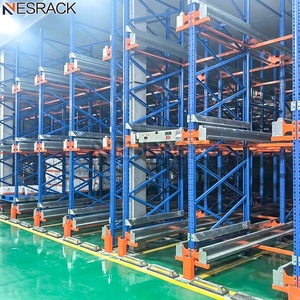
Semi-Automatic Radio Shuttle Racking System Remote Control Pallet Runner
Get Catalog
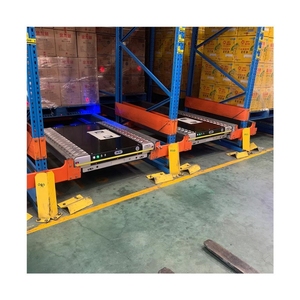
Customizable Industrial Heavy Duty Steel Pallet Shuttle Rack System
Get Catalog
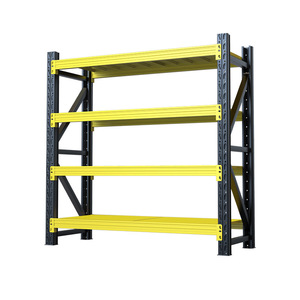
High Capacity Multi-Layer Adjustable Storage Hardware Racks for E-Commerce
Get Catalog
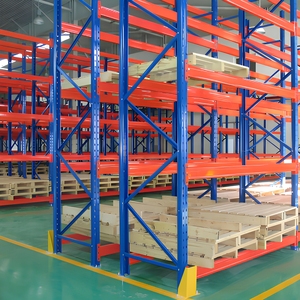
Steel Heavy Duty Double Deep Pallet Rack High Density Warehouse Racking
Get Catalog
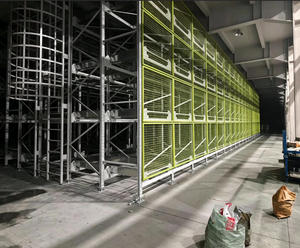
Smart AS/RS Pallet Racking Automated Storage Retrieval System 1300kg/Pallet
Get Catalog
The Evolution of Pallet Shuttle Systems in Modern Logistics Engineering
As global supply chains demand heightened throughput speed, floor-space optimization, and operational safety, traditional storage methodologies such as standard Selective Pallet Racking and Drive-In Systems face severe operational bottlenecks. As a premier China top pallet shuttle racking exporter, ApexDrive Industrial Racking Co., Ltd. delivers high-density, semi-automated storage architectures designed to resolve the inherent trade-offs between storage density and selectivity.
Pallet shuttle racking—also widely designated as radio shuttle racking or pallet runner systems—utilizes an independent, battery-powered shuttle car that travels autonomously along guide rails within storage channels. By eliminating the necessity for forklifts to enter storage lanes (a critical vulnerability in conventional Drive-In racks), pallet shuttle installations dramatically increase operational velocity while mitigating structural collision risks.
Engineering Benchmark: Industrial field audits confirm that transitioning from conventional drive-in racking to an automated pallet shuttle system yields up to a 75% increase in cubic storage capacity, reduces forklift travel times by up to 50%, and practically eliminates racking frame damage caused by vehicle collisions.
+75%
Storage Density Gain
30,000T
Annual Steel Output
6,000+
Global Projects Completed
100%
Quality Pre-Assembly
Our shuttle racking structures are manufactured utilizing certified Q235B and Q355B structural steel supplied directly by premier metallurgical mills including Baosteel and Masteel. Engineered to adhere strictly to European FEM 10.2.02 guidelines, Australian AS4084-2012 standards, and American ANSI MH16.1 specifications, ApexDrive shuttle systems serve global enterprise projects across cold-chain logistics, pharmaceutical manufacturing, FMCG distribution, and third-party logistics (3PL).
Enterprise Manufacturing Competence: From Steel Coil to Container Shipment
ApexDrive operates a modernized 20,000+ square meter manufacturing base equipped with over 150 specialized machinery sets. Achieving high structural reliability requires uncompromising precision at every stage of the fabrication workflow.
Traceable Prime Steel Sourcing
We strictly utilize hot-rolled Q235B and Q355B steel coils. Mill test certificates (MTC) accompanying every batch verify tensile yield strength, chemical composition, and physical thickness tolerances.
German-Line Precision Roll-Forming
Upright posts up to 12 meters in length are continuous cold roll-formed without splicing. Pitch accuracy is maintained within a strict ±2mm cumulative tolerance over 12,000mm profiles.
Robotic Laser & Manipulator Welding
Beam connectors and structural bracing are welded using automated robotic manipulators, guaranteeing uniform bead penetration, zero porosity, and structural fatigue resistance under dynamic loads.
Swiss Gema 220m Powder Line
Components undergo a 10-stage chemical cleaning and phosphating pretreatment before receiving thermosetting epoxy-polyester powder coating, cured at 180°C for maximum anti-corrosion protection.
Seismic Resilience & FEA Modeling
Structures undergo Finite Element Analysis (FEA) testing to ensure structural integrity up to Magnitude 7.0 seismic accelerations, applying safety factor multipliers exceeding 1.85.
Heavy Export Bundle Packaging
Frames, beams, and shuttle tracks are bound with multi-tier heavy steel strapping and protective wood corner guards. Fasteners are containerized on custom export plywood pallets.
Warehouse Racking Engineering Comparison & System Matrix
To assist warehouse directors, logistics consultants, and procurement managers in choosing the ideal storage solution, the technical evaluation matrix below details performance parameters across key warehouse racking technologies.
| Racking System Type | Storage Density | Direct Selectivity | Operating Strategy | Forklift Damage Risk | Labor Efficiency |
|---|---|---|---|---|---|
| Pallet Shuttle Racking | Very High (up to 85%) | Lane-Selective | FIFO or LIFO Dynamic | Extremely Low | High (Automated Transport) |
| Selective Pallet Racking | Low (approx. 40%) | 100% Direct Access | FIFO Strict | Moderate | Standard |
| Drive-In Racking | High (approx. 70%) | Poor (Low SKU diversity) | LIFO Only | High (Vehicle Enters Rack) | Slow (Requires Cautious Drive) |
| Double-Deep Racking | Medium-High (60%) | 50% Immediate Access | LIFO per Slot | Moderate-High | Moderate (Specialist Reach Truck) |
| Automated AS/RS | Maximum (up to 95%) | 100% Computer Controlled | WMS Fully Automated | Zero (Fully Robotic) | Maximum (Unmanned Operation) |
Future Technology & Procurement Trends in Pallet Shuttle Racking
The material handling sector is undergoing rapid technological convergence driven by Industry 4.0 automation, IoT sensors, and corporate ESG (Environmental, Social, and Governance) targets. Global importers and engineering firms must consider four vital trends shaping the future of shuttle storage procurement:
1. Integration with Autonomous Mobile Robots (AMR) & AGVs
The standard semi-automated radio shuttle setup—which relies on standard forklifts to reposition shuttles between channels—is increasingly transitioning toward fully autonomous vertical-horizontal transfer architectures. Next-generation pallet shuttle systems interface directly with Automated Guided Vehicles (AGVs) and Autonomous Mobile Robots (AMRs) fitted with dynamic vertical lifters. This setup enables 24/7 unassisted dark-warehouse operations without human driver intervention.
2. Cold-Chain Optimization & Advanced Lithium Iron Phosphate (LiFePO4) Power
Cold-storage logistics facilities (operating at temperatures between -20°C and -30°C) face escalating energy costs. High-density shuttle systems maximize internal refrigerated volume, curbing thermal dissipation. Modern shuttle cars are built with IP65-rated insulated control electronics and powered by low-temperature LiFePO4 battery chemistries featuring internal heating circuits. This design enables fast charging (under 1 hour) and reliable 8-to-10-hour duty cycles under extreme freezing conditions.
3. WMS/WCS Cloud Connectivity & Real-Time Inventory Telemetry
Point-to-point RF remote controls are being replaced by Wi-Fi (802.11 a/b/g/n) and 5G industrial networks. Radio shuttle fleets now communicate directly with Warehouse Control Systems (WCS) and enterprise-grade Warehouse Management Systems (WMS). Real-time optical position sensors, laser rangefinders, and weight monitoring sensors feed telemetry back to cloud dashboards, delivering dynamic inventory visibility and predictive maintenance alerts.
4. Hot-Dip Galvanized & High-Yield Structural Materials
Environmental sustainability imperatives are pushing manufacturers to optimize raw material usage without sacrificing structural safety. Utilizing high-strength Q355B cold-formed structural steel allows for thinner wall profiles that maintain high load capacities. Furthermore, in humid chemical or agricultural storage applications, full Hot-Dip Galvanizing (HDG)—conforming to ISO 1461 standards—is rapidly replacing standard paint applications, extending operational service life beyond 25 years.
Frequently Asked Questions by International Engineering Procurement Managers
What core parameters are required for ApexDrive engineers to design a customized Pallet Shuttle layout?
To provide a fully optimized CAD drawing and structural engineering report, our design team requires: (1) Building architectural CAD drawings detailing floor dimensions, clear height beneath roof trusses, column locations, door locations, and fire sprinkler clearances; (2) Pallet specifications including overall length, width, height, and gross load weight; (3) Operational SKU metrics and required total storage capacity; (4) Preferred material flow methodology (FIFO or LIFO); and (5) Existing forklift model details, lift height capacities, and turning radiuses.
How does a Radio Pallet Shuttle System operate in FIFO vs. LIFO configurations?
In a LIFO (Last-In, First-Out) setup, pallets are loaded and retrieved from the same front access aisle. The shuttle transports incoming loads to the deepest available slot and returns to the front. In a FIFO (First-In, First-Out) configuration, loading occurs from the entry aisle while retrieval is executed from the opposite rear aisle. The shuttle program is adjusted via soft key or WMS command to drive pallets forward to the retrieval face, making it ideal for perishable food, beverage, or pharmaceutical applications.
What certified steel grades and surface treatments are utilized in ApexDrive exported racking?
Our load-bearing structural elements (uprights, beams, and shuttle runner tracks) are cold-formed from high-tensile Q235B and Q355B structural steel coils supplied by certified tier-1 steel mills like Baosteel and Masteel. Component surfaces go through a multi-stage degreasing and rust-removal wash, followed by electrostatic powder coating cured at 180°C on an automated 220-meter processing line. Hot-Dip Galvanized (HDG) coating conforming to ISO 1461 is available for harsh environments or sub-zero cold storage facilities.
How are racking orders packed and protected against sea freight damage during overseas transit?
All export orders adhere to strict containerization standards. Upright frames and beams are bundled with multi-tier heavy-duty steel strapping and corner protective buffers. Pallet shuttle cars and electronic accessories are sealed in moisture-proof vacuum packaging and encased in reinforced wooden export crates. Small components (such as baseplates, safety pins, anchors, and levelling shims) are boxed and secured on ISPM-15 compliant heat-treated plywood pallets to streamline customs inspection and on-site unpacking.
Does ApexDrive supply overseas installation engineering support and site supervision services?
Yes. Every project ships with complete structural assembly drawings, step-by-step English installation manuals, component identification manifests, and instructional 3D videos. For large-scale projects or complex AS/RS installations, ApexDrive dispatches experienced mechanical and electrical commissioning engineers on-site to direct local installation crews, calibrate shuttle track alignments, execute load testing, and train warehouse staff.
Optimize Your Warehouse Storage Density & Throughput Today
Partner directly with China's trusted pallet shuttle racking export manufacturer. Contact our structural engineering team today to receive a free, non-binding CAD warehouse layout design, load calculation report, and detailed commercial proposal.