ApexDriveRACKING
Heavy-Duty Storage Systems
Featured Industrial Racking & Stacker Crane Compatible Equipment
Explore factory-direct engineered rack systems built with prime structural steel (Q235B/Q355B) designed for manual forklifts, semi-automated shuttles, and fully automated AS/RS stacker cranes.
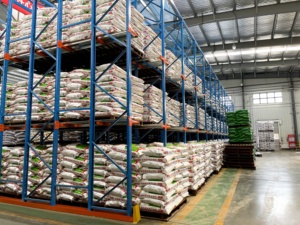
Heavy Duty Radio Shuttle Racking for Cold Storage | Semi-Automated High Density Pallet Runner System
- Cold storage rated down to -30°C
- Supports FIFO & LIFO pallet flow
- High-density deep lane design
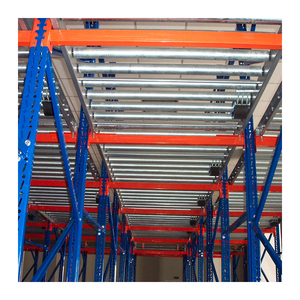
Pallet Flow Rack High Quality FIFO Warehouse Storage Racks Gravity Pallet Flow Racking System
- Gravity-driven roller track lanes
- Strict First-In, First-Out rotation
- Integrated dynamic speed controllers
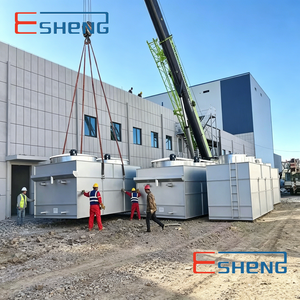
Intelligent AS/RS Automated Warehouse System for High Density Goods Storage Cold Storage
- Direct Stacker Crane Interfacing
- WMS/WCS Real-time synchronization
- Vertical clearance height up to 40 meters
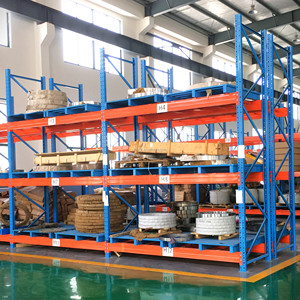
OEM Factory Wholesale Warehouse Racking Industrial Racks Customized Heavy Duty Steel Racks
- Custom beam profiles & beam connectors
- Q235B/Q355B high-tensile structural steel
- Modular step-beam & box-beam design
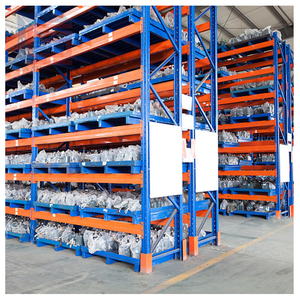
Wholesale China Industrial Pallet Storage Rack Steel Warehouse Racking Adjustable Shelving
- 75mm pitch beam adjustability
- Anti-corrosive powder coating finish
- 100% direct access to individual pallets
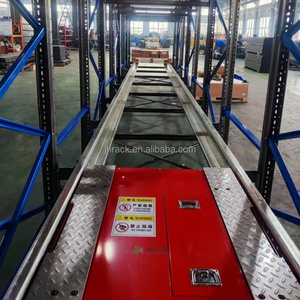
Automated Stackable Metal Shelves Racks & Shelving Units Warehouse ASRS Pallet Shuttle
- Hybrid shuttle + stacker crane architecture
- Multi-level intelligent transport
- High-speed pallet transfer cycles
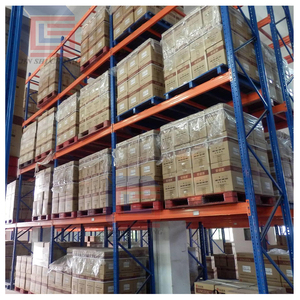
Industrial Heavy Duty Steel Pallet Rack Warehouse Shelving System For Factory & Logistics Hubs
- Heavy structural load ratings to 4,500kg/pair
- Seismic-resistant anchor footplate bracing
- Compliant with FEM 10.2.02 standards
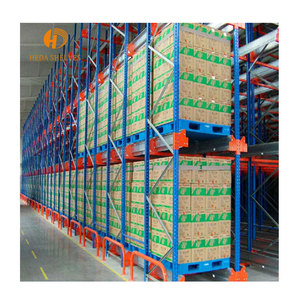
High Density Storage Rack Heavy Duty Drive In Pallet Racking System Design Double Deep Racks
- Maximizes cubic floor space utilization
- Eliminates operating aisles for bulk goods
- Heavy-duty upright frame protection guards
20,000+
SQM Manufacturing Base
30,000T
Annual Steel Processing
6,000+
Global Projects Completed
±2.0mm
Stacker Crane Precision Tolerance
Whitepaper & Structural Analysis
Engineering Principles of High-Bay Stack Crane Storage Racking
An authoritative technical breakdown of structural tolerances, material yield strengths, and system integration required for automated stacker crane storage facilities.
High-Bay Tolerance Standards & Structural Rigidity in Stack Crane Systems
In modern industrial logistics, selecting qualified **China wholesale stack crane storage racking manufacturers** requires a thorough understanding of static vs. dynamic structural engineering. Unlike conventional pallet racking operated by reach trucks or counterbalanced forklifts, Automated Storage and Retrieval Systems (AS/RS) utilizing stacker cranes demand microscopic structural tolerances across heights exceeding 15 to 40 meters.
When a stacker crane travels down a narrow aisle at speeds reaching 240 meters per minute and lifts unit loads up to 3,000 kg, any deflection in the rack structure can lead to sensor misalignment, mechanical binding, or catastrophic impact. High-bay rack manufacturing mandates compliance with international structural frameworks such as **FEM 10.2.02 (Design of Static Steel Pallet Racking for AS/RS)** and **EN 15635 (Application and Maintenance of Storage Equipment)**.
Key Engineering Metric: The cumulative vertical pitch error of upright holes in stack crane racking must not exceed ±2.0mm across a continuous 12-meter single-piece upright section. Top guide rail straightness must be maintained within 1:1000 deviation ratio to ensure continuous smooth traversal of the crane’s top-guide wheels.
At **ApexDrive Industrial Racking Co., Ltd.**, structural racking designs are engineered using advanced Finite Element Analysis (FEA) software. We simulate complex stress distributions, wind loads (for rack-supported warehouse structures), and seismic accelerations up to Magnitude 7.0. Our raw materials are sourced exclusively from top-tier state mills including Baosteel, Masteel, and Wuhan Iron and Steel, employing high-tensile **Q235B and Q355B structural grade steel** with verified mill test certificates.
Comparative Engineering Matrix: Racking System Classifications
To help supply chain directors and warehouse managers make informed procurement decisions, the following matrix compares structural parameters across standard racking types versus stack crane automated storage systems.
| System Architecture | Operated By | Storage Density | Height Range (m) | Deflection Limit | Procurement ROI Horizon |
|---|---|---|---|---|---|
| Selective Pallet Rack | Standard Forklift | Baseline (40-50%) | 3.0 - 11.0m | L/200 | 12 - 18 Months |
| Radio Shuttle System | Forklift + Pallet Runner | High (70-80%) | 4.0 - 15.0m | L/250 | 24 - 36 Months |
| Drive-In Racking | Forklift Driving In-Lane | High (65-75%) | 3.0 - 12.0m | L/200 | 18 - 24 Months |
| Automated AS/RS (Stack Crane) | Rail-Mounted Stacker Crane | Maximum (85-95%) | 12.0 - 40.0m | L/300 to L/400 | 36 - 48 Months |
Market Forecasting
Future Procurement & Development Trends in Stack Crane Racking (2025–2035)
Strategic foresight for global importers, logistics integrators, and industrial engineers planning next-generation automated distribution hubs.
1. Modular Ultra-Tall Rack-Supported Buildings
Global real estate costs are forcing logistics providers to build upward. Future procurement will shift heavily toward rack-supported building structures (clad-rack buildings), where the stack crane racking system itself serves as the structural frame supporting the warehouse roof and outer wall cladding, eliminating the need for independent civil building columns.
2. Deep Freeze & Dark Warehouse Automation
Driven by cold chain food distribution and pharmaceutical biosecurity, demand for automated stack crane storage operating in "dark warehouses" (unlit, unheated, fully automated environments) operating at -25°C to -30°C is expanding rapidly. Cold-resistant Q355B steel formulations and hot-dip galvanized surface finishes prevent hydrogen embrittlement and corrosion.
3. IoT Sensor Integration & Structural Health Monitoring
Next-generation stack crane racking will incorporate wireless strain gauges, optical deflection sensors, and vibration monitors embedded directly within high-stress beam-to-column connections. Real-time telemetry notifies maintenance teams of micro-deflections or seismic shifts before operational disruption occurs.
The Shift Toward Hybrid Stacker Crane & AMR Ecosystems
A key trend identified by supply chain strategists is the convergence of fixed rail stacker cranes with autonomous mobile robots (AMRs). While stacker cranes handle vertical high-bay storage (up to 40m), floor-level transport is handed off to AGV/AMR fleets. B2B procurement managers sourcing from China wholesale racking manufacturers must verify that supplier engineering teams provide custom end-of-aisle pick-and-deposit (P&D) stations engineered to withstand frequent robotic docked loads.
Manufacturing Rigor
Why Global Importers Partner with ApexDrive Industrial Racking Co., Ltd.
Established in September 2006 in Nanjing, China, ApexDrive provides full-cycle engineering from CAD layout design to global container shipping and installation oversight.
State-of-the-Art Production Facility
Our 20,000 m² factory houses over 150 sets of specialized equipment, including German-engineered roll-forming lines, automated robotic welding manipulators, and continuous CNC punch presses capable of achieving precision tolerances across 12-meter continuous upright profiles.
Swiss Gema 220-Meter Powder Line
Corrosion resistance determines rack lifespan. All structural members undergo a rigorous 10-stage degreasing and rust removal pre-treatment before receiving thermosetting powder coating via automated Swiss Gema sprayers, cured at 180°C for exceptional adhesion and scratch resistance.
Trial Pre-Assembly Quality Control
To ensure 100% error-free installation on overseas job sites, complex projects undergo physical trial assembly in our factory prior to container packing. Upright frames, beam connector locks, guide rails, and safety accessories are measured and stress-verified before clearance.
Ready to Optimize Your High-Bay Automated Warehouse Layout?
Get a complimentary CAD design layout, structural load calculation report, and direct factory-wholesale pricing from our senior storage engineering team within 24 hours.
Inquire Now
Global Procurement FAQ
Frequently Asked Questions for Sourcing Stack Crane & Storage Racking
Clear, engineering-backed answers addressing structural design, international standards, shipping packaging, and overseas installation guidance.
What technical parameters are required to design a custom stack crane AS/RS layout?
To generate an accurate layout and structural quotation, our engineering team requires:
1. Building architectural CAD drawings detailing clear building height, column spacing, floor slab thickness, floor load-bearing capacity, and obstacle locations (sprinklers, light fixtures, main doors).
2. Unit load data: Pallet dimensions (W x D x H including goods overhang), gross weight per pallet, and special packaging properties.
3. Operating requirements: Total required pallet storage capacity, hourly throughput requirements (inbound/outbound cycles per hour), stacker crane speed specifications, and ambient working temperatures (e.g., room temperature vs. cold storage).
1. Building architectural CAD drawings detailing clear building height, column spacing, floor slab thickness, floor load-bearing capacity, and obstacle locations (sprinklers, light fixtures, main doors).
2. Unit load data: Pallet dimensions (W x D x H including goods overhang), gross weight per pallet, and special packaging properties.
3. Operating requirements: Total required pallet storage capacity, hourly throughput requirements (inbound/outbound cycles per hour), stacker crane speed specifications, and ambient working temperatures (e.g., room temperature vs. cold storage).
What steel grades and certification standards apply to ApexDrive racking systems?
ApexDrive manufactures primary load-bearing racking components using structural carbon steel grades Q235B and Q355B (equivalent to ASTM A36 and ASTM A572 Grade 50) sourced directly from Baosteel and Masteel. Our quality management system is certified to ISO 9001:2015, and our structural racking designs comply with European EN standards (EN 15512, EN 15620, EN 15635) and FEM 10.2.02 guidelines for automated high-bay racking systems. CE conformity certificates are provided with export documentation.
How do you ensure zero damage to finished racking during ocean container transport?
Export shipments are packed using heavy-duty industrial bundling protocols. Uprights and beam profiles are grouped with heavy-gauge steel strapping over protective corrugated corner guards and wrapped in stretch film to prevent moisture exposure. Small hardware accessories, top guide rails, footplates, and beam safety locking pins are sorted, bagged, and crated in fumigation-free solid plywood boxes labeled with clear packing list indices for efficient site sorting.
Does ApexDrive support on-site installation guidance outside of China?
Yes. Every project includes comprehensive English installation manuals, step-by-step assembly drawings, and structural anchor bolt positioning layouts. For complex semi-automated or fully automated AS/RS stacker crane installations, we offer two support modes: remote real-time technical video guidance led by senior project engineers, or on-site dispatch of experienced installation supervisors to manage local installation crews until final commissioning and load testing.
Which storage racking system yields the highest ROI for cold storage facilities?
For cold storage environments where operating energy costs per cubic meter are extremely high, Radio Shuttle Racking Systems and automated AS/RS Stacker Crane Systems yield the highest Return on Investment (ROI). They eliminate traditional forklift aisle space, boosting storage density up to 85-90% of total warehouse volume. Radio shuttle systems allow high-density FIFO/LIFO batch storage with semi-automation, while AS/RS eliminates human labor entirely inside freezing rooms, significantly lowering ongoing operating overhead.
Partner with a Leading China Wholesale Stack Crane Racking Manufacturer
Contact ApexDrive Industrial Racking Co., Ltd. today to discuss your project requirements, request mill certificates, or speak directly with an AS/RS storage automation specialist.
Inquire Now