ApexDriveRACKING
Heavy-Duty Hardware
Featured OEM Storage Racking Systems
Precision-manufactured utilizing mill-certified Q235B and Q355B structural steel. Every unit is engineered for optimal volumetric load utilization, seismic resilience, and full integration with material handling equipment.
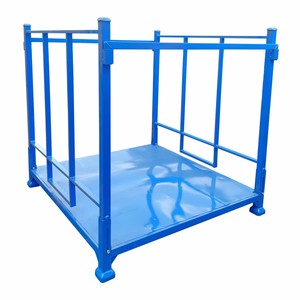
Portable Stacking Racks with Steel Pallet Base & Removable Posts
Engineered for cold chain logistics and modular staging, providing dynamic block-stacking versatility without static aisle restrictions.
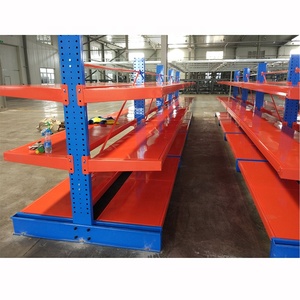
Industrial Custom Cantilever Racking for Heavy Steel Stock & Pipes
Unobstructed linear access for extra-long loads, profiles, and bar stock. Custom-designed column heights and load-rated cantilever arms.
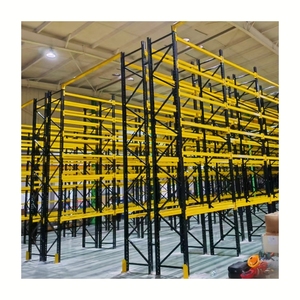
Customized High Density Pallet Racking Heavy Duty Warehouse Shelving
Optimized beam profiles and upright geometry designed to maximize vertical footprint utilization in high-turnover fulfillment hubs.
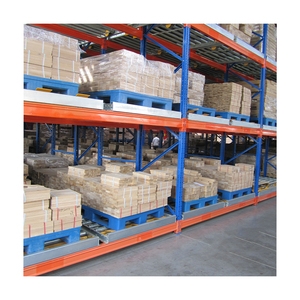
Steel Pallet Rack System Heavy Duty Selective Storage Shelf
100% immediate pallet accessibility for mixed SKU inventories. Fully adjustable beam pitches with positive locking safety pins.
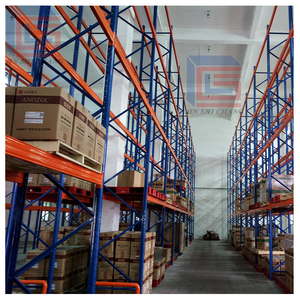
Heavy Duty Selective Pallet Rack System for Industrial Logistics
Robust structural framework certified for multi-tier loads, designed to interface seamlessly with reach trucks and automated lifters.
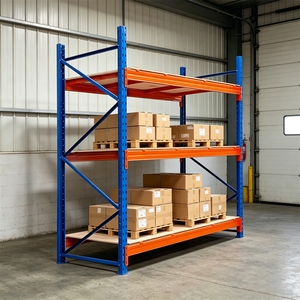
Powder Coated Heavy Duty Rack Industrial Adjustable Shelves
Electrostatic powder finish cured at 180°C for exceptional impact and wear resistance across ambient and humidity-controlled facilities.
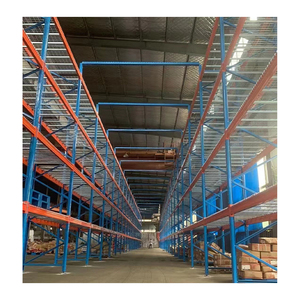
Versatile Storage System Heavy Duty Warehouse Pallet Racking
Configurable frame depths and column gauges tailored to specific unit loads, pallet dimensions, and operational throughput metrics.
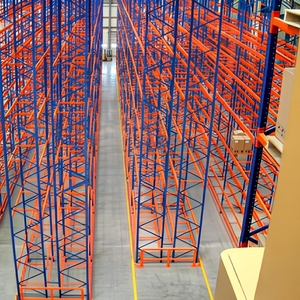
Steel Adjustable Narrow Aisle (VNA) Pallet Racking with Guide Rails
Space-saving VNA layout maximizing floor ratio by narrowing aisle widths to 1.5–1.8m, complete with heavy-duty floor-mounted guide rails.
E-E-A-T Manufacturing Excellence
Why OEM Buyers Trust ApexDrive Racking Engineering
From raw coil sourcing to automated roll forming and robot-welded beam assemblies, our manufacturing chain enforces absolute structural integrity and full batch traceability.
Mill-Certified Steel Grades
We exclusively utilize prime Q235B and Q355B structural cold-rolled steel supplied by tier-one state steelmakers (Baosteel, Masteel, and WISCO). Physical load dynamics and chemical yield points are documented per heat batch.
Precision German Roll-Forming
High-precision cold roll forming lines produce continuous upright profiles up to 12 meters in length with cumulative hole-pitch tolerances controlled within strictly ±2mm, eliminating structural twist and bolt misalignment.
Robotic Welding Manipulators
Automated robotic arm stations execute full-penetration seam welding on beam connectors and baseplates. Eliminating human variance guarantees high fatigue resistance and load compliance under dynamic stresses.
220m Swiss Gema Coating Line
Components undergo automated 10-stage immersion degreasing, surface phosphating, electrostatic powder application via Swiss Gema systems, and 180°C thermal curing for superior anti-corrosion protection.
Market Intelligence
Strategic Procurement Trends for Industrial Racking (2025–2030)
Global supply chains are undergoing paradigm shifts driven by land cost escalation, automated intralogistics adoption, and stringent structural safety regulations.
1. Modular Automation & Shuttle Synergy
Procurement directors are shifting away from static traditional selective racking toward high-density automated infrastructure. Pallet Radio Shuttle systems and automated 4-way cart networks allow warehouses to transition smoothly from semi-automated operating modes into fully automated AS/RS ecosystems with minimal structural retrofitting.
2. Cold Chain Volumetric Density Optimization
With energy expenditures taking up over 60% of cold storage operational costs, buyers are prioritizing ultra-high volumetric density solutions. High-bay AS/RS and deep-lane shuttle racks minimize cubic air space requiring refrigeration, directly reducing power consumption per pallet position by up to 40%.
3. Nearshoring & Custom OEM Standard Compliance
Multinational procurement buyers require overseas OEM partners capable of producing structural racking compliant simultaneously with US RMI (Rack Manufacturers Institute), European FEM 10.2.02, EN 15512, and Australian AS4084-2012 standards to standardize global facility engineering.
R&D Roadmap
Engineering & Technology Developments in Automated Racking
Modern rack structures are no longer passive steel frameworks; they are integral structural elements engineered for continuous robotic interaction and real-time operational telemetry.
The Evolution of Structural Racking Technology
As automated guided vehicles (AGVs), Autonomous Mobile Robots (AMRs), and stacker cranes push warehouse throughput speeds higher, racking structures must handle dynamic impact, vibration resonance, and tight mechanical tolerances. Finite Element Analysis (FEA) computer modeling now allows engineers to optimize profile wall thicknesses and hole patterns—maximizing strength-to-weight ratios while verifying seismic performance under Grade-7 earthquake simulations.
Furthermore, integrated sensor networks (Structural Health Monitoring) are beginning to enter automated high-bay racking systems. Fiber-optic deflection sensors and strain gauges detect accidental forklift impacts or overload conditions in real-time, feeding safety diagnostic telemetry directly into the enterprise Warehouse Management System (WMS).
Technical Matrix: Automated vs. Conventional Storage Systems
| Racking Architecture Type | Volumetric Space Utilization | Access & Throughput Mode | Forklift / Robot Dependency | Seismic & Load Factor | Ideal Industry Application |
|---|---|---|---|---|---|
| AS/RS Stacker Crane Racking | 90% – 95% | 100% Automated (WMS Driven) | Automatic Stacker Cranes & Conveyors | Enhanced High-Bay FEA Frame | Pharmaceuticals, E-Commerce, Automotive Parts |
| Radio Shuttle Racking | 80% – 88% | FIFO or LIFO Deep-Lane | Forklift + Battery Electric Shuttle Cart | Heavy-Duty Beam & Rail Support | Cold Storage, Food & Beverage, Bulk Goods |
| Very Narrow Aisle (VNA) Racking | 65% – 75% | 100% Direct Selective Access | Specialized Turret Trucks / Wire-Guided | Rigid Baseplates & Structural Rails | 3PL Warehouses, Distribution Centers |
| Drive-In Racking | 70% – 78% | LIFO High-Density Batching | Standard Counterbalance Forklift | Top & Back Bracing Frames Required | Seasonal Storage, Homogenous Batching |
| Selective Pallet Racking | 40% – 50% | 100% Direct Selective Access | Universal Reach & Counterbalance Trucks | Standard Upright Frame & Locking Beams | General Logistics, Retail Fulfillment |
Procurement Guidance
Frequently Asked Questions for OEM Racking Buyers
Essential technical and commercial clarity provided by our senior racking design engineers to facilitate smooth procurement decisions.
What exact data is required to generate a customized warehouse racking CAD layout?
To provide an accurate engineering layout and structural calculation report, we require:
- Building architectural drawing (CAD format) indicating column grids, clear ceiling height, doors, sprinklers, and floor levelness (FF/FL values).
- Pallet unit load details: exact length, width, height (including load), and maximum gross weight per pallet.
- Number of SKUs and total storage pallet positions targeted.
- Material handling equipment specs: forklift model, aisle turning radius, and maximum lifting height.
- Operating ambient environment (Ambient, Cold Room, Sub-Zero, or Outdoor).
How do you ensure structural compliance with international safety standards?
Our racking designs undergo structural testing and finite element analysis (FEA) compliant with international engineering specifications. We manufacture in strict adherence to ISO 9001:2015 quality management procedures, European EN 15512 / FEM 10.2.02 racking standards, and US RMI guidelines. CE compliance certificates and mill test reports for Q235B/Q355B steel are provided with every export project.
What surface treatment is recommended for sub-zero cold storage facilities?
For cold storage operating between -5°C and -30°C with high humidity levels, we recommend either hot-dip galvanizing (HDG) per ISO 1461 (providing a zinc layer exceeding 65–80 μm) or specialized low-temperature resistant electrostatic powder coatings. Hot-dip galvanizing ensures permanent protection against condensation rust and micro-cracking caused by freezing cycles.
How are heavy structural racking components packed to prevent damage during ocean freight?
Uprights and beams are bound into dense heavy bundles using multi-tier high-tensile steel strapping and wrapped with protective corner guards and plastic film. Small components, baseplates, spacers, and safety lock pins are packed in heavy-duty corrugated cartons secured onto ISPM-15 compliant heat-treated plywood pallets. This container-optimized packaging guarantees safe arrival and efficient forklift unloading on site.
Do you provide overseas installation support and engineering supervision?
Yes. Every project includes comprehensive 3D assembly installation manuals, column anchor layouts, and detailed elevation drawings. For large-scale automated or mezzanine projects, ApexDrive dispatches experienced installation supervision engineers to oversee local crews, execute strict quality checks, and ensure structural verticality tolerances are maintained.
Optimize Your Storage Density & Warehouse Throughput Today
Partner directly with an established Chinese OEM automated storage racking manufacturer. Send us your floor plan or engineering RFQ for a fast, zero-cost CAD proposal and structural load assessment.