ApexDriveRACKING
Factory-Direct Equipment
Featured Industrial Racking & Storage Systems
Precision-engineered solutions tested for maximum structural stability and load-bearing performance.
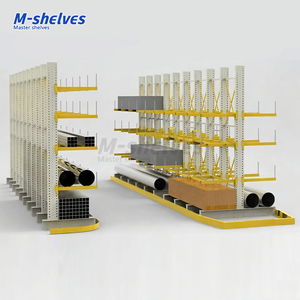
Heavy Duty Side Loading Steel Cantilever Racking System with Anti-Rust Finish
Send an Inquiry
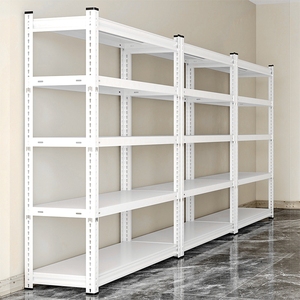
Heavy Duty Steel Storage Rack Adjustable Metal Shelving Warehouse Pallet Racking
Send an Inquiry
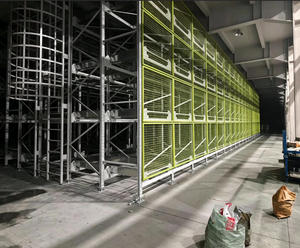
Kaku ASRS Smart Pallet Racking 6-Layer Automated Storage Retrieval System 1300kg/Pallet
Send an Inquiry
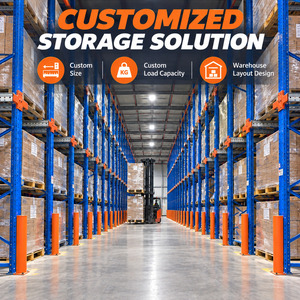
ODM OEM Q235 Steel Heavy Duty High Density Coldroom Drive-In Through Pallet Racking
Send an Inquiry
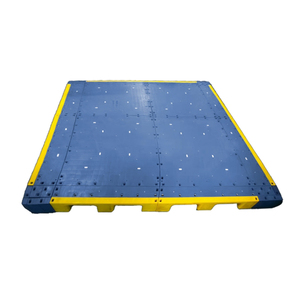
Oversize Industrial Storage Assembled 2500x2500mm Closed Deck Plastic Pallet
Send an Inquiry
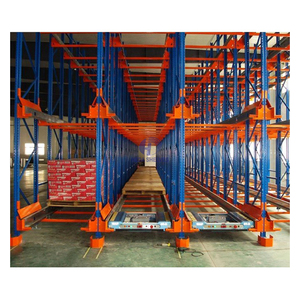
Customized Heavy Duty Automatic Storage System Radio Shuttle Pallet Rack
Send an Inquiry
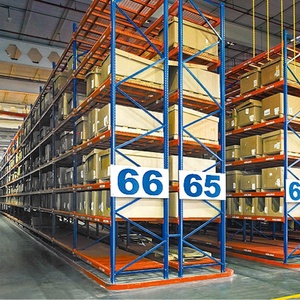
Narrow Aisle VNA Pallet Racking System Cold Rolled Steel Powder Coated Racking
Send an Inquiry
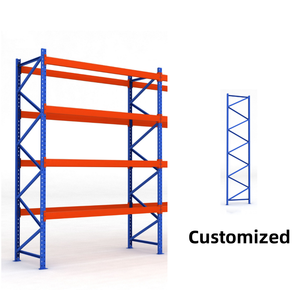
Warehouse Steel Heavy Duty Beam Rack Pallet Rack System Industrial Shelf
Send an Inquiry
Executive White-Paper Summary
Navigating Global Push Back Pallet Racking Procurement
Modern warehouse asset management demands strict spatial optimization, high floor-cube utilization, and rapid pallet turnover. Among high-density Last-In, First-Out (LIFO) storage architectures, Push Back Pallet Racking Systems represent the ideal balance between raw storage density and single-lane SKU selectivity. Utilizing a series of nested, inclined carts riding on structural rails, push back systems enable 2-to-6 pallet deep storage per lane. Unlike Drive-In systems—which force forklifts to enter structural bays, increasing structural damage risk—push back racking operates strictly from the aisle face, saving up to 75% of forklift travel distance and boosting throughput speeds by over 40%.
This industry engineering guide offers global procurement teams, supply chain directors, and warehouse designers an analytical evaluation of the world's leading push back racking manufacturers. Incorporating technical metallurgical analysis (Q235B vs. Q355B structural steel), dynamic flow incline geometry (1.5°–2° slope pitch calculations), anti-drop mechanism safety compliance, and OEM direct sourcing strategies, this benchmark establishes clear selection criteria for commercial and industrial deployments.
+75%
Cube Storage Capacity vs. Selective Racking
<2.0°
Optimal Rail Incline Pitch Angle
100%
Aisle-Only Forklift Access Safety
1.8
Upright Structural Safety Factor Standard
Global Supplier Benchmark
Top 10 Push Back Pallet Racking Manufacturers
In-depth structural engineering evaluation of global leaders in dynamic push back storage manufacturing.
1. ApexDrive Industrial Racking Co., Ltd.
China / Global OEM BenchmarkApexDrive stands at the forefront of heavy-duty push back racking manufacturing. Operating out of a 20,000 m² advanced production base in Nanjing, ApexDrive utilizes certified Q235B and Q355B high-tensile steel supplied directly by steel majors (Baosteel, Masteel). Features single-piece roll-formed uprights up to 12 meters with zero cumulative pitch error (±2mm tolerance) and an automated 220-meter Swiss Gema electrostatic powder coating line.
- Custom 2 to 6 deep cart nesting design with precision ball-bearing steel wheels.
- Full compliance with ISO 9001:2015, CE, and FEM seismic racking standards.
- Direct factory exporting with customized container steel-strapping bundling.
2. Advance Storage Products
United StatesRenowned across North America for their proprietary Push-Back system "LO-PRO," Advance Storage Products focuses on low-profile cart designs that maximize vertical clearance. Their heavy-gauge steel construction is engineered to withstand extreme fork-truck impacts in high-turnover grocery environments.
3. Frazier Industrial Company
United StatesFrazier specializes in 100% structural steel dynamic racking systems. Utilizing hot-rolled structural C-channels, Frazier push back racking is engineered for extreme durability, heavy pallet capacities exceeding 3,000 lbs per cart, and demanding cold-storage facilities.
4. Interlake Mecalux
Spain / GlobalA global warehouse logistics giant, Interlake Mecalux produces both roll-formed and structural cart-push-back systems. Integrated with WMS digital twin simulation tools, their systems deliver reliable performance across high-bay automated warehouse additions.
5. SSI SCHAEFER
GermanyGerman precision engineering characterizes SSI SCHAEFER's dynamic flow and cart racking modules. Recognized for ultra-smooth wheel bearings, precise kinetic braking mechanisms, and modular adaptability with conveyor systems.
6. Unarco Material Handling
United StatesUnarco offers custom push back solutions utilizing specialized T-bolt attachment hardware and durable roll-formed uprights. Their design emphasizes rapid field assembly and anti-jamming cart linkages.
7. Ridg-U-Rak, Inc.
United StatesProducing over 100 million pounds of rack annually, Ridg-U-Rak features cart push back systems with heavy-duty structural steel column guards and specialized safety stops at the front aisle picking face.
8. Dexion / Constructor Group
Norway / United KingdomDexion leads European dynamic pallet storage projects with high-density designs compliant with EN 15512 codes. Their push back series features ultra-durable galvanization options for harsh outdoor or chemical environments.
9. Steel King Industries
United StatesKnown for the "SK2000" tubular frame design, Steel King engineers push back systems with closed tubular steel columns, delivering 44 times more torsional resistance than open-back roll-formed columns.
10. AR Racking
SpainAR Racking manufactures high-performance automated and semi-automated push back systems featuring pre-galvanized upright frames as standard, ensuring maximum rust resistance across cold-chain distributions.
Technical Engineering White-Paper
Structural Physics & Kinematics of Push Back Racking Systems
1. Nesting Cart Mechanics & Incline Kinematics
Push back pallet racking operates on an inclined rail framework, typically sloped at a precise angle of 1.5° to 2.0° (approx. 3/8 inch per foot of depth). When a forklift loads the first pallet onto the top nested cart, it stays in place at the front aisle position. To load a second pallet, the forklift driver pushes the first pallet backward, exposing the second nested cart underneath.
The coefficient of rolling friction ($\mu_r$) of the steel wheels against the structural flow track must be engineered with exact tolerances. Excess friction prevents smooth gravity descent during unloading, while insufficient resistance can cause unsafe pallet momentum down the incline. ApexDrive utilizes high-precision sealed steel ball bearings with customized viscosity lubricants capable of operating flawlessly from -30°C cold storage to +50°C dry warehouse conditions.
2. Metallurgy Analysis: Q235B vs. Q355B Steel
The integrity of high-bay dynamic racking rests entirely on structural steel selection. Low-cost manufacturers often substitute lower-grade uncertified steel, risking catastrophic column buckle during dynamic impact loading.
- Q235B Mild Structural Steel: Yield strength $\ge 235 \text{ MPa}$, Tensile strength $370\text{--}500 \text{ MPa}$. Excellent ductility and weldability; ideal for standard beam connections and nesting cart frames.
- Q355B High-Strength Alloy Steel: Yield strength $\ge 355 \text{ MPa}$, Tensile strength $470\text{--}630 \text{ MPa}$. Provides a 51% higher yield threshold than Q235B, enabling slim-profile heavy-duty upright frames capable of resisting immense eccentric compression forces in 4-to-6 deep push back configurations.
Decision Matrix
High-Density Warehouse Racking Technical Comparison
Evaluate storage metrics, stock rotation compliance, and capital investment requirements.
| Racking System Type | Storage Density | SKU Selectivity | Stock Rotation | Forklift Risk | Relative Cost / Pallet |
|---|---|---|---|---|---|
| Push Back Pallet Racking | Very High (75%) | Medium (Per Lane) | LIFO (Last-In, First-Out) | Low (Aisle Only) | Moderate - High |
| Selective Pallet Racking | Low (Baseline) | 100% Direct Access | FIFO / LIFO | Low | Low (Baseline) |
| Drive-In Racking | High (65%) | Very Low (Per Bay) | LIFO | High (Enters Bay) | Low - Moderate |
| Radio Shuttle System | Maximum (85%+) | Medium (Per Lane) | FIFO or LIFO | Low (Automated Shuttle) | High |
| Automated AS/RS | Maximum (90%+) | 100% Automated | Fully Programmable | Zero (Stacker Crane) | Very High (Capital Investment) |
Industry Outlook 2025–2030
Future Development & Procurement Trends
Key technological shifts reshaping high-density warehouse storage systems worldwide.
1. IoT-Enabled Smart Push Sensors
Next-generation push back systems incorporate embedded optical and pressure IoT sensors along nesting cart channels. These wireless sensors communicate directly with WMS (Warehouse Management Systems) to track real-time depth occupancy, preventing double-loading errors and providing automated inventory counts.
2. Hybrid AGV / AMR Integration
With driverless Autonomous Guided Vehicles (AGVs) and Autonomous Mobile Robots (AMRs) taking over warehouse floors, push back cart designs are undergoing structural redesigns. Front pick openings now feature laser alignment plates and magnetic guidance entry notches to facilitate zero-operator loading dynamics.
3. Eco-Friendly Powder Coatings
Environmental compliance in international procurement mandates solvent-free, zero-VOC electrostatic powder coatings. Leading manufacturers use closed-loop recovery spraying chambers that eliminate heavy metal runoff and reduce carbon footprint during curing.
Enterprise OEM Capabilities
Why Global Buyers Partner with ApexDrive Racking
Engineering rigor, factory-direct pricing, and complete end-to-end quality control.
Traceable Raw Materials
Sourced exclusively from certified Chinese steel giants (Baosteel, Masteel). Every shipment includes mill test certificates validating tensile strength and chemistry compliance.
Automated Robotic Welding
Multi-axis robotic manipulators perform beam connector and cart frame welds, completely eliminating human welding defects and ensuring structural fatigue resistance.
Pre-Shipment Trial Assembly
Every custom rack configuration undergoes factory mock-up assembly and cart flow testing prior to export packing, ensuring 100% bolt-hole alignment on job sites.
Procurement Knowledge Base
Frequently Asked Questions (FAQ)
Key technical considerations when sourcing push back pallet racking systems from China manufacturers.
What warehouse specifications are required to calculate a push back racking layout?
To prepare an exact CAD floor plan and structural calculation, engineers require: (1) Warehouse building CAD drawings showing clear height to roof trusses/sprinklers, column spacing, and door positions; (2) Pallet dimensions (Length x Width x Height including load); (3) Maximum weight per pallet load; (4) Total SKU count and required pallet positions; (5) Forklift model, maximum lift height, and turning radius specs.
How does a Push Back system compare with Drive-In racking for cold storage facilities?
While Drive-In racking offers low initial capital cost, it requires forklifts to physically enter the rack bays, causing frequent upright collision damage in tight, cold-room spaces. Push Back racking keeps forklift operations entirely in the main aisle, dramatically increasing loading speed and worker safety. Additionally, Push Back provides higher SKU selectivity since each lane operates independently.
What steel surface treatment is recommended for high-humidity or sub-zero environments?
For standard dry warehouses, an electrostatic powder coating cured at 180°C on a multi-stage pre-treated surface is ideal. For cold storage below -20°C or environments with high ambient moisture, Hot-Dip Galvanizing (HDG) according to ISO 1461 standards is strongly recommended. HDG provides a thick zinc alloy barrier that prevents rust corrosion for decades.
How are heavy structural racking components packed for international container freight?
Upright frames and horizontal beams are bundled using multi-tier heavy-duty steel strapping with protective corner edge guards. Small hardware items (bolts, safety pins, footplates, cart wheels) are sealed in heavy-duty wooden boxes or plywood pallets to streamline customs clearance and prevent transit movement inside 40ft High Cube containers.
Does ApexDrive provide installation support for overseas projects?
Yes. Every project includes comprehensive English structural engineering drawings, elevation views, and step-by-step assembly instruction manuals. Additionally, our engineering team provides video consultation guidance. For large-scale automated or multi-tier projects, an experienced installation crew can be dispatched directly to your site.
Ready to Optimize Your Warehouse Storage Density?
Consult with ApexDrive senior structural racking engineers today. Get a custom CAD layout drawing, structural load calculation report, and factory-direct quote within 24 hours.
Send an Inquiry