ApexDriveRACKING
Direct Factory Selection
Featured Industrial Heavy-Duty Storage Systems
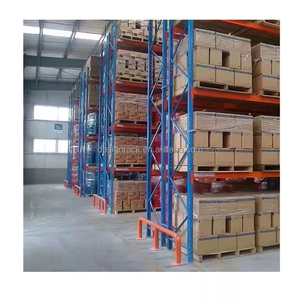
Factory Warehouse Storage Rack 800KG Boltless Rack Heavy Duty Teardrop Pallet Racking
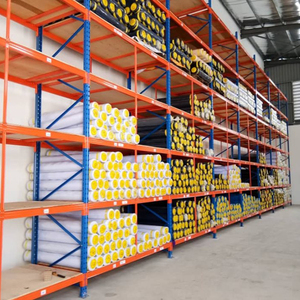
Factory Heavy Duty Textile 2000KG-3000KG Galvanized Heavy Pallet Racking System
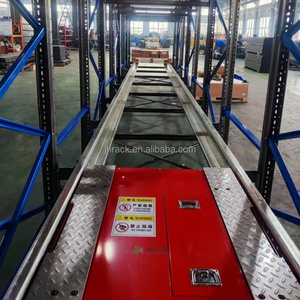
Automated Stackable Metal Shelves Storage Racks Warehouse ASRS Pallet Shuttle Racking
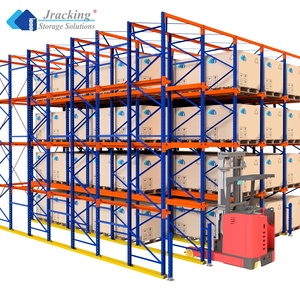
Heavy Duty Industrial Steel EU Blue & Orange Selective Pallet Racking CE Certified
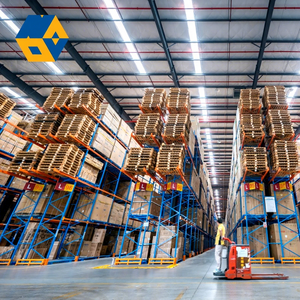
Heavy Duty 2000KG Per Layer Large Capacity Beam Stacking Pallet Rack Shelving Unit
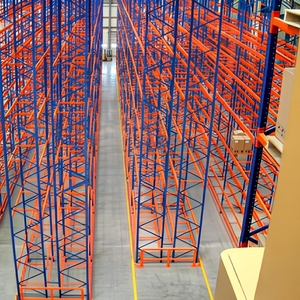
Steel Adjustable Narrow Aisle Pallet Racking System for High-Density Storage
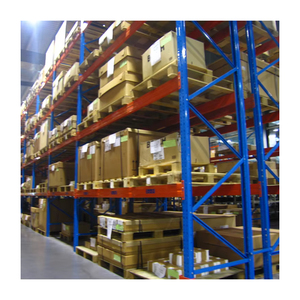
Heavy Duty Steel Warehouse Rack Industrial Pallet Storage Metal Boltless Shelving
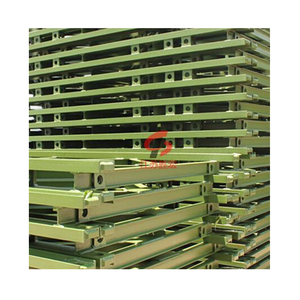
Steel Pallet Storage Rack Base Frame Structural Support for Heavy Warehouse Handling
Technical Engineering Whitepaper
Architectural Mechanics & Engineering Dynamics of Double Deep Pallet Racking
Double Deep Pallet Racking (DDPR) stands at the strategic nexus of high-density warehouse storage and cost-efficient material handling. By storing pallets two-deep in a back-to-back rack configuration, this specialized structural layout eliminates 50% of the access aisles required in conventional selective racking systems. For modern logistics hubs, 3PL distribution centers, FMCG warehousing, and cold-chain infrastructure, sourcing double deep racking systems from an established China supplier provides an optimal balance between floor area utilization and capital expenditure.
Technically defined, a double deep racking structure stores two loads deep from a single aisle, or four loads deep in a double-entry aisle structure. Operational execution requires specialized handling equipment—most commonly a pantograph reach truck or a deep-reach forklift fitted with telescopic fork extenders. By compressing warehouse footprint requirements while retaining 50% immediate pallet selectivity, double deep systems consistently boost cubic storage density by 30% to 40% compared to standard single-deep selective configurations.
Information Gain Insight: The mechanical viability of a Double Deep installation relies heavily on structural load distribution. Because inner-position pallets require extended reach, beam deflection limits (L/300 under EN 15512 standards) and upright column stability must be calculated with heightened structural safety margins (typically a minimum factor of 1.8) to counteract eccentric torsional forces applied during deep-lane positioning.
30%–40% Density Surge
Eliminates every second aisle, converting dead floor passage area directly into revenue-generating high-bay storage positions.
High-Grade Carbon Steel
Cold-rolled structural Q235B and high-yield Q355B steel milled by Baosteel and Masteel ensure superior frame integrity under heavy dynamic load.
LIFO Batch Optimization
Ideal for identical SKU volume storage, batch-manufactured goods, and inventory managed under Last-In, First-Out operational logic.
Comprehensive Storage Density & Selectivity Matrix
When evaluating structural procurement choices, warehouse logistics directors must weigh volumetric storage capacity against pallet accessibility. The data matrix below highlights how Double Deep Pallet Racking compares directly against alternative industrial warehouse storage racking systems manufactured in China:
| Racking System Variant | Volumetric Storage Density | Pallet Selectivity Ratio | Handling Equipment Requirement | Floor Space Utilization | CapEx investment level |
|---|---|---|---|---|---|
| Double Deep Pallet Racking | High (60–65%) | 50% Direct Access | Double-Reach / Pantograph Truck | 65% Floor Coverage | Moderate |
| Standard Selective Racking | Medium (40–45%) | 100% Direct Access | Standard Counterbalance / Reach | 40% Floor Coverage | Low-Moderate |
| Radio Shuttle Racking | Very High (75–85%) | LIFO / FIFO by Lane | Standard Forklift + Radio Shuttle | 80% Floor Coverage | High |
| Very Narrow Aisle (VNA) | High (65–70%) | 100% Direct Access | VNA Turret Truck + Guide Rail | 55% Floor Coverage | Moderate-High |
| Automated AS/RS High-Bay | Maximum (85–95%) | 100% Automated Access | Stacker Crane + WMS Software | 90% Floor Coverage | Capital Intensive |
Future Procurement & Technological Evolution Trends (2025–2030)
The global warehousing equipment landscape is undergoing a massive shift towards structural automation integration, sustainability compliance, and real-time load telemetry. Sourcing Double Deep Pallet Racking from top-tier Chinese engineering manufacturers involves recognizing key structural innovations that redefine long-term facility ROI:
1. AGV/AMR Pantograph Integration
Traditional double-deep operations relied exclusively on human-operated reach trucks. The modern trend integrates automated guided vehicles (AGVs) and autonomous mobile robots (AMRs) fitted with precision optical sensors and hydraulic double-extendable forks. Chinese manufacturing engineers now pre-drill and reinforce bottom guide channels to support millimeter-accurate robotic navigation.
2. Low-Carbon Green Steel Sourcing (CBAM Readiness)
With environmental regulations like the European Union's Carbon Border Adjustment Mechanism (CBAM) taking effect, tier-1 Chinese racking suppliers are shifting to certified low-carbon steel processing. Utilizing electric arc furnace (EAF) steel alongside energy-efficient electrostatic powder coating lines ensures compliance with international ESG targets.
3. IoT Structural Health Monitoring
Next-generation double deep racking frames are increasingly fitted with strain gauges and vibration sensors on bottom upright posts. These smart sensors transmit real-time telemetry regarding structural impacts, beam sagging, or seismic shifts to facility WMS dashboards, transforming reactive maintenance into predictive safety protocols.
Manufacturing Excellence
Why Partner with ApexDrive Industrial Racking Co., Ltd.
Established in September 2006 in Nanjing, China, ApexDrive Industrial Racking Co., Ltd. operates a premier 20,000 m² state-of-the-art manufacturing plant dedicated to structural rack engineering. Armed with over 150 sets of advanced metal-forming equipment and an annual production capacity exceeding 30,000 tons, ApexDrive serves global logistics, pharmaceutical, cold chain, and automotive leaders including Nike, BMW, SAIC Volkswagen, and FAW Group.
100% Traceable Steel Coils
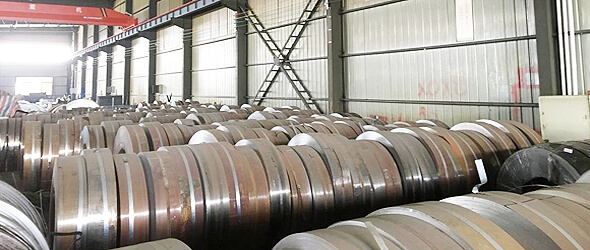
Direct procurement of high-tensile Q235B and Q355B structural steel from steel giants Baosteel, Masteel, and Wuhan Steel with full chemical mill test certificates.
±2 mm Tolerance Precision
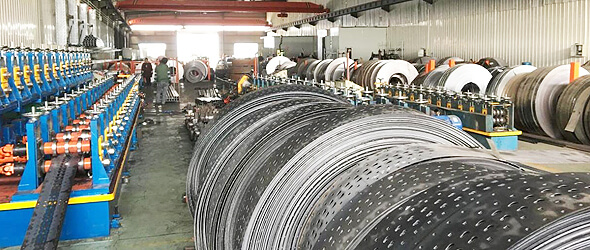
German-engineered continuous roll-forming lines produce seamless upright posts up to 12 meters in height with cumulative hole-pitch accuracy within ±2 mm.
Robotic Manipulator Welding
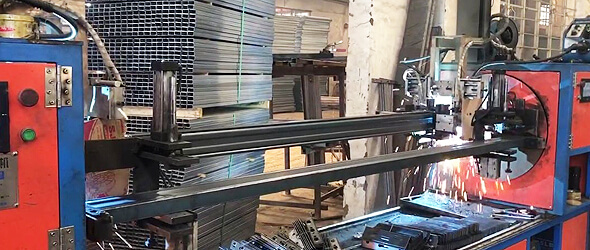
Full-penetration robotic seam welding on all beam connector hooks eliminates weld porosity and guarantees structural moment-resistance against severe dynamic load.
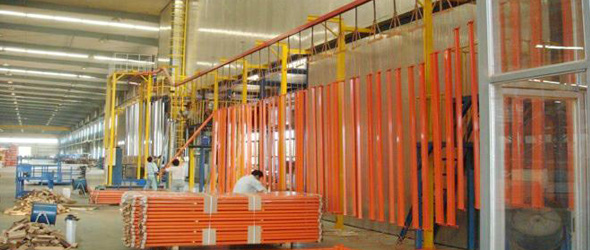
220m Swiss Gema Coating Line
10-stage automated surface pretreatments (degreasing, rust removal, phosphating) coupled with Swiss Gema electrostatic powder spraying cured at 180°C.
Procurement Guide
Frequently Asked Questions by International Buyers
Navigating structural specification, freight packaging, and international compliance is essential when choosing China racking suppliers. Here are expert answers to critical questions:
What warehouse design data is required to generate a CAD layout for Double Deep Racking?
To engineer an accurate double deep layout, our design team requires: (1) Architectural CAD floor plans showing ceiling clear heights, column grids, fire sprinkler drops, and door locations; (2) Exact pallet dimensions (Width x Depth x Height inclusive of cargo overhang); (3) Maximum weight per unit load; (4) Specifications of your double-reach or pantograph forklift (lift height, turning radius, and collapsed mast height); and (5) Ambient operating temperature requirements.
How does a double deep racking system handle load capacity reductions at the back position?
Because a pantograph reach truck experiences center-of-gravity forward displacement when extending into the secondary pallet position, the truck's lifting capacity drops by approximately 20% to 30% at max extension. To ensure safety, our engineering team factors in structural beam stiffness, top-tie bracing, and custom pallet support bars (heavy-duty cross beams) to safely distribute loads across both positions.
What international structural engineering standards do ApexDrive racking systems comply with?
All steel storage racking manufactured by ApexDrive strictly adheres to international structural safety standards, including Europe’s FEM 10.2.02 and EN 15512 specifications, America’s RMI (Rack Manufacturers Institute) / ANSI MH16.1 standards, and ISO 9001:2015 Quality Management Systems. Products carry verified CE marks for worldwide deployment.
What export packaging measures prevent transit corrosion and shipping damage?
Upright frames and horizontal beams are bundled using multi-tier heavy-duty steel strapping wrapped in protective polyethylene stretch film with reinforced corner guards. Small components (baseplates, safety pins, row spacers, and 8.8-grade structural bolts) are packaged in reinforced corrugated cartons secured to export-grade ISPM-15 compliant wooden or steel pallets.
Can ApexDrive provide on-site installation guidance outside of China?
Yes. Every order ships complete with detailed 3D installation blueprints, step-by-step English assembly manuals, and video documentation. For major warehouse installations, ApexDrive dispatches experienced project installation engineers directly to your overseas facility to supervise local assembly teams and conduct final load testing.
Transform Your Warehouse Density Today
Get in touch with our expert structural racking engineers for free CAD layout drawings, structural load reports, and factory-direct pricing tailored to your logistics facility.