ApexDriveRACKING
Product Catalog
Featured Industrial Racking & High-Density Storage Systems
Precision-engineered structural steel storage systems manufactured in accordance with ISO 9001:2015, CE, and FEM enterprise standards for global industrial applications.
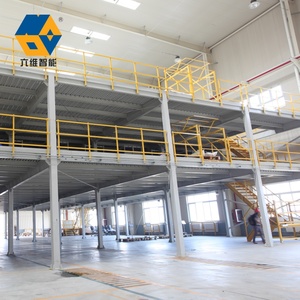
Customized Heavy Duty Industrial Mezzanine Platform System
Contact Us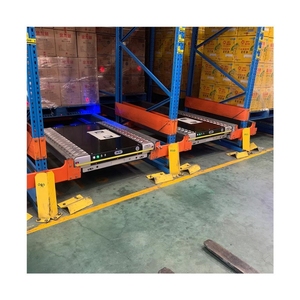
Industrial Radio Shuttle & Customizable Stacking Rack System
Contact Us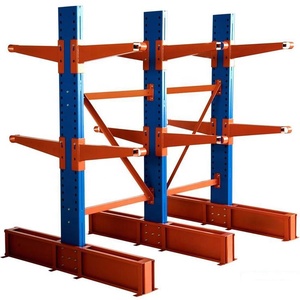
Heavy Duty Cantilever Racking System for Lumber & Profiles
Contact Us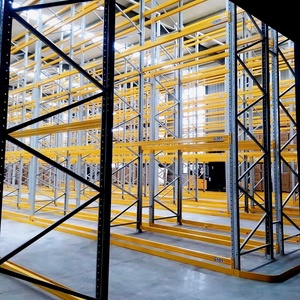
VNA Narrow Aisle & Selective Heavy Duty Pallet Racking
Contact Us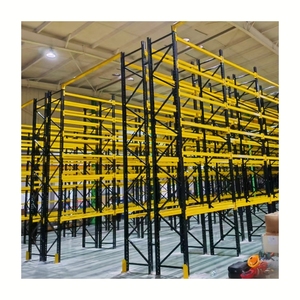
High Density Warehouse Pallet Racking Steel Shelving
Contact Us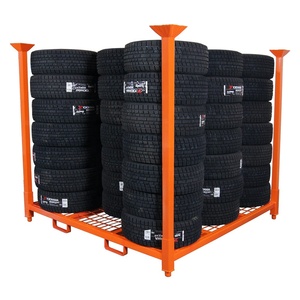
Portable Detachable Stackable Steel Pallet & Tire Storage Rack
Contact Us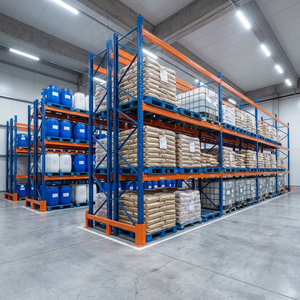
Heavy Duty Q235B Industrial Pallet Racking with Free Design
Contact Us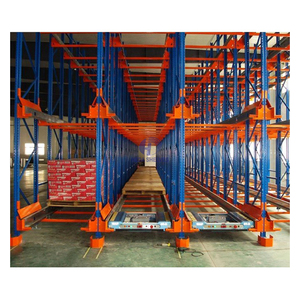
Automated Shuttle Pallet Rack High-Bay Storage System
Contact Us
Industry Whitepaper
Engineering & Procurement Benchmark: Drive-In Racking Systems from Top China Manufacturers
In the rapidly evolving global intralogistics landscape, warehouse operators, logistics procurement managers, and industrial facility developers face a persistent challenge: maximizing cubic floor space utilization while controlling structural costs and operational complexity. Standard selective pallet racking systems, while versatile, typically commit up to 60% of available floor footprint to forklift travel aisles. To solve this spatial inefficiency, **Drive-In Pallet Racking Systems** manufactured by leading Chinese engineering enterprises have emerged as the definitive high-density storage standard across FMCG, cold storage, pharmaceutical, and bulk manufacturing sectors.
Drive-in racking eliminates conventional aisles by allowing counterbalanced or reach forklifts to drive directly into the racking lanes to store or retrieve pallets. Operating on a **Last-In, First-Out (LIFO)** or **First-In, First-Out (FIFO - Drive-Through configuration)** inventory rotation scheme, drive-in systems increase spatial density by **75% to 85%** compared to traditional selective setups. This comprehensive whitepaper examines the engineering fundamentals, structural mechanics, metallurgic specifications, future market trends, and enterprise selection criteria for procurement professionals sourcing from tier-1 Chinese manufacturers.
1. Structural Engineering Physics of Heavy-Duty Drive-In Racking
Unlike selective racking, where horizontal load beams brace upright frames at every elevation, drive-in racking relies on continuous cantilevered pallet support rails. Because forklifts must enter the structure uninterrupted, standard horizontal cross-beams cannot be installed within the driving bay. This structural modification shifts load paths fundamentally, necessitating specialized engineering dynamics:
Cantilevered Support Rail Corvets
Roll-formed heavy-gauge steel support rails rest on specialized steel bracket corbels welded or bolted to upright frames. These corbels transfer eccentric pallet loads into column torsional forces, requiring strict material yield strength validation.
Top-Tie & Back-Bracing Symmetry
To counteract lateral sway and torsional rotation in the absence of aisle beams, structural top tie-beams and horizontal diagonal bracing grids are installed above the maximum clearance height of the forklift mast.
Ground Guide Rail & Column Armor
Heavy-duty structural C-channel steel or angle ground rails are anchored into concrete floors to guide forklift tires along narrow lanes, acting simultaneously as primary column protectors against impact.
Metallurgical Comparison: Q235B vs. Q355B Steel in Chinese Racking Production
Leading China pallet racking manufacturers select hot-rolled steel strip coils according to mechanical performance requirements. Choosing between standard Q235B carbon steel and high-tensile Q355B low-alloy steel impacts frame profile thickness, safety factors, and total installation weight.
| Mechanical Property / Parameter | Q235B Structural Steel (Standard) | Q355B High-Tensile Steel (Heavy-Duty / Cold Store) |
|---|---|---|
| Yield Strength (ReH) | ≥ 235 MPa | ≥ 355 MPa (51.1% Higher Tensile Capacity) |
| Tensile Strength (Rm) | 370 - 500 MPa | 470 - 630 MPa |
| Impact Resistance (Charpy V-Notch) | 20°C Test Benchmark | -20°C Low-Temp Tested (Ideal for Cold Chain) |
| Column Profile Thickness Savings | Baseline Thickness (e.g., 2.0mm - 2.5mm) | Allows 15-20% Gauge Reduction while Maintaining Load |
| Recommended Application | Medium-height standard drive-in lanes (<6 meters) | High-bay drive-in racks (>8 meters), Seismic zones, Cold storage |
2. Key Procurement & Technological Trends in Industrial Pallet Storage (2025–2030)
Global supply chain disruptions, escalating commercial real estate costs, and decarbonization mandates are driving rapid technical evolution in warehouse storage equipment. Procurement teams must account for four macro trends when sourcing racking systems from China:
Trend 1: Migration from Manual Drive-In to Semi-Automated Radio Shuttle Systems
While traditional drive-in racking offers exceptional cost-per-pallet density, operating risks—such as forklift collision damage inside narrow lanes and operator travel time—have accelerated the adoption of Radio Shuttle Racking Systems. In a radio shuttle setup, an autonomous battery-powered shuttle carriage runs inside the rail channels, carrying pallets deep into the rack while the forklift remains outside the lane. This hybrid structure eliminates internal column impacts and drastically accelerates cycle throughput times.
Trend 2: Cold Chain Logistics Optimization & Anti-Corrosion Advances
With global cold chain market growth exceeding 12% CAGR, high-density storage inside refrigerated warehouses (-25°C to -30°C) is in extreme demand. Because energy costs to cool cubic volume are severe, drive-in and shuttle racking systems maximize cold room density. Chinese manufacturers are now incorporating electrostatic thermosetting powder coatings cured at 180°C on automatic 220-meter pre-treatment lines, alongside hot-dip galvanizing (HDG) options to eliminate condensation corrosion and metal embrittlement.
Trend 3: ESG Compliance & Low-Carbon Manufacturing Practices
International buyers now evaluate suppliers on environmental, social, and governance (ESG) compliance. Premier Nanjing and Jiangsu racking factories utilize closed-loop zero-VOC powder coat lines, recycled steel scrap integration, and automated robotic welding cells that reduce manufacturing energy consumption per ton of steel processed by over 22%.
3. Product Evolution: From Standard Racks to Intelligent AS/RS Integration
The structural design of pallet racking has evolved across four distinct technological generations. Modern logistics projects increasingly integrate hybrid systems to balance selectivity and density:
Generation I
Selective Pallet Racking
100% SKU access but low space efficiency (35-40% footprint utilization). Requires wide aisles for standard counterbalanced forklifts.
Generation II
Standard Drive-In / Drive-Through
High storage density (75-80% utilization) operating on LIFO/FIFO principles. Ideal for uniform SKUs with low throughput turnover.
Generation III & IV
Radio Shuttle & Full AS/RS
Automated pallet movement, stacker crane integration, WMS/WCS software connectivity, and zero operator internal drive hazards.
4. Why Sourcing Drive-In Racking from Tier-1 China Manufacturers Delivers Superior ROI
China accounts for over 60% of the world's industrial steel racking production capacity. However, differentiating between low-tier fabricators and established enterprise manufacturers is critical for long-term structural safety and structural compliance (EN 15512, RMI, ISO 9001:2015).
Precision German Roll-Forming Technology
State-of-the-art multi-station continuous roll-forming mills ensure continuous upright punching without pitch deviation. Cumulative hole pitch tolerance is maintained within ±2 mm over a 12-meter continuous upright length, ensuring perfect horizontal rail alignment.
Automated Robotic Welding Cells
Beam connectors, top-tie joints, and corbel brackets are welded using Panasonic automated robotic manipulators. This guarantees full penetration welds, uniform bead aesthetics, and absolute elimination of cold welding or porosity defects.
Pre-Shipment Trial Assembly & Testing
To eliminate site installation issues, components undergo full trial mock-up assembly at the factory. Deflection load testing is verified under 1.5x nominal payload to confirm structural engineering calculations.
5. Frequently Asked Questions (FAQ) for Overseas Racking Procurement
Based on intent mining from international logistics buyers, warehouse developers, and structural consultants, here are key engineering answers:
What warehouse data is required to generate a free layout drawing and quote?
To generate an optimized CAD warehouse design and structural calculation report, our engineering team requires:
- Building architectural drawing (CAD or PDF) showing clear height under trusses, column locations, doors, and sprinkler clearance.
- Exact pallet details: Length × Width × Height (including goods) and total Gross Weight per unit load.
- Forklift fleet parameters: Minimum aisle turning radius, maximum mast lift height, and outer chassis width.
- Operational workflow: Desired SKU count, stock rotation rule (LIFO or FIFO), and daily throughput volume.
How does Drive-In racking compare to Radio Shuttle racking in total cost of ownership (TCO)?
Standard drive-in racking has a lower initial capital expenditure (CapEx) because it requires no electronic components. However, radio shuttle racking reduces operating expenditure (OpEx) by eliminating forklift travel inside lanes, cutting pallet loading cycle times by 40%, and virtually removing rack collision repair costs. For high-turnover or cold-storage facilities, radio shuttle systems typically achieve full ROI within 18 to 24 months.
What international design and quality standards do your racking systems comply with?
Systems are designed and manufactured in full accordance with international structural codes:
- European Standard: FEM 10.2.02 & EN 15512 for steel static storage systems.
- American Standard: RMI (Rack Manufacturers Institute) MH16.1 specification.
- Quality & Safety: ISO 9001:2015 Quality Management System and CE Certification.
How are racking systems packaged and protected against sea freight damage?
Export components are protected by multi-tier heavy packaging: Upright frames and beams are bundled with steel strapping, corrugated corner protection, and plastic stretch wrapping. Smaller hardware, bolts, safety pins, and corbel brackets are packed in reinforced wooden cartons on heat-treated plywood pallets suitable for container shipping and rapid forklift unloading.
Can you provide overseas installation guidance or on-site assembly crews?
Yes. Every exported project includes detailed 3D installation CAD assembly drawings, step-by-step English installation manuals, and component marking codes. We offer real-time remote video technical support, and for major projects, we can dispatch certified structural installation supervisors directly to your project site.
What seismic considerations are engineered into high-density pallet racking?
For seismic zones (such as Zone 3/4 or Earthquakes up to M7 magnitude), structural engineers increase baseplate surface areas, install heavy-duty chemical anchor bolts, increase upright profile gauge, and integrate cross-diagonal back bracing frames to safely absorb horizontal kinetic acceleration.
Transform Your Warehouse Storage Density Today
Partner directly with China's premier racking factory. Receive free CAD layout planning, structural engineering analysis, factory-direct wholesale pricing, and worldwide logistics support.
Contact Us