ApexDriveRACKING
20,000+ m²
Production Base
30,000 Tons
Annual Capacity
Q355B / Q235B
Certified Structural Steel
6,000+
Global Projects Delivered
Precision Structural Racking
Featured Multi-Pallet Storage Racking Systems
Directly manufactured by Tier-1 Chinese racking engineers. Each system is engineered to optimize cubic space utilization, load structural integrity, and forklift operating efficiency.
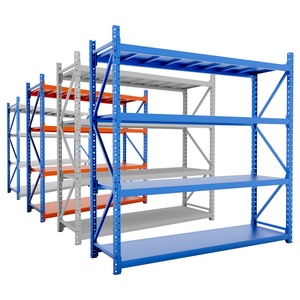
Factory Direct 4-Layer 800kg Medium Heavy Duty Pallet Racking System Steel Adjustable Longspan Warehouse Storage Pallet Racks
- Load Capacity: 800kg / Beam Level
- Steel Grade: Cold-Rolled Q235B High-Yield Steel
- Pitch Adjustment: 50mm / 75mm Beam Pitch
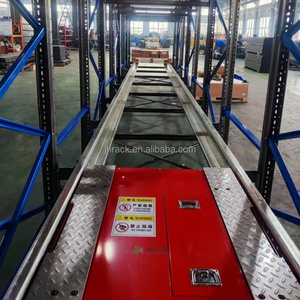
Automated Stackable Metal Shelves Storage Racks & Shelving Units Warehouse Asrs Pallet Shuttle Racking System
- Automation: Pallet Shuttle & Stacker Crane Integration
- Density: Up to 85% Cubic Volume Utilization
- Control: WMS / WCS Automated Interface
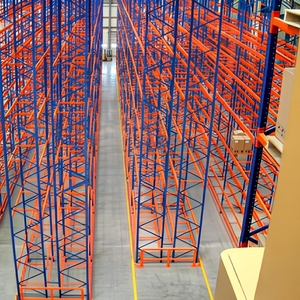
Steel Adjustable Narrow Aisle Pallet Racking System for High-Density Warehouse Storage | Space-Saving Rack with Guide Rails
- Aisle Width: Reduced to 1.6m – 1.8m (VNA)
- Selectivity: 100% Direct Pallet Access
- Guidance: Floor-Mounted Heavy Guide Rails
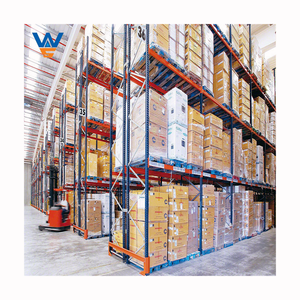
Heavy Duty High Capacity Selective Pallet Racking Drive in Through Rack Metal Storage Pallet Racking System
- Storage Mode: LIFO / FIFO Deep Lane Configuration
- Upright Section: Up to 120mm Heavy Duty Profiles
- Safety: Heavy-Duty Floor Armored Guards
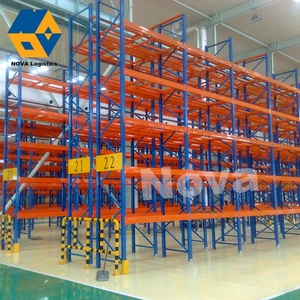
Customized Competitive Industrial Warehouse Storage Steel Heavy Duty Pallet Rack
- Beam Profiles: Box Beams & Step Beams Available
- Finish: Swiss Gema Electrostatic Powder Coating
- Compliance: ISO 9001 & CE Certified
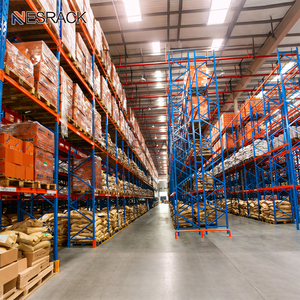
High Density Heavy Duty Galvanized Steel Adjustable Durable Double Deep Industrial Warehouse Pallet Racking System
- Storage Method: Double-Deep Reach Truck Operations
- Surface Options: Hot-Dip Galvanized / Epoxy Powder
- Capacity: 1,000kg to 4,000kg per Level
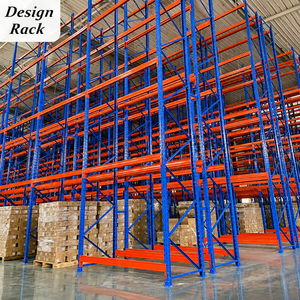
Certificated Large Heavy Duty Shelving Storage Applications Easy Assemble Material Racking Unit Industrial Pallet Rack Solution
- Assembly: Boltless Interlocking Beam Connectors
- Structural Safety: Safety Pins Prevent Beam Dislodgement
- Design: Free 3D CAD Layout Engineering
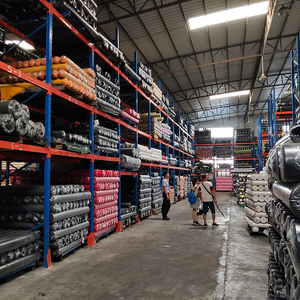
Highly Customizable Free Design Storage Rack for Various Heavy Duty Storing 1000KG 2000KG 3000KG Pounds Tons
- Payload Range: Up to 3,000kg per Tier
- Column Footplate: Anchor-Bolted Heavy Baseplates
- Testing: Load Deflection & Stress Rigorously Tested
Engineering Rigor & OEM Manufacturing Capability: ApexDrive Racking
In global supply chain management, selecting a multi pallet position racking factory is not merely a purchasing decision; it is a critical structural engineering commitment. As a Premier Chinese racking manufacturer founded in September 2006, ApexDrive Industrial Racking Co., Ltd. operates a state-of-the-art 20,000+ square meter manufacturing complex with an annual structural steel fabrication capacity exceeding 30,000 metric tons.
Our engineering matrix combines high-grade coil raw materials, cold-roll profile forming, automated robotic welding, and automated surface treatment to deliver structural steel systems engineered for a minimum 20-year operational lifecycle.
Mill-Certified Prime Steel Sourcing
We source prime Q235B and Q355B structural steel coils exclusively from Tier-1 state mills including Baosteel, Masteel, and Wuhan Iron and Steel. Mill test reports verify tensile strength, yield limits, and precise chemical composition for every production lot.
Precision Continuous Roll Forming
Utilizing advanced continuous cold-roll forming lines engineered with German tooling, upright columns up to 12 meters are produced in a single continuous section with cumulative pitch tolerances held to within ±2mm over the entire structural length.
Robotic Weld Integrity
Critical load-bearing joints, beam-end connectors, and baseplates are welded using automated robotic manipulators under shielded gas environments, completely eliminating porosity, cold joints, and stress concentration hot-spots.
220-Meter Automated Powder Coating
Components undergo 10 stages of pre-treatment—including automatic chemical degreasing, rust removal, and phosphating—before entering a 220-meter Swiss Gema electrostatic powder line cured at 180°C for exceptional impact and corrosion resistance.
Seismic Stability & Stress Compliance
Engineered under FEM 10.2.02 and RMI standards, ApexDrive multi-pallet structures are designed to resist M7 seismic activity, maintaining structural beam safety factors of 1.5 to 1.8 and limiting deflection to under L/300 under max payload.
Export Packaged for Zero Transit Damage
All structural upright frames, box beams, and frame accessories are bundled using multi-tier heavy steel strapping and protective edge-guards, with small hardware housed in export-grade plywood crates for rapid customs inspection.
Engineering Comparison: Multi-Pallet Storage Architecture Matrix
When selecting multi-pallet position racking for industrial distribution hubs, facility managers must balance storage density against SKU selectivity and throughput velocities. Below is an engineering evaluation across standard configurations:
| Racking Architecture | Storage Volume Density | Direct SKU Selectivity | Forklift Operating Requirements | Optimal Warehousing Application |
|---|---|---|---|---|
| Selective Pallet Racking | Medium (40% - 50%) | 100% Direct Access | Standard Counterbalance / Reach Truck | High SKU variety, fast-moving FMCG distribution hubs. |
| Double-Deep Pallet Racking | High (60% - 65%) | 50% Immediate Access | Deep-Reach Pantograph Forklift | Medium SKU counts with multiple pallets per SKU batch. |
| Very Narrow Aisle (VNA) | Very High (70% - 75%) | 100% Direct Access | VNA Turret Truck / Articulated Forklift | High vertical clearance facilities with premium floor costs. |
| Radio Shuttle System | Ultra High (80% - 85%) | LIFO / FIFO (Per Channel) | Standard Forklift + Autonomous Shuttle | Cold storage, food & beverage, bulk batch manufacturing. |
| Automated AS/RS High-Bay | Maximum (85% - 92%) | 100% Automated Access | Automated Stacker Cranes & WMS System | Fully automated 24/7 fulfillment mega-distribution centers. |
Global Sourcing Trends: Multi-Pallet Racking Sourcing (2025–2030)
As international supply chains shift toward hyper-density, automation readiness, and carbon-footprint accountability, the procurement landscape for warehouse storage systems is undergoing structural transformations. Procurement directors sourcing multi-pallet position racking from China must align with five major industry vectors over the next decade:
1. Structural Migration to High-Yield Q355B Steel Profiles
Traditionally, standard structural racking relied on Q235B (yield strength 235 MPa). However, contemporary high-bay distribution centers demand thinner profile gauges with higher structural yield margins. Chinese factories are rapidly converting production lines to Q355B steel (yield strength 355 MPa). This metallurgical progression reduces overall steel weight by 12% to 18% while maintaining structural load ratings, resulting in decreased ocean freight costs and lower carbon tariffs during import.
2. Cold Chain Specific Galvanized & Low-Temperature Powder Systems
With global cold chain logistics expanding at a CAGR exceeding 11%, racking hardware must endure sub-zero environments without cold embrittlement or surface delamination. Procurement is leaning heavily toward hot-dip galvanizing (HDG) per ISO 1461 standards (coating thickness 60–80 μm) or specialized low-temperature epoxy powder formulations designed to resist thermal shock down to -30°C.
3. Integration of Hybrid Automated Radio Shuttle & Modular ASRS Layouts
Static high-density storage (such as traditional Drive-In racking) is increasingly being retrofitted or superseded by semi-automated Radio Shuttle channels and modular AS/RS stacker cranes. Overseas buyers are prioritizing suppliers who offer pre-engineered rail channels, integrated power-bus trackways, and embedded proximity sensors to ensure future plug-and-play automation upgradeability.
4. BIM (Building Information Modeling) & Digital Twin Sourcing Workflows
Modern B2B buyers no longer accept static 2D DWG layouts. Leading Chinese racking suppliers now provide complete 3D BIM models (Revit format) detailing structural load distribution, clearance tolerances, and fire sprinkler interference zones. Digital twin modeling allows logistics engineers to simulate forklift turning radiuses and pallet deflection prior to steel cutting.
5. Environmental Product Declarations (EPD) & Decarbonized Production
Under emerging carbon border adjustments (such as Europe's CBAM), tier-1 racking exporters in China are undergoing third-party lifecycle assessments (LCA). Suppliers implementing closed-loop water recovery in chemical pretreatment, solar-powered powder curing ovens, and scrap steel recycling are becoming preferred partners for multinational logistics operators.
Future Development Trends: Smart Racking & Advanced Materials
The industrial warehouse rack is transitioning from a passive structural steel framework to an intelligent, data-driven node within the intralogistics ecosystem. Key technological innovations defining the next generation of multi-pallet storage racking include:
1. IoT Real-Time Load Monitoring & Strain Sensor Arrays
Integrated strain gauge sensors and micro-gyroscopes embedded within critical upright columns and load-bearing beam connectors provide continuous structural telemetry. These sensors detect unintended forklift impact strikes, beam overload deflections, and structural tilting caused by seismic vibration or floor settlement, immediately triggering safety alerts to warehouse managers via WMS dashboards.
2. Next-Generation Ultra-Corrosion Resistant Zinc-Aluminum-Magnesium Coatings
Replacing traditional post-galvanizing methods, advanced roll-formers are adopting Zinc-Aluminum-Magnesium (ZAM) coated coil steel. ZAM coatings offer self-healing edge corrosion protection—where the alloy migrates to cover cut edges and punched holes—providing up to 4 times the corrosion resistance of standard galvanized steel in aggressive chemical or high-humidity environments.
3. Modular High-Bay Rack Clad Structural Buildings
In land-scarce logistics zones, Rack-Supported Buildings (Rack-Clad Warehousing) represent the apex of structural space optimization. Rather than installing racking inside an existing building envelope, the multi-pallet rack structure itself forms the load-bearing skeleton that directly supports the exterior wall cladding and roof assembly. This structural approach eliminates building columns and cuts civil construction timelines by up to 30%.
Procurement Knowledge Base
Frequently Asked Technical Questions
Clear engineering insights for procurement officers, supply chain directors, and warehouse engineers.
1. What technical information is required for ApexDrive to generate a certified CAD layout & load analysis report?
To produce an exact structural engineering layout, our team requires: (1) Architectural CAD drawings detailing floor dimensions, clear building height, column grids, fire doors, and ceiling sprinkler clearances; (2) Pallet specifications including overall dimensions (W x D x H), gross payload weight per pallet, and bottom runner layout; (3) Forklift operating parameters including maximum reach height, aisle width turning radius, and mast collapse height; and (4) Desired stock rotation strategy (FIFO vs. LIFO).
2. How do Chinese structural steel grades (Q235B / Q355B) compare to US (ASTM) and European (EN) structural standards?
Chinese Q235B structural steel corresponds directly to ASTM A36 and European S235JR, offering a minimum yield strength of 235 MPa. Chinese Q355B (formerly Q345B) corresponds to ASTM A572 Grade 50 and European S355JR, providing a minimum yield strength of 355 MPa. All raw material coils sourced by ApexDrive include mill test reports detailing mechanical yield, ultimate tensile strength, and elongation percentages.
3. What safety coefficients and beam deflection limits are engineered into ApexDrive multi-pallet systems?
All our pallet racking calculations adhere strictly to FEM 10.2.02 and RMI structural codes. Structural uprights feature safety factors of 1.6 to 1.8 against buckling. Horizontal load-bearing beams are engineered to maintain maximum vertical deflection under full payload of less than L/300 (where L is the beam clear span length). High-visibility mechanical beam safety locks are fitted to every connector to prevent accidental forklift dislodgement.
4. Should we select Electrostatic Powder Coating or Hot-Dip Galvanizing for our racking finish?
For dry, indoor ambient temperature warehouses (+5°C to +40°C), electrostatically applied epoxy powder coating (60–80 μm thickness) provides superior chemical resistance, color coding, and cost effectiveness. For cold storage facilities (-30°C), outdoor uncovered storage, or high-humidity food processing plants, Hot-Dip Galvanizing (HDG per ISO 1461) is recommended. HDG applies a 60–80 μm zinc layer through molten immersion, providing cathodic sacrificial protection against oxidation.
5. How does ApexDrive ensure overseas structural installation compliance and quality control?
Every project is trial-assembled in our factory prior to export to verify hole-pitch alignment, beam connector engagement, and baseplate anchoring tolerances. Each order ships with detailed 3D step-by-step assembly drawings, bolt-torque specifications, and high-definition installation videos. For complex automated Radio Shuttle or AS/RS high-bay projects, ApexDrive dispatches experienced project engineers on-site to direct installation, alignment, and commissioning.
6. What export packaging methods are used to prevent structural damage during sea freight?
Upright profiles and box beams are bundled in custom heavy-gauge steel strapping with protective plastic corner edge-guards and wood dunnage separators to prevent metal-to-metal rubbing. Smaller connection plates, baseplates, row spacers, and high-strength 8.8 grade hardware bolts are vacuum-sealed in heavy polybags and packed into solid, ISPM-15 compliant plywood crates suitable for containerized ocean transport.
Optimize Your Warehouse Cubic Capacity & Storage ROI
Collaborate directly with senior racking engineers. Receive a comprehensive CAD layout design, structural calculation report, and factory-direct quotation within 24 hours.
Inquire Now