ApexDriveRACKING
Direct Factory Showcase
Heavy-Duty & Automated Warehousing Solutions
Engineered for extreme space optimization, cold storage adaptability, and high-throughput industrial intralogistics.
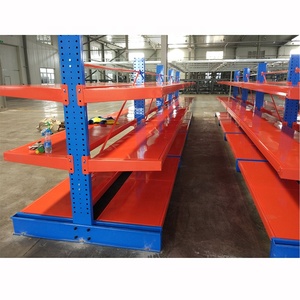
Cantilever Rack Industrial Customed Warehouse Racking Tube Cantilevered Racks Storage Racks
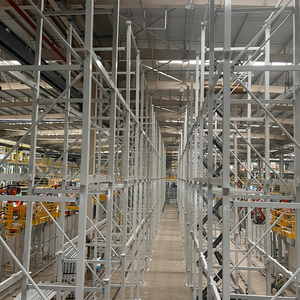
Neat Arrangement 5 Layer Steel Pallet Supported Goods Storage Frame for Cold Chain Base Warehouse
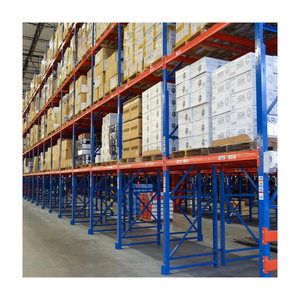
Wholesale Price Heavy Duty Storage Racks Warehouse Stacking Racks Selective Steel Pallet Rack
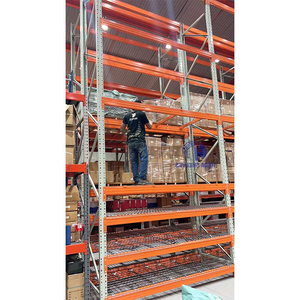
Industrial Adjustable Pallet Rack Warehouse Storage Heavy Duty Steel Racking System
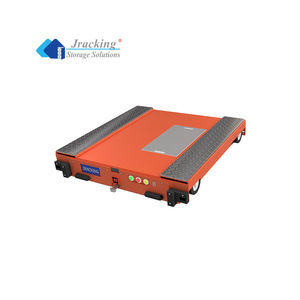
CE Certified Automated Four Way Radio Shuttle River-type Pallet Racking System
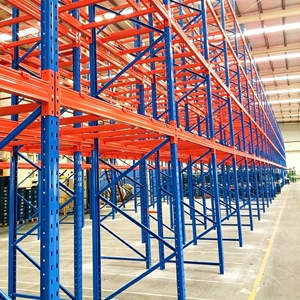
Adjustable Heavy Duty Steel Racks 6 8 10 Layer High Bay Selective Pallet Racking System
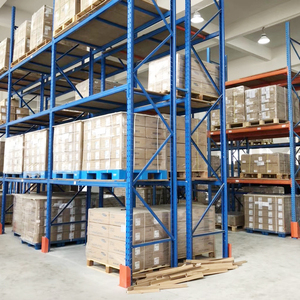
Industrial Pallet Rack Q235B Steel Heavy Duty Adjustable Storage Rack FEM/RMI Certified
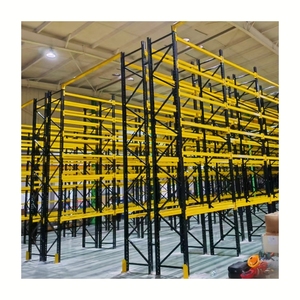
Customized Colors High Density Pallet Racking Warehouse Racks Heavy Duty Shelving
Industry Whitepaper
Engineering Architecture of Multi-Way Shuttle Systems
An authoritative technical analysis for enterprise supply chain directors, warehouse system integrators, and logistics procurement executives.
1. Fundamentals of Multi-Way (4D Matrix) Shuttle Mechanics
In modern high-density automated warehousing, the Multi-Way Shuttle System (4D Radio Shuttle System) represents a monumental leap forward from conventional 2D radio shuttles and stacker crane AS/RS configurations. Unlike traditional 2-way shuttles that can only traverse linearly along a single longitudinal channel—requiring manual forklift interventions or transfer cars to shift lanes—a 4-directional shuttle possesses an integrated dual-drive steering mechanism. This kinematic design empowers the autonomous vehicle to change tracks in both longitudinal (X-axis) and transverse (Y-axis) directions without physical rotation.
By pairing 4-way shuttles with vertical Reciprocating Vertical Conveyors (RVCs) or high-speed elevators (Z-axis), the facility transforms into a fully integrated, flexible 3D spatial matrix. Every pallet position within the multi-level racking grid becomes directly accessible by any shuttle vehicle within the fleet. This dynamic fleet decoupling eliminates single-point operational bottlenecks inherent in traditional AS/RS stacker cranes, allowing logistics managers to independently scale storage throughput (by adding vehicles) and storage capacity (by expanding racking tiers).
2. Structural Steel Engineering & Deflection Tolerances
Because multi-way shuttles travel dynamically inside the racking superstructure at speeds up to 1.5–2.0 m/s with fully loaded pallets exceeding 1,500 kg, structural rigidity and manufacturing tolerances are non-negotiable. As a premier Chinese manufacturer, our racking systems utilize premium structural steel grades—predominantly Q235B and Q355B structural steel supplied certified directly by top-tier state mills such as Baosteel, Masteel, and Wuhan Iron & Steel.
The structural design rigorously enforces international structural codes including FEM 10.2.02 (European Racking Code) and RMI (Rack Manufacturers Institute ANSI MH16.1) specifications:
- Track Hole-Pitch Precision: Continuous high-precision CNC roll-forming achieves cumulative hole-pitch tolerances under ±2.0 mm across a 12-meter single-piece upright section, ensuring seamless rail alignment.
- Beam Deflection Limits: Under maximum design load, beam deflection is governed strictly under L/300 to L/400, preventing track sag that could trigger shuttle levelling sensors or impede automatic direction switching.
- Seismic Stability Rating: Engine-calculated structural bracings and heavy-duty floor anchorages are engineered to withstand up to seismic intensity Magnitude 7.0 without structural plastic deformation.
3. Comparative Analysis: Multi-Way Shuttle vs. Legacy Storage Technologies
To assist procurement specialists in executing thorough feasibility studies, the operational metrics below outline the core trade-offs between storage technologies:
| Storage Architecture | Volumetric Floor Density | Throughput Scalability | Redundancy & Reliability | Energy Consumption / Pallet | Initial CapEx Investment |
|---|---|---|---|---|---|
| Selective Pallet Racking | Low (~35–40%) | Forklift Dependent | High (Manual) | High (Forklift Fleet) | Very Low |
| 2-Way Radio Shuttle Racking | High (~70–75%) | Moderate (Forklift + Shuttle) | Moderate | Low | Moderate |
| AS/RS Crane System | Very High (~80–85%) | Fixed Per Aisle Crane | Low (Single Crane Bottleneck) | High (Heavy Moving Mass) | High |
| Multi-Way 4D Shuttle Racking | Maximum (~85–90%) | Independent & Elastic | Maximum (Autonomous Vehicle Swarm) | Ultra-Low (Ultracapacitor / LFP) | Optimized ROI |
Market Foresight
Procurement Trends & Technological Horizons (2025–2030)
Strategic directions shaping global automated warehousing, cold-chain operations, and supply chain resiliency.
1. Sub-Zero Cold Chain Integration
Global demand for frozen food, bio-pharmaceuticals, and cold-chain distribution is pushing multi-way shuttle systems into extreme sub-zero environments (down to -30°C). Procurement is shifting toward specialized cold-grade steel alloys, low-temperature anti-freeze lubricants, and high-discharge Lithium Iron Phosphate (LFP) batteries equipped with intelligent self-heating thermal management modules.
2. AI Swarm Intelligence & WCS Optimization
Modern procurement requires seamless middleware interoperability. Multi-way shuttle systems are no longer isolated hardware pieces; they operate as interconnected robotic swarms controlled by AI-driven Warehouse Control Systems (WCS). Pathfinding algorithms dynamically recalculate route grids in real-time, preventing traffic congestion and automatically rebalancing pallet placement based on SKU velocity.
3. Ultra-Fast Charging & Energy Recovery
To support 24/7 continuous operations, next-gen multi-way shuttles incorporate supercapacitor fast-charging stations integrated directly into racking transfer tracks. Shuttles automatically top up power in 15–30 second bursts during pallet loading or vertical hoist transfer, eliminating off-line battery replacement downtime.
Manufacturing Excellence
Why Global Importers Source from ApexDrive Racking
Rigorous quality control, mill-certified raw steel, automated robotics, and comprehensive international engineering support.
Traceable Mill Raw Materials
We source prime Q235B and Q355B structural steel directly from Baosteel and Masteel. Every heat batch comes complete with official chemical composition and tensile strength Mill Test Certificates (MTCs), ensuring guaranteed yield performance.
220-Meter Automated Coating Line
Components pass through a 10-stage automatic degreasing, rust removal, and phosphating pre-treatment process before electrostatic powder spraying via Swiss Gema technology. Powder coatings are cured at 180°C to deliver superior impact resistance and long-lasting corrosion protection.
Full Trial Assembly & QC Controls
To guarantee hassle-free installation on overseas job sites, every customized multi-way shuttle project undergoes full mock-up trial assembly in our factory prior to container packing. Beam connectors, track joints, and safety lock pins are strictly inspected for zero-defect tolerances.
Procurement FAQs
Frequently Asked Questions by International Buyers
Answers to common technical, commercial, and logistics queries regarding multi-way shuttle racking procurement.
What technical data is required to request a free warehouse layout and shuttle calculation?
To design an optimized multi-way shuttle racking scheme, our engineering team requires:
- Architectural floor plan (CAD or PDF format) indicating clear underside height, column grid layouts, building doors, and fire sprinkler clearances.
- Exact pallet specifications: Width × Depth × Height (including load) and gross weight per pallet.
- Required SKU count, total target pallet storage capacity, and target hourly throughput rates (inbound/outbound pallets per hour).
- Operating environment conditions (ambient temperature, cold storage temperature, or humidity levels).
How does a 4-Way Multi-Directional Shuttle differ from a standard 2-Way Radio Shuttle?
A standard 2-Way Radio Shuttle operates only in a straight line inside a designated lane; moving it to another channel or tier requires a forklift operator to manually pick up and relocate the shuttle vehicle. In contrast, a 4-Way Multi-Directional Shuttle features dual wheel sets enabling self-steering across X and Y tracks. Combined with automated vertical lifters, a 4-Way shuttle navigates anywhere in the 3D storage rack matrix without manual forklift intervention, dramatically increasing system automation and operational speed.
What building slab and floor levelling tolerances are required for shuttle installations?
Because automated racking systems rely on precise structural geometry, concrete slab floor levelling should comply with international standards such as DIN 18202 (Table 3, Line 4) or ASTM E1155 (FF 50 / FL 35 rating). Minor floor irregularities can be accommodated using our heavy-duty steel shims placed beneath the upright baseplates during installation.
How are racking shipments packaged to prevent transit damage during sea freight?
Racking upright frames and beams are bundled with multi-tier heavy-duty steel strapping and wrapped with protective stretch film to safeguard powder-coated surfaces. Accessories, baseplates, beam safety pins, and fast bolts are securely packed in heavy-duty corrugated cartons and strapped onto export-grade plywood pallets for easy forklift unloading and customs inspection.
Can ApexDrive dispatch engineering crews for overseas site installation?
Yes. Every project ships with complete 3D structural CAD assembly drawings and step-by-step English installation manuals. Additionally, we provide remote video engineering support or can dispatch certified installation supervisors directly to your project location to oversee site assembly, mechanical alignment, and shuttle system commissioning.
Ready to Maximize Your Storage Density & Automation Efficiency?
Connect directly with our senior racking structural engineers. Receive custom CAD layout designs, structural calculations, and factory-direct pricing within 24 hours.