ApexDriveRACKING
Factory-Direct Catalog
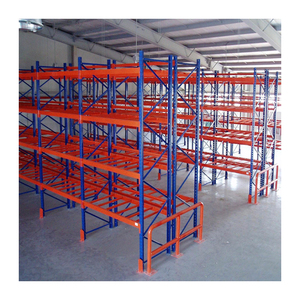
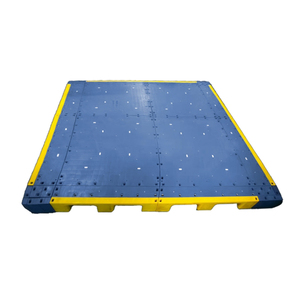
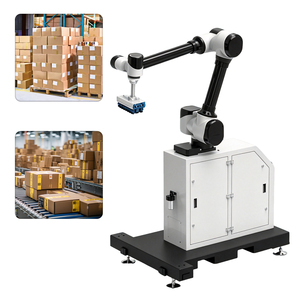
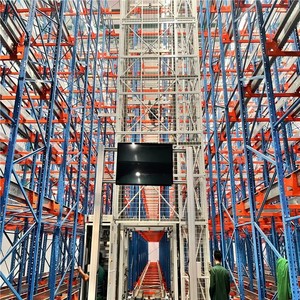
Flagship Intelligent Pallet Storage Systems
Engineered for extreme structural stability, high throughput speed, and seamless integration with modern warehouse management software (WMS).
20,000+
Production Base (m²)
30,000+
Annual Steel Capacity (Tons)
6,000+
Global Projects Installed
±2 mm
12m Roll Forming Precision
1. Executive Summary & E-E-A-T Enterprise Authority
Modern industrial supply chains demand unprecedented efficiency, vertical space optimization, and flawless inventory accounting. As a premier Intelligent Pallet Storage System Manufacturer and Direct Factory, ApexDrive Industrial Racking Co., Ltd. (established in September 2006 in Nanjing, China) has spent nearly two decades solving complex warehousing challenges for Fortune 500 enterprises, global 3PL operators, cold-chain hubs, and high-tech manufacturing plants.
Operating out of a state-of-the-art 20,000 square-meter production complex equipped with over 150 dedicated machine sets, our manufacturing integrity is backed by strict international compliance standards. We strictly manufacture under ISO 9001:2015 Quality Management Certification and maintain CE Mark Certification for Steel Racking Systems. Every beam, upright column, dynamic shuttle rail, and structural connection is engineered from prime structural steel (Q235B and high-yield Q355B) sourced exclusively from Tier-1 national steel mills such as Baosteel, Masteel, and Wuhan Iron and Steel.
Information Gain Insight: Structural rack failure in high-bay automated warehouses is almost never caused by standard loading—it stems from micro-pitch cumulative errors and poor weld integrity. Our automated German-technology roll-forming lines guarantee a cumulative hole-pitch error of less than ±2 mm across a continuous 12-meter upright profile, while robotic welding manipulators eliminate weld porosity entirely.
Certified Material Sourcing
Full metallurgical traceability from mill certificates. High tensile Q355B steel guarantees structural resilience under dynamic shuttle accelerations and seismic events up to magnitude M7.
WMS & WCS Software Integration
Native compatibility with automated guided vehicles (AGVs), stacker cranes, and enterprise resource software for 24/7 dark-warehouse lights-out operations.
Surface Treatment Rigor
10-stage degreasing, ultrasonic cleaning, and Swiss Gema electrostatic powder spraying on a 220-meter line, cured at 180°C for extreme chemical and corrosion resistance.
2. Structural Architecture of Intelligent Pallet Storage Systems
Intelligent pallet storage transitions traditional static racking into dynamic, robotic logistics assets. Selecting the optimal system architecture depends on SKU variance, pallet turn rates, floor-load capacity, and height limitations. Below is an engineering analysis of the primary automated storage topologies engineered in our factory:
A. Radio Shuttle Racking Systems (2-Way & 4-Way)
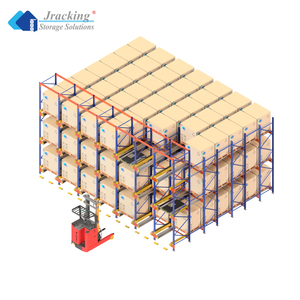
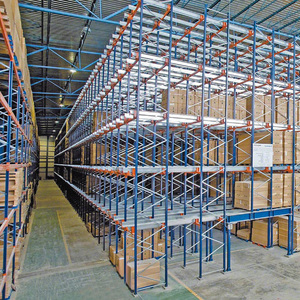
Radio shuttle systems utilize self-powered robotic runners that travel along guide rails within storage channels. The Four-Way Radio Shuttle represents a major leap in high-density engineering, enabling the robot to traverse both longitudinal storage lanes and lateral transport aisles without manual forklift intervention.
- Density Ratio: Up to 85% volumetric utilization (300% denser than selective pallet racking).
- Payload Flexibility: Standard configurations engineered for 1,000 kg to 1,500 kg per pallet position.
- Operational Logic: Programmable for both First-In, First-Out (FIFO) and Last-In, First-Out (LIFO) inventory control.
- Environment Adaptation: Specialized low-temperature lithium-iron phosphate battery packs engineered for cold storage rooms operating down to -30°C.
B. Automated Storage and Retrieval Systems (AS/RS)
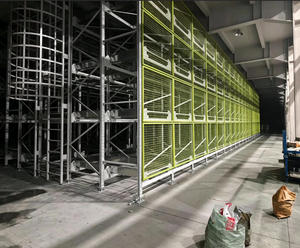
AS/RS combines ultra-tall structural high-bay racking (reaching heights from 12 to over 40 meters) with automated stacker cranes, rail-guided vehicles (RGVs), and continuous conveyor loops. Stacker cranes travel at horizontal speeds exceeding 200 m/min and lifting speeds up to 60 m/min, providing rapid access to thousands of unit loads with pinpoint positioning accuracy.
C. Gravity Pallet Flow & Push-Back Racking
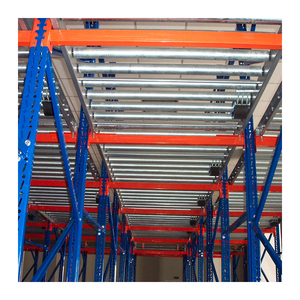
For high-throughput beverage, food distribution, and fast-moving consumer goods (FMCG), gravity flow racking uses inclined roller beds (typically 3% to 4% slope) equipped with magnetic speed controllers and dynamic separation brakes. Pallets glide automatically from the loading face to the picking face, enforcing absolute FIFO discipline with zero electrical power consumption.
3. System Selection Benchmark Matrix
To assist warehouse directors, supply chain consultants, and engineering contractors in selecting the correct system, our engineering department has compiled this direct comparison matrix:
| Storage Topology | Volumetric Density | Direct Selectivity | Throughput Rate | Forklift Operating Requirement | Optimal Industry Application |
|---|---|---|---|---|---|
| Selective Pallet Racking | Baseline (35% - 40%) | 100% Direct Access | Moderate | Standard Counterbalance / Reach | General Warehousing, High SKU count |
| Radio Shuttle System | Very High (75% - 85%) | Lane-based Selectivity | High (Automated inside lane) | Standard Forklift (Aisle loading only) | Cold Storage, Food & Beverage, Batch Goods |
| 4-Way Automated Shuttle | Maximum (85% - 90%) | Dynamic Matrix Access | Very High (Continuous multi-shuttle) | None (Automated Lift + Shuttle) | E-commerce fulfillment, Automated 3PL Hubs |
| Unit-Load AS/RS System | Maximum Vertical (80% - 92%) | 100% Computerized Access | Ultra-High (24/7 Autonomous) | None (Robotic Stacker Crane) | Pharmaceuticals, Automotive Parts, High-Bay Hubs |
| Pallet Flow Racking | High (70% - 78%) | Strict FIFO per lane | High (Gravity Driven) | Loading & Unloading Forklifts | Perishables, Dairy, Fast-Moving Consumer Goods |
4. Strategic Procurement Trends in Warehousing (2025–2030)
The global warehousing market is shifting rapidly from static storage racks to intelligent, energy-efficient automated ecosystems. When planning capital expenditures for enterprise storage over the next decade, procurement heads must consider five key industry trends:
1. Shift from 2-Way to 4-Way Intelligent Shuttle Architectures
Traditional 2-way shuttle systems require forklifts to physically move the shuttle cart between different lanes. Procurement is rapidly migrating toward 4-Way Shuttle + Vertical Lifter configurations. This fully automated matrix architecture enables shuttles to switch tracks independently across vertical levels and horizontal corridors, reducing total forklift fleet dependencies by up to 80%.
2. Dynamic Weight Sensing & AI Predictive Maintenance
Modern pallet storage systems are no longer passive steel beams. High-value warehouses are integrating IoT strain sensors, photoelectric sensors, and RFID scanning into the racking grid. Real-time telemetry detects structural deflection, off-center pallet placement, and mechanical stress before failure occurs, enabling predictive maintenance schedules that eliminate unscheduled downtime.
3. High-Bay Green Warehousing & Cold-Chain Energy Saving
Electricity costs in cold-storage operations represent up to 40% of total operating expense. High-density shuttle systems reduce the total cubic meterage of cooled air required per pallet by up to 50% compared to standard rack layouts. Furthermore, smart shuttle runners now incorporate regenerative dynamic braking, feeding energy back into lithium batteries during deceleration.
4. Modular "Build-As-You-Grow" Standardized Racking
Enterprises are avoiding rigid, fixed infrastructure. Modern smart racking utilizes standardized bolted framing structures that allow companies to start with a semi-automated radio shuttle installation and smoothly upgrade to a fully robotic 4-way AS/RS layout as order volume scales—without discarding existing upright frames or guide rails.
5. Factory Manufacturing Excellence & Quality Control
As a direct manufacturer, ApexDrive eliminates intermediary markups while maintaining total process oversight over six distinct production stages inside our factory:
01. Cold Coil Inspection
Every steel coil undergoes thickness validation, chemical composition testing, and mechanical tensile testing against strict mill parameters prior to slitting.
02. Multi-Stage Roll Forming
Continuous automated profiling lines transform flat strip steel into complex 12-fold and 16-fold upright profiles with maximum section modulus and flexural strength.
03. Manipulator Robotic Welding
Beam connectors and safety lock components are welded using robotic arm manipulators, ensuring continuous, deep-penetration weld seams free of slag or cold joints.
04. Pre-Treatment & Degreasing
Components pass through an automated 10-stage pre-treatment tunnel incorporating chemical degreasing, acid rust removal, and nano-zirconium phosphate coating for superior paint adhesion.
05. Swiss Powder Coating
Automatic electrostatic guns spray thermo-setting epoxy polyester powder on our 220-meter line, cured precisely at 180°C to create an impact-resistant, non-chipping surface finish.
06. Trial Assembly & Export Bundling
Components undergo physical trial assembly for squareness and hole pitch match before being bound with heavy-duty steel strapping and wrapped on wooden pallets for sea freight protection.
6. Frequently Asked Questions (Procurement FAQ)
What specific warehouse dimensions and load data are required to receive a custom CAD layout?
To provide a structural CAD drawing and accurate quotation, our engineering team requires: (1) Building architectural CAD drawings detailing clear building height under trusses, column spacing, door dimensions, and sprinkler/lighting clearances; (2) Pallet specifications including length, width, overall height including cargo, and maximum weight per loaded pallet; (3) Required total pallet capacity or target SKU turnover rate; and (4) Specifications of existing forklifts (lifting height, aisle turn radius) or your operational preference for automated equipment.
What structural steel grades are used, and how do you guarantee load compliance?
We manufacture load-bearing structural members primarily from high-grade Q235B steel and high-tensile Q355B cold-rolled steel sourced from premier Chinese steel mills (Baosteel, Masteel, and WISCO). Beam deflection is engineered not to exceed L/300 under maximum rated load (where L is beam length), and upright column safety factors exceed 1.8 in accordance with EN 15512 and ANSI/RMI MH16.1 structural standards.
How does your factory support overseas installation and commissioning?
We provide comprehensive global support. Every project ships with customized 3D assembly drawings, detailed English installation manuals, and step-by-step video tutorials. For large-scale automated projects or AS/RS commissioning, we dispatch certified senior installation engineers on-site to direct local assembly teams, install electrical guide tracks, and calibrate shuttle system controls.
Can shuttle racking systems function reliably in cold storage (-25°C to -30°C)?
Yes. Our radio shuttles engineered for cold chain feature low-temperature resistant electrical components, IP65-rated internal seals, internal heating elements for core electronics, and specialized low-temperature lithium iron phosphate (LiFePO4) battery packs that maintain full operational capacity down to -30°C without memory loss or voltage drop.
What surface treatment option is recommended for humid or chemical environments?
While our standard electrostatic powder coating provides exceptional rust and abrasion resistance for indoor dry warehouses, we recommend hot-dip galvanizing (HDG) for high-humidity environments, outdoor agricultural applications, or chemical exposure zones. Hot-dip galvanized coatings provide a thick zinc alloy barrier (typically 60-80 microns) offering 25+ years of zero-maintenance corrosion protection.
What is the typical lead time from design finalization to container shipment?
Standard manufacturing lead time for custom pallet racking systems is 20 to 25 calendar days following final CAD layout sign-off and deposit receipt. For complex automated AS/RS or multi-shuttle installations requiring custom electrical panel assembly and software commissioning, manufacturing lead times range from 35 to 45 days.
Accelerate Your Warehouse Capacity & Automation Today
Partner directly with a certified manufacturer. Contact our engineering team for a free technical consultation, custom CAD layout, and factory-direct project estimate.