ApexDriveRACKING
Featured Engineering Portfolio
Primary Warehouse Racking Systems & Pallet Equipment
Explore our precision-engineered high-density storage solutions, customized to maximize cubic volumetric utilization across commercial and industrial distribution facilities.
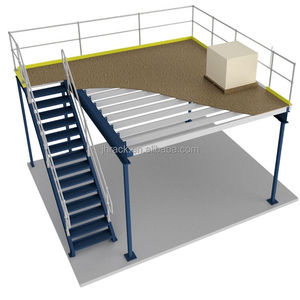
Mezzanine Design Platform Steel Mezzanine Structures Warehouse Racking
Inquire Now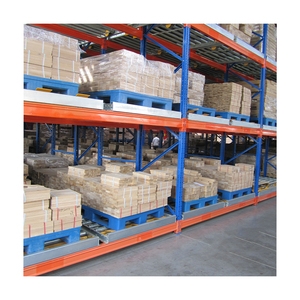
Steel Pallet Rack System Heavy Shelving Selective Duty Storage Shelves
Inquire Now
Heavy Duty Pallet Rack System Industrial Easy Assembly Adjustable
Inquire Now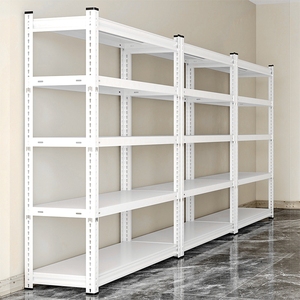
Heavy Duty Steel Storage Rack Corrosion Resistant Industrial Racking
Inquire Now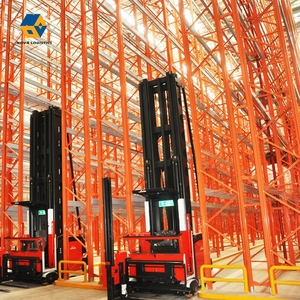
Stacking Lift Cold Storage High Bay VNA Pallet Racking Powder Coating
Inquire Now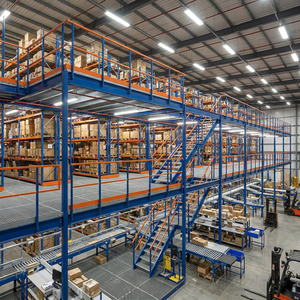
Customized Industrial Pallet Rack System Storage Solution Manufacturer
Inquire Now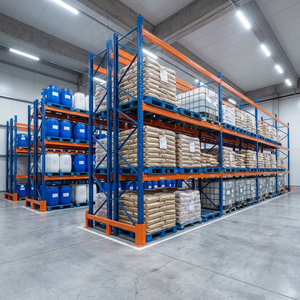
Palettenregal Warehouse Pallet Rack Q235B System With Free Design
Inquire Now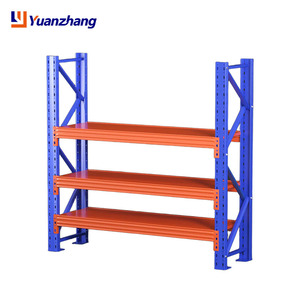
Heavy Duty Double Deep Pallet Racking Universal Steel Storage Shelves
Inquire Now1. Technical Engineering of Lane Storage Racking Systems: Architecture & Mechanical Rigor
Lane storage racking systems—commonly categorized into Drive-In/Drive-Through racking, Radio Shuttle deep-lane systems, Double-Deep configurations, and Automated Storage and Retrieval Systems (AS/RS)—represent the pinnacle of volumetric storage efficiency in modern industrial warehousing. Designed to reduce operating aisle space by up to 65% compared to standard selective pallet racking, deep-lane architecture transitions storage design from traditional 2D floor footprint planning into high-density 3D spatial maximization.
As a premiere OEM/ODM manufacturer headquartered in Nanjing, China, ApexDrive Industrial Racking Co., Ltd. (established in September 2006) leverages advanced structural dynamics to manufacture industrial racking systems engineered for high-throughput fulfillment hubs, cold-chain preservation facilities, FMCG distribution centers, and heavy manufacturing warehouses worldwide.
Information Gain Insight: The structural efficiency of a deep-lane racking system relies on minimizing aisle-to-storage ratios while maintaining lateral rigidity under asymmetric loading conditions. By utilizing high-tensile Q355B structural steel for load-bearing upright frames, structural stiffness increases by up to 28% relative to conventional Q235 steel, preventing frame deflection over high-bay elevations exceeding 12 meters.
Structural Mechanics & Dynamic Load Distribution
Deep-lane racking configurations subject vertical upright columns and horizontal support rails to unique combined stress profiles, including axial compression, longitudinal shear, and eccentric bending moments caused by single-sided loading cycles. To counteract these physical forces, our engineering team implements structural calculations compliant with FEM 10.2.02 (European Federation of Materials Handling) and RMI (Rack Manufacturers Institute) standards.
Our heavy-duty upright frames are roll-formed into continuous profiles featuring multi-ribbed side geometry. This structural profile increases the section modulus (Wz) and radius of gyration (i), ensuring that column buckling resistance is maximized even under seismic accelerations corresponding to Zone 4 (M7 earthquake design criteria).
| Racking Architecture | Volumetric Utilization | Access Methodology | Optimal Load Profile | Structural Load Rating |
|---|---|---|---|---|
| Radio Shuttle Deep Lane | 85% - 90% | FIFO or LIFO (Semi-Automated) | High Volume, Batch SKUs | Up to 2,000 kg / Pallet |
| Drive-In Racking | 70% - 80% | LIFO (Forklift Driven) | Uniform SKUs, Low Turnover | Up to 1,500 kg / Pallet |
| AS/RS Deep-Lane Automated | 90% - 95% | FIFO / LIFO (Fully Automated) | Ultra-High Throughput, 24/7 Ops | Up to 3,000 kg / Pallet |
| Double Deep Selective | 60% - 65% | 50% Direct Access (Panty Fork) | Medium Turnover, 2-Pallet SKUs | Up to 1,800 kg / Pallet |
| High-Bay VNA (Very Narrow Aisle) | 75% - 85% | 100% Direct Selectivity | High SKU Mix, Vertical Expansion | Up to 1,500 kg / Pallet |
Verified Manufacturing Process
Direct Factory Capabilities & Production Quality Assurance
From raw coil sourcing to automated 220-meter powder coating lines, discover how our ISO 9001:2015 and CE certified production safeguards your structural investment.
Traceable Raw Material Sourcing
Structural components are exclusively roll-formed from premium Q235B and Q355B cold-rolled steel coils supplied by China’s primary steel mills: Baosteel, Masteel, and Wuhan Iron and Steel. Mill test reports (MTR) verifying chemical composition and yield strength accompany every production batch.
Robotic Automated Welding
Beam connectors and structural adapters are joined using high-precision multi-axis robotic welding manipulators. Continuous automated welding eliminates human error, preventing missed seams or internal porosity, and ensuring structural joints exceed dynamic fatigue limits.
220m Electrostatic Powder Coating
Components pass through a 10-stage automated pre-treatment system (degreasing, phosphating, pure water rinsing) before entering our 220-meter automated powder coating line equipped with Swiss Gema spraying guns, curing at 180°C for exceptional impact and salt-spray resistance.
2. Strategic Future Trends in Deep-Lane Racking & Warehouse Automation (2025–2030)
As global enterprise supply chains evolve under pressure from rising land costs, labor shortages, and rapid e-commerce fulfillment expectations, procurement directors must align racking infrastructure investments with long-term technological trajectories. The industrial storage sector is undergoing a structural transition toward intelligent, energy-efficient, and software-connected deep-lane environments.
Trend 1: Convergence of Radio Shuttle Systems with Autonomous Mobile Robots (AMRs)
Traditional semi-automated radio shuttle systems rely on human forklift operators to transfer pallet shuttles between distinct racking lanes. The emerging procurement paradigm incorporates Autonomous Mobile Robots (AMRs) equipped with vertical lifting mechanisms. These AMRs transport shuttles and pallets directly from receiving docks into racking channels without manual intervention. Procurement specifications are shifting toward integrated omnidirectional guide rails and standardized optical positioning targets built into racking uprights.
Trend 2: Dynamic Thermal Optimization in Cold Storage Deep-Lane Bays
Operating cold storage facilities at temperatures reaching -30°C incurs immense power demands. Because refrigerated air naturally sinks and becomes trapped in high-density lane configurations, next-generation lane storage racks incorporate thermodynamic convective channels. By calculating perforation pitches along beam profiles and structural decking, engineered racking systems reduce HVAC energy consumption by up to 18% while preventing thermal localized hot spots.
Trend 3: Smart Structural Health Monitoring (IoT Strain Gauges)
Structural failure in high-bay deep-lane systems can cascade across hundreds of pallet locations. Leading logistics operations are mandating the pre-installation of digital IoT strain gauges and tilt sensors along key structural nodes (such as frame baseplates and top bracing beams). Connected to a centralized Warehouse Management System (WMS), these sensors deliver real-time telemetry regarding overload conditions, dynamic impact loads from material handling equipment, and seismic stress levels.
Procurement Tip: When sourcing lane racking systems for automated environments, mandate a maximum cumulative hole-pitch tolerance of ±2 mm over a 12-meter upright length. Sub-standard tolerances cause cumulative structural drift, leading to sensor calibration failures in automated shuttle and stacker crane equipment.
Trend 4: Sustainable Steel Sourcing & Lifecycle Carbon Footprint Tracking
Environmental, Social, and Governance (ESG) criteria are rapidly becoming mandatory evaluation factors in international tender bids. Global logistics enterprise buyers now require structural racking suppliers to deliver environmental product declarations (EPDs). By utilizing energy-efficient roll-forming lines, recycled scrap steel blending, and low-VOC thermosetting powder coatings, manufacturers reduce embedded carbon per pallet position by over 22% compared to traditional legacy factories.
3. Global Field Proven Execution: Real-World Case Studies
ApexDrive Industrial Racking Co., Ltd. has executed over 6,000 successful projects across 60+ countries and regions. Our engineering solutions deliver reliable operational support for enterprise leaders, including FAW Group, SAIC Volkswagen, BMW, Nike, BOE Technology, HIT Robot Group, China Aerospace, Wanrun New Energy, and Shanying Paper.
Case Study: Suzhou Metro Maintenance Depot (AS/RS High-Bay)
Designed and manufactured a customized high-bay Automated Storage and Retrieval System (AS/RS) for rail transit spare parts management. Engineered with sub-millimeter structural tolerance to interface seamlessly with automated stacker cranes, increasing parts retrieval speed by 300% while operating 24/7 with zero picking errors.
Case Study: Cold-Chain Logistics Center (Texas, USA)
Engineered a 14-deep lane radio shuttle system operating in a -25°C freezing environment. Utilizing high-durability cold-resistant Q355B structural steel profiles and specialized hot-dip galvanized components, the facility achieved an 88% spatial utilization rate while drastically lowering thermal loss per pallet position.
Procurement Knowledge Base
Frequently Asked Questions (FAQ) for Industrial Racking Buyers
Get definitive answers from our senior racking structural engineers regarding design inputs, metal metallurgy, international safety compliance, and overseas site execution.
What technical data is required for a free warehouse racking layout design?
To provide an engineered CAD layout drawing and load data calculation report, our engineering team requires:
1. Building architectural drawings (CAD or PDF) indicating clear building height, column locations, doors, utility pipes, and fire sprinkler clearances.
2. Exact pallet specifications: Length × Width × Height (including cargo), gross weight per pallet position, and bottom runner layout.
3. Operational requirements: Total SKU count, required total pallet capacity, stock rotation preference (FIFO vs. LIFO), and forklift model specifications (lift height, aisle turning radius, mast type).
1. Building architectural drawings (CAD or PDF) indicating clear building height, column locations, doors, utility pipes, and fire sprinkler clearances.
2. Exact pallet specifications: Length × Width × Height (including cargo), gross weight per pallet position, and bottom runner layout.
3. Operational requirements: Total SKU count, required total pallet capacity, stock rotation preference (FIFO vs. LIFO), and forklift model specifications (lift height, aisle turning radius, mast type).
How do Q235B and Q355B steel grades differ in structural racking applications?
Q235B steel offers a minimum yield strength of 235 MPa and is the standard industry choice for medium to heavy-duty horizontal pallet beams and light structural frames. Q355B steel features a higher yield strength of 355 MPa (over 50% stronger), making it essential for heavy load-bearing upright frames, high-bay AS/RS structures, long-span mezzanine columns, and seismic-resistant installations. Using Q355B allows engineers to optimize material thickness without sacrificing total load capacity.
What protection standards ensure powder-coated racking resists corrosion?
Our factory utilizes a 220-meter automated powder coating line integrated with Swiss Gema electrostatic spraying heads. Prior to coating, components undergo a rigorous 10-stage surface preparation process involving chemical degreasing, rust removal, surface conditioning, and zinc phosphating. The applied thermosetting epoxy-polyester powder is cured at 180°C, establishing a uniform 60–80 micron protective barrier compliant with ISO 12944 standard C2-C3 durability classes. Hot-dip galvanizing (HDG) is available for extreme chemical or outdoor environments.
How does your factory handle export packing to prevent damage during ocean transit?
Components are packaged following rigid export bundling procedures. Upright columns and heavy beams are bundled using multi-tier high-tension steel strapping with protective plastic corner guards and timber spacers to eliminate metal-on-metal friction. Small accessories (bolts, safety pins, footplates, row spacers) are packed in heavy-duty cardboard boxes secured on ISPM-15 compliant fumigated plywood pallets. Container loading plans are pre-calculated via software to ensure balanced axle weight distribution inside 40ft High Cube containers.
Do you provide overseas installation support and engineering supervision?
Yes. Every exported project includes a comprehensive documentation package comprising detailed CAD installation drawings, 3D step-by-step assembly diagrams, component checklists, and an English instruction manual. Additionally, our engineering staff provides real-time online video guidance. For large-scale automated projects or complex mezzanine platforms, certified ApexDrive installation engineers can be dispatched to your project site to supervise local assembly teams.
What quality certifications and structural testing validate your racking systems?
ApexDrive Industrial Racking operates under a strictly certified ISO 9001:2015 Quality Management System. Our racking components carry formal European CE certification (EN 15512 standard). Every batch undergoes trial assembly prior to leaving the factory floor, and structural components undergo destructive tensile testing, weld seam ultrasonic inspection, and beam deflection testing (guaranteed deflection lower than L/300 under full rated load).
Ready to Maximize Your Warehouse Volumetric Storage Capacity?
Contact our senior structural logistics engineers today for a complimentary warehouse space consultation, structural load calculation, and custom 2D/3D CAD layout design within 24 hours.
Inquire Now