ApexDriveRACKING
Export Product Portfolio
Precision-Engineered Industrial Warehouse Racking Systems
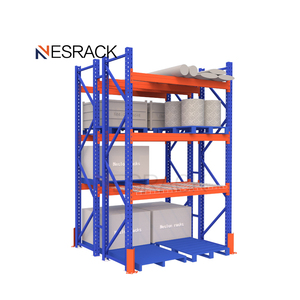
Commercial Grade Warehouse Rack Multi Level Pallet Racking System
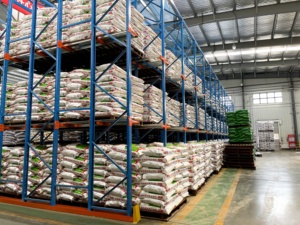
Heavy Duty Radio Shuttle Racking for Cold Storage High Density System
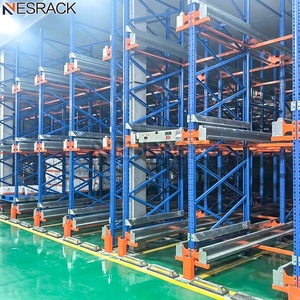
China Wholesale Semi-Automatic Remote Control Pallet Shuttle Racking
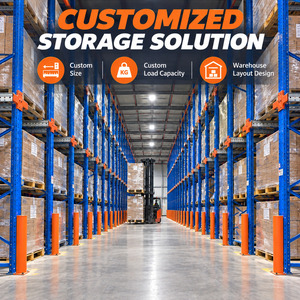
OEM Q235B/Q355B Steel High Density Coldroom Drive-In Racking
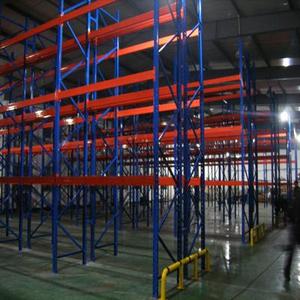
Narrow Aisle High Density Storage System with Adjustable Beams
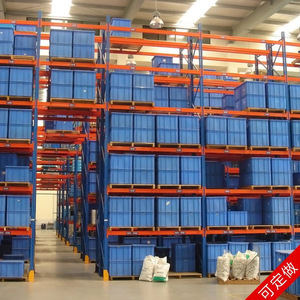
Multi-Layer Epoxy Powder Coated High Bay Warehouse Storage System
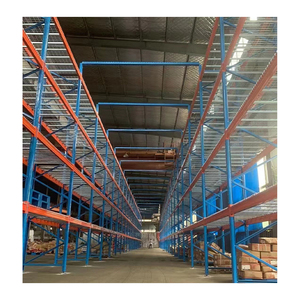
Versatile Heavy Duty Custom Steel Pallet Racking Warehouse System
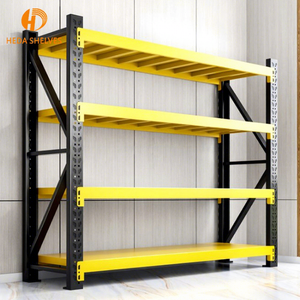
Boltless Adjustable 500kg/Layer Industrial Steel Stack Shelving
Industry Whitepaper
Architectural Advantage of Multi-Way (4D) Shuttle Systems in Germany
An engineering breakdown of how Chinese manufacturing scaling enables tier-1 European logistics hubs to achieve maximum footprint efficiency while adhering to DIN EN 15635 standards.
1. The Paradigm Shift in German Industrial Real Estate & Intralogistics
With industrial land acquisition costs rising dramatically across major German logistics regions—such as North Rhine-Westphalia (NRW), Munich, Frankfurt Rhine-Main, and Hamburg—warehouse operators can no longer rely on traditional horizontal expansion. The demand for maximum floor-space utilization (Raumnutzungsgrad) has pushed logistics engineers to transition from conventional Selective Pallet Racking to dynamic, deep-lane automated storage systems.
Among automated technologies, the Multi-Way Shuttle Racking System (also known as the 4D Pallet Shuttle) has emerged as the definitive solution for high-density storage. Unlike standard 2D radio shuttles that move only linearly along deep channels, a 4D Multi-Way Shuttle can traverse both longitudinal and transverse channels within the rack structure, changing rails autonomously via built-in hydraulic or electric lifting mechanisms. Combined with vertical lifters (reciprocating elevators), the 4D shuttle can access any pallet position across the entire 3D grid system.
Engineering Insight (Information Gain): Modern German warehouse projects utilizing ApexDrive Multi-Way Shuttles realize up to 85% space efficiency compared to 35-40% for conventional wide-aisle racking systems. Furthermore, capital expenditures (CapEx) for 4D shuttle infrastructure are typically 25% to 35% lower than traditional AS/RS stacker crane systems, with reduced structural steel mass requirements and vastly superior energy efficiency.
2. Structural Mechanics & Standard Compliance: DIN EN 15512 & FEM 10.2.02
To successfully serve the rigorous German market, structural racking components must satisfy stringent European structural calculations. ApexDrive Multi-Way Shuttle Racking is engineered strictly in compliance with DIN EN 15512 (Steel static storage systems - Adjustable pallet racking systems - Principles for structural design) and FEM 10.2.02 guidelines for automated high-bay warehouses.
High-Yield Steel Grades
Roll-formed using premium Q355B structural steel (equivalent to European S355JR), providing exceptional tensile strength (up to 510 MPa) and minimal elastic deflection under static and dynamic load conditions.
Deflection Limit (L/300)
Racking beams and shuttle support rails maintain a strict deflection limit under full capacity (up to 1,500 kg per pallet), ensuring smooth optical sensor tracking and precise shuttle positioning.
Seismic & Dynamic Rigidity
Computer-modeled dynamic analysis accounts for acceleration forces during shuttle braking and directional transitions. Fully tested for operational resilience in European industrial zones.
Localized Applications
Tailored Solutions for German Industry Vertical Hubs
From automotive supply chains in Baden-Württemberg to deep-freeze cold storage in Bremerhaven, our Multi-Way Shuttle systems adapt to specialized operational requirements.
Automotive OEM & Spare Parts Logistics
Primary Hubs: Stuttgart, Munich, Wolfsburg, Leipzig.
German automotive giants require high-throughput buffer storage for small-box and heavy-component containers. ApexDrive Multi-Way Shuttles seamlessly interface with automated guided vehicles (AGVs) and conveyor systems, enabling 24/7 Just-in-Sequence (JIS) component delivery.
Deep-Freeze Cold Chain (-30°C)
Primary Hubs: Port of Hamburg, Bremerhaven, Duisburg.
Energy expenditure in sub-zero cold stores is extremely high. By eliminating forklift access aisles, our shuttle system reduces cold storage building volumes by up to 40%. Shuttles are built with low-temperature lithium-titanate batteries and IP65-rated moisture protection.
E-Commerce & Omnichannel Fulfillment
Primary Hubs: Dortmund, Frankfurt Rhine-Main, Berlin-Brandenburg.
Handling peak season order spikes requires dynamic scaling. Multi-Way Shuttle systems allow German fulfillment operators to increase throughput by simply deploying additional shuttles into the existing rack framework without installing extra static steel components.
Trends & Comparison
Germany Intralogistics Trends (2025–2030) & Data Matrix
Understanding the transition toward green intralogistics, dark warehousing, and automated inventory control systems in DACH countries.
Key Industry Trends Driving Automation Adoption in Germany
German logistics infrastructure is undergoing rapid modernization driven by three primary catalysts: severe labor shortages in warehouse operations, stringent federal energy efficiency standards (ISO 50001 compliance), and the expansion of Industry 4.0 IoT warehouse architectures.
ApexDrive Multi-Way Shuttle systems integrate intelligent Warehouse Control Systems (WCS) that communicate bidirectionally with tier-1 enterprise Resource Planning and Warehouse Management software, such as SAP EWM (Extended Warehouse Management), Manhattan Associates, and Oracle WMS via RESTful API or OPC UA protocols.
Technology Comparison Data Visualization
| System Parameter | ApexDrive Multi-Way (4D) Shuttle | Standard 2D Radio Shuttle | Traditional Stacker Crane AS/RS |
|---|---|---|---|
| Space Utilization Efficiency | Extreme (80% - 88%) | High (70% - 78%) | High (75% - 85%) |
| Flexibility & Redundancy | Very High (Shuttles reassigned dynamically) | Moderate (Lane limited) | Low (Crane failure stops full aisle) |
| Maximum Travel Speed | 2.0 - 2.5 m/s | 1.0 - 1.2 m/s | 3.0 - 4.0 m/s |
| Power System | LTO Lithium Battery / Ultra-Capacitor | Lead-Acid or Standard Lithium | Busbar Continuous Power |
| CapEx Cost Ratio | Optimal (Scalable) | Lowest initial cost | Highest initial investment |
| Cold Storage Adaptation (-30°C) | Seamless (Integrated Heating Kits) | Standard optional | Requires special low-temp lubricants |
Manufacturing Rigor
End-to-End Factory Control: From Raw Steel Coil to Container Shipment
ApexDrive Industrial Racking Co., Ltd. controls all quality variables under one roof at our 20,000 m² modern manufacturing complex in Nanjing, China.
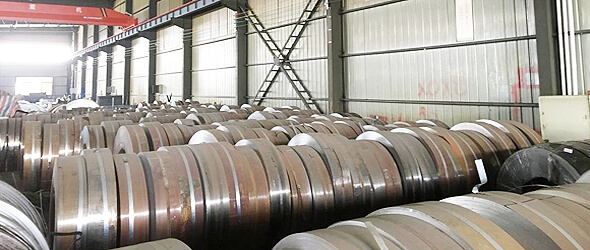
Stage 01
Traceable Prime Steel Sourcing (Baosteel / Masteel)
We source prime hot-rolled structural steel coils exclusively from top-tier Chinese state-owned steel mills, including Baosteel, Masteel, and Wuhan Iron & Steel. Every batch comes with authentic material test certificates verifying yield point (≥355 MPa for Q355B) and chemical composition. Tensile tests and thickness tolerance inspections are conducted upon entry.
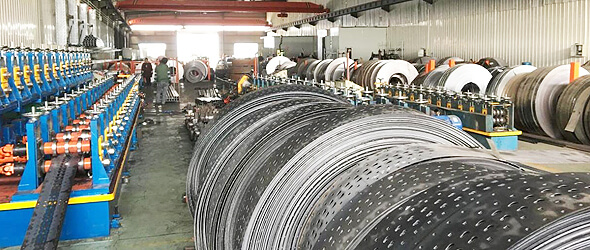
Stage 02
German-Technology Precision Roll Forming (±2mm over 12m)
Racking uprights, beams, and shuttle guide rails are processed on automated continuous roll-forming lines developed with German tooling technology. Upright profiles up to 12 meters in length are punched and formed in a single continuous pass, maintaining a cumulative hole-pitch error within ±2 mm over the entire length for absolute beam engagement safety.
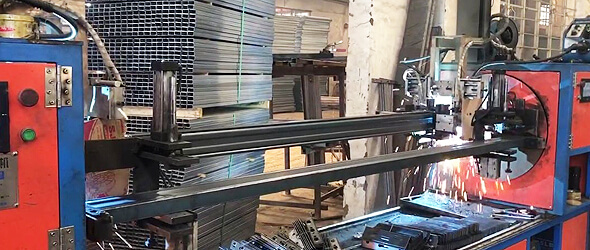
Stage 03
Robotic Manipulator Welding for Uncompromising Joint Integrity
Beam claw connectors and heavy load-bearing structural joints are welded using multi-axis automatic robotic welding manipulators. Robotic welding eliminates manual human error, guaranteeing deep weld penetration, zero porosity, and smooth aesthetic seams capable of handling continuous cyclic stress loads under heavy shuttle operations.
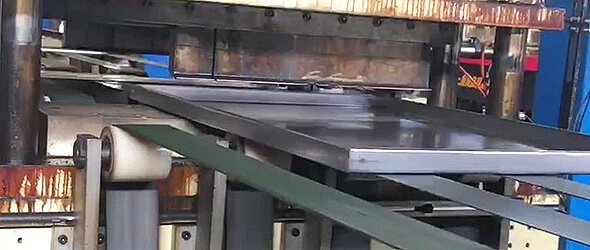
Stage 04
Automatic Bending & Integrated Metal Fabrication
For multi-tier mezzanine decking and specialized shelf accessories, our automated bending centers process sheet metal in gauges from 0.7mm to 1.2mm. Every bend angle is controlled by CNC sensors, ensuring tight mechanical fit-up and vibration-free installation on-site.
Stage 05
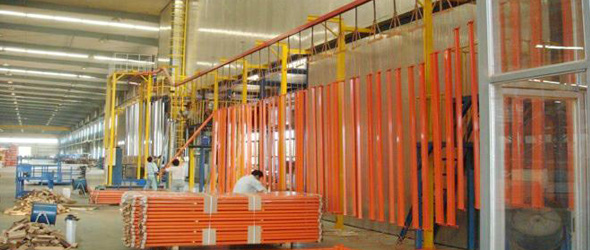
220-Meter Automatic Powder Coating Line (Swiss Gema Guns)
Steel profiles undergo a 10-stage pre-treatment process (including automatic spray degreasing, rust removal, and phosphate coating) before entering our 220-meter powder coating line equipped with Swiss Gema electrostatic spray guns. Cured at 180°C, the thermosetting epoxy-polyester coating achieves exceptional impact resistance and corrosion protection.
Stage 06
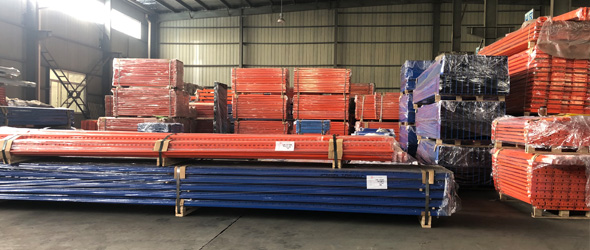
Heavy-Duty Export Bundle Packaging & Pre-Shipment Trial Fit
Before container loading, sample frames are fully assembled in our factory to confirm hole alignments and shuttle rail dimensions. Racking beams and upright frames are bound with heavy-duty multi-tier steel strapping and protective corner guards, while small hardware parts are packed into wood-reinforced export cartons for safe ocean transport to European ports.
Procurement Knowledgebase
Frequently Asked Questions by German Importers & Logistics Engineers
Direct technical guidance on standards compliance, import procedures, structural calculations, and localized support in Germany.
How does ApexDrive ensure compliance with German statutory racking safety standards (DIN EN 15635)?
Every racking system engineered for the German market undergoes rigorous static and dynamic structural calculations in accordance with DIN EN 15512 and FEM 10.2.02. We provide comprehensive statics documentation (Statische Berechnung) stamped by qualified structural engineers. Furthermore, our manufacturing facility operates under ISO 9001:2015 certification, and our products carry CE marking, satisfying all requirements of the German Product Safety Act (Produktsicherheitsgesetz - ProdSG).
What technical data is required from our side to receive a complete CAD layout and quote?
To produce an accurate CAD drawing and load calculation report free of charge, our engineering team requires: (1) Warehouse building CAD drawings indicating clear overhead clearance, column grid layout, floor slab loading capacity, and door/sprinkler positions; (2) Pallet dimensions (L x W x H including cargo overrun) and maximum load weight per pallet; (3) Required operational flow (FIFO or LIFO); and (4) Desired throughput target (pallets per hour moved by the Multi-Way Shuttle system).
What are the customs duty rates and HS Tariff codes for importing racking from China to Germany?
Industrial steel racking components fall under HS Code 7308.90 (Structures and parts of structures of iron or steel). For EU imports into Germany, customs clearance requires the Commercial Invoice, Packing List, Bill of Lading, and Certificate of Origin. Standard EU third-country duty rates apply unless specific trade adjustments exist. Our dedicated export logistics team assists your German freight forwarder with complete customs documentation packages.
Can ApexDrive dispatch engineers for on-site installation supervision in Germany?
Yes. We offer flexible installation options: (1) Turnkey Project Support: We dispatch certified Chinese installation supervisors to work alongside local German installation crews (Montageteams) to oversee frame erection, shuttle rail calibration, and electrical integration; (2) Remote Engineering Support: We provide detailed 3D step-by-step assembly drawings, English/German installation manuals, and 24/7 video guidance for your appointed local contractor.
How does the 4D Multi-Way Shuttle perform in sub-zero cold chain environments (-25°C to -30°C)?
ApexDrive Cold-Chain Multi-Way Shuttles are specifically modified for deep-freeze operation. Key adaptations include: Lithium-Titanate (LTO) battery cells capable of rapid charging and stable discharge at -30°C, internal anti-condensation heating elements for control electronics, specialized low-temperature lubricants, and optical sensors equipped with heating lenses to prevent frost accumulation during continuous duty cycles.
What is the expected lead time from contract signing to delivery at Hamburg or Rotterdam ports?
Manufacturing standard project orders typically takes 25 to 35 days from finalized CAD drawing approval. Ocean freight shipping from Shanghai/Nanjing port to main European gateway ports (Hamburg, Bremerhaven, Rotterdam) takes approximately 30 to 38 transit days. Overall project lead time ranges between 60 and 75 days.
Execution Workflow
8-Stage Closed-Loop Turnkey Project Engineering
A structured, single-point-of-contact project delivery methodology ensuring complete risk mitigation and seamless commission.
01. Initial Consultation
Requirement gathering on pallet specifications, SKU counts, building constraints, and throughput goals.
02. Site Measurement
Warehouse floor review using precision laser scanners or client CAD verification checklists.
03. Free Layout Design
Full 2D CAD layouts, 3D structural rendering, and comprehensive static load calculation reports.
04. Scheme Optimization
Iterative engineering refinement with client operational managers to optimize cost vs throughput performance.
05. Contract & Guarantee
Finalization of technical specifications, delivery milestones, DIN compliance guarantees, and warranty terms.
06. Precision Manufacturing
Automated roll-forming, robotic welding, and powder coating backed by raw material mill tracking.
07. Export & Transport
Steel-strapped bundle packaging and container loading optimization directly delivered to European hub destinations.
08. Installation & After-Sales
English/German documentation, remote or on-site supervisor dispatch, and long-term spare parts availability.