ApexDriveRACKING
High-Density Warehousing Equipment
Featured OEM Pallet Shuttle & Racking Systems
Precision-engineered pallet racking, automated shuttle cars, and mezzanine structures manufactured to structural Q235B/Q355B steel standards for Korean logistics projects.
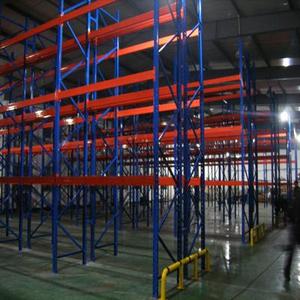
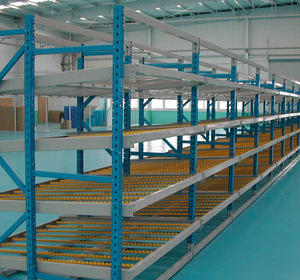
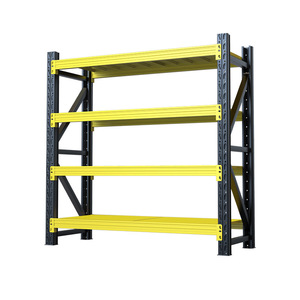
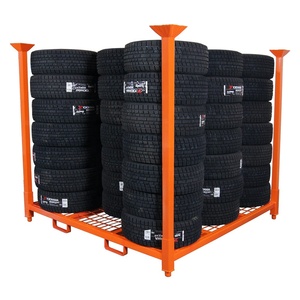
1. Architectural & Engineering Overview: OEM Pallet Shuttle Systems for South Korea
South Korea’s warehousing landscape is defined by tight spatial constraints, rapidly escalating commercial land costs in urban logistics corridors (such as Gyeonggi-do, Incheon, and Busan), and strict building safety regulations. To maintain maximum throughput without expanding footprint, modern Korean logistics operators are aggressively transitioning from traditional selective racking to semi-automated and fully automated high-density Pallet Shuttle Systems.
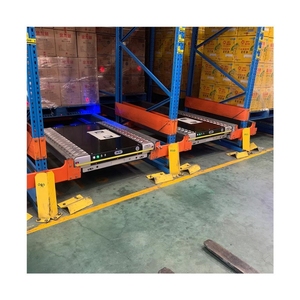
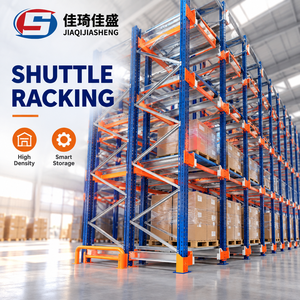
As a specialized Custom OEM Pallet Shuttle Racking Manufacturer & Supplier for Korea, ApexDrive Industrial Racking Co., Ltd. provides white-paper grade structural engineering, proprietary radio shuttle car manufacturing, and end-to-end OEM/ODM integration. Our radio shuttle storage solutions convert underutilized warehouse overhead into productive storage volume, reaching space utilization rates of up to 85% compared to 35-45% in conventional layout configurations.
Structural Integrity & Seismic Compliance (KBC / KCS Code Alignment)
South Korea’s seismic design requirements for industrial facilities require strict adherence to structural load factors. All racking components produced in our 20,000 m² manufacturing base utilize premium Q235B and high-tensile Q355B cold-rolled structural steel sourced directly from Tier-1 mills (Baosteel, Masteel, and Wuhan Iron and Steel). Structural frames are designed with a safety factor exceeding 1.8 and a maximum allowable beam deflection ratio of L/300.
- Frame Profile Engineering: Continuous roll-formed uprights up to 12 meters in height without splice welds, guaranteeing structural homogeneity under cyclic earthquake acceleration.
- Precision Hole Pitching: German CNC punch tooling ensures cumulative pitch errors stay below ±2 mm over a 12-meter height, preventing torsional stress concentration across connector joints.
- Custom Guide Rail Geometry: Proprietary shuttle guide rails feature integrated side-flange retention to prevent radio shuttle derailment under rapid acceleration (1.2 m/s) and emergency braking maneuvers.
2. Localized Application Scenarios Across South Korea Logistics Nodes
To maximize Information Gain and align with local operational demands, our engineering team customizes pallet shuttle sub-assemblies according to South Korea's regional industry verticals:
Cold Chain Storage (Busan & Gyeonggi)
Operates reliably down to -25°C in seafood, meat, and pharmaceutical cold storage facilities. Features lithium iron phosphate (LiFePO4) low-temp batteries, IP65 waterproof sensor seals, and anti-condensation internal heating circuits.
E-Commerce Micro-Fulfillment (Incheon & Seoul Capital Area)
Tailored for high-turnover online retail hubs (such as Coupang and Naver logistics networks). High-speed shuttle indexing coupled with WMS integration enables dynamic FIFO/LIFO execution during sales peak waves.
Automotive & Electronics Buffer Storage (Ulsan & Pyeongtaek)
Heavy-duty pallet shuttles engineered for unit loads up to 1,500 kg. Designed to handle standardized KOPAL (Korean Pallet Pool 1100x1100mm) and plastic EU-style pallets seamlessly within auto assembly plant buffer warehouses.
3. Technical Benchmark: Storage System Comparison for Korean Facilities
Selecting the optimal storage layout requires balancing SKU diversity against throughput velocity and capital investment. The table below details why Pallet Shuttle Technology serves as the optimal middle-ground between manual selective racking and high-cost fully automated AS/RS stacker crane systems:
| Storage System Type | Space Utilization Ratio | Pallet Accessibility | Korean Labor Cost Reduction | Cold Storage Efficiency | Recommended Application |
|---|---|---|---|---|---|
| OEM Radio Pallet Shuttle | 75% - 85% | Lane-based FIFO / LIFO | High (60% Less Forklift Drive Time) | Maximum Efficiency | Cold Storage, Food & Beverage, E-Commerce Hubs |
| Selective Pallet Racks | 35% - 45% | 100% Direct Access | Low (High Forklift Operations) | Low Efficiency (High Air Vol) | High SKU, Low Volume Distribution Centers |
| Drive-In Racking | 60% - 70% | Strict LIFO Only | Moderate (Risk of Rack Collision) | Moderate | Bulk Raw Materials, Homogeneous Goods |
| Full AS/RS (Stacker Crane) | 85% - 92% | Fully Automated WMS | Maximum (Near Zero Operator) | High (High Initial Capex) | Mega Fulfillment Centers & High-Bay Hubs |
4. South Korea Logistics Trends & Smart Warehouse Initiatives
The Ministry of Land, Infrastructure and Transport (MOLIT) in South Korea has actively promoted the "Smart Logistics Center Certification System" (스마트물류센터 인증제도), encouraging logistics firms to upgrade legacy facilities with energy-efficient, automated equipment. Key technology drivers influencing Korean procurement decisions include:
- Shift from LIFO to Dynamic FIFO: Traditional Drive-in systems forced LIFO (Last-In, First-Out) picking. Modern Pallet Shuttle configurations allow dual-end aisle access, allowing Korean food and beverage distributors to enforce strict FIFO rotation for perishable goods.
- Standardization around KOPAL Pallet Sizes: The standard 1100 mm × 1100 mm T-11 Korean pallet dominates domestic supply chains. ApexDrive custom-designs shuttle guide rails, beam spans, and optical sensors around the exact tolerances of T-11 and T-12 wooden and plastic pallets.
- Cold Storage Energy Saving (ESG Goals): Electricity tariffs in South Korea have elevated operational expenditures for cold stores. By eliminating forklift aisles inside the deep rack block, the chilled air envelope is reduced by up to 40%, delivering substantial annual power savings.
Why Global EPC Contractors & Korean Buyers Partner with ApexDrive
From initial CAD spatial planning to containerized export shipping directly to Busan or Incheon Port, ApexDrive provides full-lifecycle engineering support. We manufacture structural steel racking and radio shuttle vehicles under one roof, ensuring total hardware-software compatibility.
20,000 m²
Production Base
30,000 T+
Annual Capacity
220 m
Auto Powder Line
6,000+
Global Projects
Quality Assurance & Production Standards
Precision Manufacturing from Steel Coil to Container
Every racking component undergoes rigorous inspection protocols, non-destructive weld testing, and pre-shipment trial assembly to ensure zero field-assembly delays in Korea.
01
Traceable Raw Steel
Q235B and Q355B structural coil certified with original mill test certificates (MTC) verifying yield strength and chemical purity.
02
German Roll Forming
Multi-stage continuous cold roll forming ensures precise beam profile geometry and structural integrity under dynamic load stresses.
03
Robotic Welding
Automated robotic manipulators weld beam connectors and structural base plates, completely eliminating missed welds and porosity.
04
Swiss Gema Coating
10-stage automatic degreasing and electrostatic powder coating cured at 180°C for superior impact, scratch, and rust resistance.
frequently asked questions
South Korea Procurement & Technical FAQ
Direct answers from our senior project engineering team regarding design CADs, shipping logistics, customs, and cold-room technical specifications.
Q: How do your pallet shuttle systems accommodate standard South Korean pallet dimensions?
A: Our racking channels and radio shuttle cars are custom-manufactured to match standard Korean T-11 (1100mm × 1100mm) and T-12 (1200mm × 1000mm) wooden and plastic pallets. Optical positioning sensors are calibrated during factory testing to detect varying bottom-deck runner profiles without false trigger stops.
Q: Can ApexDrive design pallet shuttle racking for sub-zero cold stores in South Korea?
A: Yes. Our cold-storage edition shuttle cars operate down to -25°C. They utilize specialized internal heating components, low-temperature lubricants, and sealed LiFePO4 batteries designed to prevent condensation shorts during battery swapping between cold and ambient zones.
Q: What documentation do you supply for Korean building permit and seismic validation?
A: We provide full structural layout CAD drawings, 3D structural rendering calculations, mill test certificates (Q235B/Q355B), ISO 9001:2015 certificates, and CE compliance documentation to assist your local Korean structural engineering consultants during municipal filing.
Q: How are heavy-duty racking orders shipped to Busan or Incheon Ports?
A: Uprights and beams are bound using high-tensile steel strapping and protective edge boards. Fasteners, baseplates, and shuttle vehicles are securely packed on plywood pallets in wooden crates, preventing sea-freight moisture exposure and ensuring rapid customs inspection at Port of Busan or Incheon.
Q: What is the typical lead time for a custom OEM Pallet Shuttle project for Korea?
A: Engineering CAD layouts and 3D modeling are completed within 48 hours. Manufacturing typically requires 20 to 25 days depending on project tonnage. Sea freight transit time from our factory port to Busan or Incheon is approximately 3 to 5 days.
Q: Do you provide installation guidance and technical support in South Korea?
A: Every shipment includes comprehensive English installation manuals, step-by-step assembly videos, and structural bolt torque specifications. Our technical engineering team provides real-time online video guidance during installation, and site installation assistance can be arranged upon request.
Get Custom Design & Factory Quote
Optimize Your Korean Warehouse Storage Density Today
Contact our project engineers for a free 2D/3D warehouse layout CAD design, load capacity calculation report, and factory-direct price estimate within 24 hours.