ApexDriveRACKING
Recommended Semi-Automated Pallet Racking Systems
Engineered for maximum spatial efficiency, low-temperature performance, and seamless integration with Moscow's modern logistics hubs. Browse our flagship high-density storage configurations below.
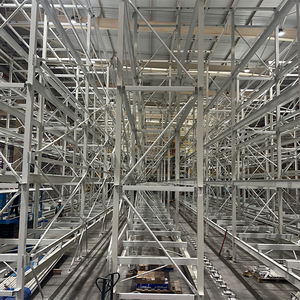
Engineering Design Pallet Rack System with High Density Layout
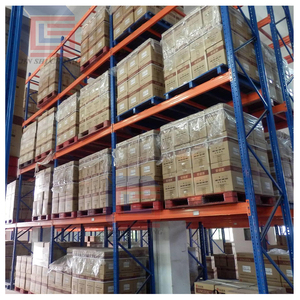
Industrial Heavy Duty Steel Pallet Rack Warehouse Shelving System
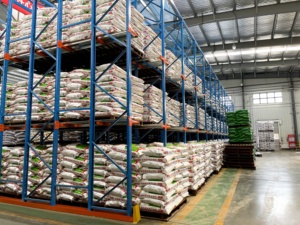
Heavy Duty Radio Shuttle Racking for Cold Storage & Deep Lanes
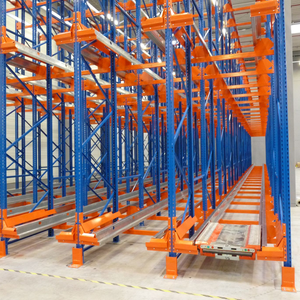
Customized Radio Shuttle Pallet Racking for Logistics Centers
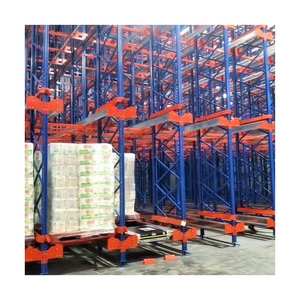
Semi-Automatic Storage Rack Corrosion Protected Shuttle System
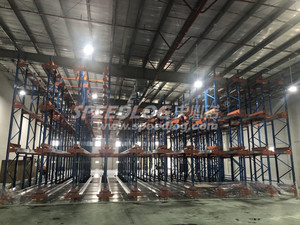
High Density Steel Blue Semi Auto Pallet Shuttle Rack Solution
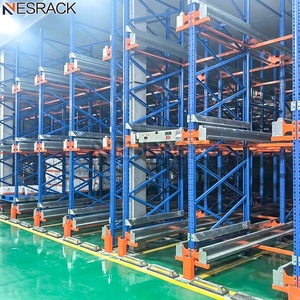
Remote Control Radio Shuttle Racking System Wholesale
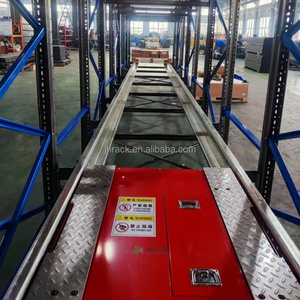
Automated Stackable Metal Shelves & Pallet Shuttle Racking System
30,000+
Tons Annual Steel Capacity
6,000+
Global Projects Delivered
80%
Max Volume Utilization
-30°C
Cold Storage Sub-Zero Ready
Executive Overview: The Evolution of Semi-Automated Pallet Racking in the Moscow Logistics Market
The Greater Moscow Region (Moscow Oblast) stands as the undisputed logistical heartland of Russia and the Central Federal District. Key supply chain corridors along the MKAD (Moscow Ring Road), Central Ring Road (A-113), A-107, A-108, and industrial clusters in Podolsk, Domodedovo, Chekhov, Noginsk, and Pushkino handle over 65% of the nation's containerized freight, FMCG movement, and e-commerce fulfillment. However, logistics operators in Moscow are facing an unprecedented operational squeeze: soaring Class-A warehouse rental rates per square meter, acute labor shortages in manual forklift operators, and stringent environmental requirements for sub-zero cold chain preservation.
To overcome these structural cost challenges, leading Russian retailers (such as X5 Group, Magnit, Wildberries, Ozon, and Leroy Merlin) and 3PL warehousing providers are rapidly transitioning from traditional selective pallet racking to semi-automated pallet racking systems—specifically Radio Shuttle Racking (Pallet Runners). By replacing standard forklift travel aisles with self-propelled, remote-controlled radio shuttle carts operating inside deep storage channels, semi-automated systems increase cubic storage density by up to 80% while dramatically accelerating pallet throughput cycles.
Information Gain Insight for Moscow Operators: Transitioning a Class-A Moscow warehouse from standard selective racking to a high-density semi-automated pallet shuttle system increases pallet slot capacity from 1.2 pallets per m² up to 2.8 pallets per m² without expanding the building footprint. This directly reduces per-pallet monthly heating and refrigeration energy overheads by up to 38% in sub-zero environmental conditions.
Engineering Blueprint: Technical Architecture of Semi-Automated Radio Shuttle Systems
A semi-automated pallet racking system represents a synergistic hybrid of heavy-duty structural steel frames and smart mechatronic robotics. The structural framework is precision roll-formed from premium certified Q235B and Q355B structural steel grades sourced from top-tier steel mills (such as Baosteel and Masteel). The automated element consists of an autonomous radio shuttle cart equipped with optical proximity sensors, laser distance meters, dual-direction wheel assemblies, and an onboard programmable logic controller (PLC).
Core Operational Workflow (FIFO & LIFO Capabilities)
Semi-automated shuttle racking supports both First-In, First-Out (FIFO) and Last-In, First-Out (LIFO) inventory logic, making it uniquely adaptable to diverse supply chain mandates in Moscow distribution hubs:
- LIFO Configuration (Single-Aisle Access): Standard for high-density bulk storage of identical SKUs. The forklift places the radio shuttle cart on the rails of the designated channel level, deposits a loaded pallet onto the shuttle, and commands the shuttle via RF remote or integrated WMS. The shuttle independently carries the pallet to the deepest available slot and returns to the front.
- FIFO Configuration (Dual-Aisle Access): Crucial for Moscow's cold storage facilities handling fresh food, dairy, and pharmaceuticals with strict expiration dates. Loading takes place on one side of the rack structure while picking occurs on the opposite aisle, guaranteeing absolute batch control.
Sub-Zero Battery Heating Jackets
Custom-engineered Lithium Iron Phosphate (LiFePO4) battery packs featuring internal thermo-regulated heating cells, allowing continuous 8+ hour operational cycles in freezer environments down to -30°C.
GOST R 55525-2017 Seismic Rigidity
Uprights engineered with omega-shaped cross-sections and multi-point teardrop connection locks, meeting rigorous Russian GOST standards for dynamic dynamic loads and seismic stability.
Swiss Gema Anti-Corrosion Coating
Electrostatic powder coating processed through a 220-meter automated line and cured at 180°C, providing superior scratch resistance against humid condensation and chemical washdowns.
Localized Application Scenarios across the Moscow Region
1. Deep-Freeze (-25°C to -30°C) Cold Storage in Domodedovo & Podolsk
Operating a refrigerated or frozen warehouse in Moscow Oblast incurs substantial electric utility costs. Traditional selective racking wastes up to 60% of cold room volume on empty forklift aisles. By implementing our heavy-duty radio shuttle racking with customized corrosion-resistant galvanized shuttle tracks, cold chain logistics centers in Podolsk maximize stored tonnage while minimizing refrigerated air volume. The semi-automated shuttles eliminate the need for forklifts to constantly enter sub-zero rooms, reducing thermal exchange, preserving floor ice integrity, and protecting driver ergonomics.
2. Fast-Moving Grocery & FMCG Distribution (X5, Retail Logistics)
FMCG distribution hubs surrounding the Central Ring Road operate on high-velocity throughput where speed and inventory accuracy are paramount. Semi-automated pallet racking allows forklifts to pick and deposit pallets at the aisle face while shuttles simultaneously transport goods inside 30-pallet-deep channels. This parallel workflow increases pallet movement speeds from 20 pallets/hour to over 50 pallets/hour per forklift truck.
3. E-Commerce Buffer Stocking & Replenishment Hubs (Chekhov & Pushkino)
During peak shopping events (such as November sales and New Year holidays in Russia), major e-commerce platforms experience severe order volume spikes. Semi-automated racking acts as a high-density buffer storage system, receiving bulk pallet loads directly from inbound container trailers and releasing them rapidly into fast-picking floor zones upon WMS demand.
Technical Comparison: Storage Systems in Moscow Operating Environments
Selecting the optimal warehouse racking layout requires balancing capital expenditure (CAPEX), floor utilization, and labor costs. The matrix below compares semi-automated shuttle systems against traditional storage configurations:
| Parameter / Feature | Semi-Automated Radio Shuttle | Standard Selective Racking | Drive-In Racking | Fully Automated AS/RS |
|---|---|---|---|---|
| Volume Utilization Factor | 80% – 85% (Very High) | 35% – 40% (Low) | 65% – 70% (High) | 85% – 90% (Maximum) |
| Pallet Access Logic | FIFO or LIFO (Selectable) | 100% Direct Access | LIFO Only | FIFO or LIFO (Software) |
| Cold Storage Efficiency | Optimal (-30°C Ready) | Poor (High Energy Waste) | Moderate (Slow Handling) | Excellent (Unmanned) |
| Forklift Damage Risk | Near Zero (Stays Out of Channels) | Low | High (Forklifts Enter Racks) | Zero (Crane Driven) |
| GOST R 55525 Compliance | Fully Certified | Fully Certified | Requires Extra Bracing | Special Industrial Permit |
| CAPEX ROI Period (Moscow) | 1.5 to 2.2 Years | Immediate / Low Cost | 2.5 to 3.5 Years | 4.0 to 6.0 Years |
Moscow Logistics Market Trends & Technical Adoption Drivers
Several macro-economic and engineering drivers are steering warehouse operators across the Russian Federation towards semi-automated storage infrastructure:
- Warehouse Verticalization: Modern Class-A logistics facilities built in Moscow Oblast are increasing clear ceiling heights from 10–12 meters up to 14–16 meters. Semi-automated shuttle systems seamlessly scale upward, enabling safe pallet placement at extreme heights where manual forklift positioning becomes hazardous.
- Transition to Domestic & Eurasian Steel Supply Chains: In response to international geopolitical realignments, Moscow buyers require certified raw materials that conform strictly to GOST standards. Our manufacturing base utilizes certified Q235B/Q355B structural steel with full mechanical mill certificates, ensuring seamless customs clearance and structural audit compliance under Eurasian Customs Union (EAC) rules.
- Integration with Russian WMS Platforms: Modern semi-automated shuttles are no longer standalone machines. Our shuttle systems feature open Modbus and Wi-Fi communication protocols, enabling direct interface with widely used enterprise platforms in Russia, such as 1C:Enterprise WMS, Axelot WMS, and global SAP environments.
ApexDrive Racking: Manufacturing Excellence & OEM Advantage
As a leading Chinese manufacturer and global supplier of industrial warehouse racking systems, ApexDrive Industrial Racking Co., Ltd. (operating from a modern 20,000+ m² production base) brings over 18 years of specialized storage engineering experience to the Moscow market.
150+ Advanced Production Lines
Equipped with automatic German-technology roll-forming lines capable of producing continuous 12-meter upright columns with cumulative hole pitch tolerances within ±2 mm.
Robotic Manipulator Welding
All load-bearing beam connectors, shuttle rail brackets, and base plates are welded by robotic arm manipulators, eliminating thermal porosity and ensuring full seam integrity.
Pre-Shipment Trial Assembly
Every semi-automated shuttle racking project undergoes pre-shipment structural trial assembly and electrical shuttle track calibration at our factory before export packing.
Export Packaging & Multimodal Logistics to Moscow
Exporting structural steel components across thousands of kilometers requires heavy-duty packing standards. Our racking components are secured using multi-tier high-tensile steel strapping, corner edge protectors, and waterproof plastic wrap film. Small hardware items, radio shuttles, sensors, and remote controls are packed in heavy-duty plywood crates for safe transport via Trans-Siberian Rail or direct container trucking to Moscow logistics terminals (such as Vorsino, Elektrostal, or Kresty).
Frequently Asked Questions (FAQ) for Moscow Racking Procurement
1. Do your semi-automated racking systems comply with Russian GOST regulations?
Yes. Our racking systems are calculated and engineered to comply strictly with GOST R 55525-2017 (Steel Storage Racking – Technical Conditions) and GOST 28766-90 structural load requirements. We provide complete structural engineering calculations, steel mill test certificates (Q235B/Q355B), and technical documentation required for state safety compliance inspections in the Russian Federation.
2. How do radio shuttles perform in Moscow cold storage facilities at -30°C?
Our cold-chain radio shuttles are specifically built for low-temperature environments down to -30°C. They utilize specialized sub-zero electronic components, low-viscosity synthetic lubricants, anti-condensation internal heating circuits, and high-capacity Lithium Iron Phosphate (LiFePO4) battery packs. These batteries deliver 8–10 hours of continuous operation per charge even in deep-freeze conditions.
3. What information is needed to request a free engineering layout design?
To generate a customized CAD drawing and structural quotation, our engineering team requires:
• Building CAD drawing or measurements (clear height, column grid, doors, floor slope).
• Pallet dimensions (Length x Width x Height including cargo overhang).
• Gross weight per loaded pallet (kg).
• Required storage capacity (total pallet positions) and turnover rules (FIFO or LIFO).
• Operating temperature range inside the warehouse zone.
• Building CAD drawing or measurements (clear height, column grid, doors, floor slope).
• Pallet dimensions (Length x Width x Height including cargo overhang).
• Gross weight per loaded pallet (kg).
• Required storage capacity (total pallet positions) and turnover rules (FIFO or LIFO).
• Operating temperature range inside the warehouse zone.
4. What is the typical lead time and shipping route to Moscow Oblast?
Manufacturing time typically ranges from 20 to 30 days depending on project tonnage. Shipments to Moscow are routed via direct rail freight containers (such as Nanjing/Yiwu to Vorsino/Kresty terminal, taking approx. 14–20 days) or sea-rail multimodal transport. Total door-to-door delivery usually spans 35 to 45 days.
5. How is on-site installation managed for projects in Russia?
We provide complete assembly documentation, 3D structural connection diagrams, and step-by-step video manuals in English. Additionally, our senior installation engineers offer real-time remote guidance. For major logistics projects in Moscow, we can dispatch certified installation supervisors to oversee local assembly teams, commission the radio shuttles, and conduct final load-testing.
Optimize Your Moscow Warehouse Space Today
Get in touch with our senior racking engineers for a complimentary CAD floor plan layout, GOST compliance evaluation, and factory-direct price quotation for your semi-automated pallet shuttle project.