ApexDriveRACKING
Heavy-Duty Pallet Racking Systems for Ghanaian Warehouses
Precision-engineered, CE and ISO 9001:2015 certified heavy-duty storage configurations designed for optimal spatial density and structural durability.
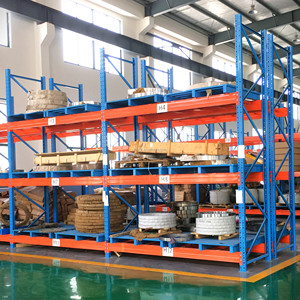
Heavy Duty OEM Industrial Steel Pallet Racking System
Engineered from premium Q235B/Q355B structural steel. Fully customizable load capacities ranging from 1,000kg to 4,500kg per beam level for high-bay logistics centers.
Contact Us
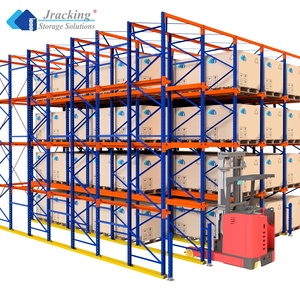
CE Certified Selective Pallet Racking System (Blue & Orange)
Offers 100% direct pallet selectivity. Features adjustable beam pitch settings and double-claw safety connectors tailored for fast-moving consumer goods (FMCG) storage.
Contact Us
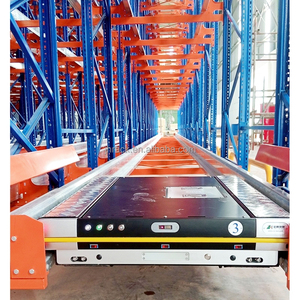
High-Density Radio Shuttle Pallet Storage System
Semi-automated deep-lane pallet storage supporting both FIFO and LIFO operational flows. Designed for cold storage facilities and agricultural bulk warehouses.
Contact Us
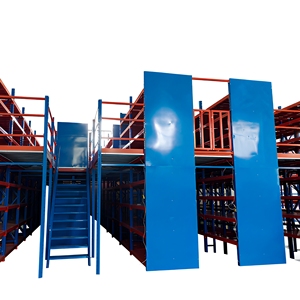
Heavy-Duty Steel Structure Mezzanine Floor System
Multi-tier mezzanine platforms engineered to maximize vertical building clear height. Complete with high-strength floor decking, handrails, and integrated staircases.
Contact Us
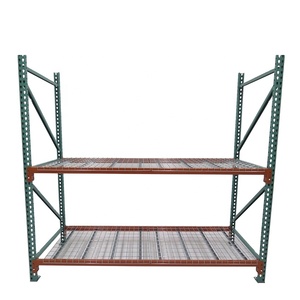
US Teardrop Heavy-Duty Industrial Pallet Racking
Standard punch teardrop frame profile allowing boltless beam adjustment. Compatible with international material handling equipment and standard North American specifications.
Contact Us
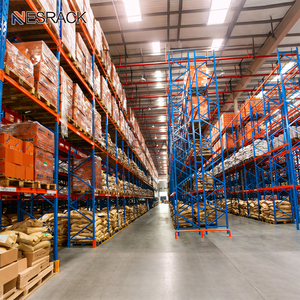
Galvanized Heavy-Duty Double Deep Pallet Racking
Stores pallets two-deep to increase storage density by up to 30% over standard selective racking. Hot-dip galvanizing provides superior anti-corrosion protection.
Contact Us
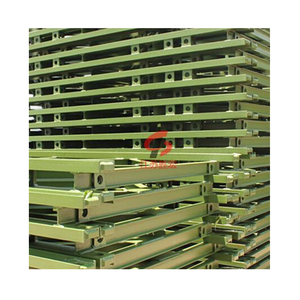
Heavy Structural Base Frame & Upright Ground Anchoring
Heavy-gauge footplates and seismic anchors designed to evenly distribute point loads across warehouse concrete floor slabs, ensuring long-term structural stability.
Contact Us
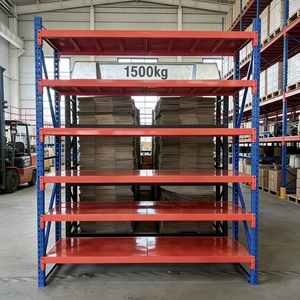
Modular 3-Tier Powder Coated Heavy-Duty Steel Storage Rack
High-rigidity bolted assembly rack featuring electrostatic thermosetting powder coating. Resistant to humidity, abrasion, and mechanical impacts in industrial environments.
Contact Us
20,000+ m²
Modern Manufacturing Base
30,000+ T
Annual Steel Output
6,000+
Global Projects Installed
100%
Custom Structural Engineering
Engineering High-Capacity Structural Storage for Ghana's Expanding Logistics & Industrial Sector
As West Africa’s economic landscape undergoes rapid transformation—driven by the implementation of the African Continental Free Trade Area (AfCFTA) secretariat in Accra and accelerated infrastructure investments around the Port of Tema—industrial storage requirements have evolved dramatically. Modern supply chain operations in Ghana can no longer rely on inefficient floor block-stacking or low-grade light racking systems. Enterprise logistics managers, third-party logistics (3PL) providers, and industrial plant directors require robust, high-bay structural pallet racking systems capable of handling extreme point loads while enduring tropical coastal environmental conditions.
Our structural pallet racking systems are engineered specifically to solve the dual challenges of spatial optimization and environmental resilience faced by commercial operations across Greater Accra, Kumasi, Takoradi, and Tamale. Utilizing premium Q235B and Q355B structural steel supplied directly by China’s premier steelmakers (Baosteel, Masteel, and Wuhan Iron & Steel), our racking configurations provide unmatched structural integrity, seismic compliance, and anti-corrosive resistance designed for long service life in West African climates.
Localized Application Scenarios Across Ghana’s Key Industrial Zones
Tailored structural storage engineering designed for specific regional industrial workflows and trade hubs across Ghana.
Tema Port Logistics & Free Zone Bonded Warehousing
The Port of Tema serves as the primary maritime gateway for Ghana and landlocked West African neighbors like Burkina Faso, Mali, and Niger. Port-adjacent distribution centers handle massive containerized freight volume requiring rapid pallet turnover. Our selective and double-deep structural pallet racking systems maximize vertical clear height up to 12+ meters, enabling 3PL operators to maintain 100% SKU access, speed up customs inspections, and optimize container deconsolidation efficiency under heavy daily throughput.
Kumasi & Middle-Belt Agro-Processing & Cocoa Storage
As the commercial capital of the Ashanti Region, Kumasi forms the epicenter of Ghana’s cocoa, timber, and agricultural commodity trade. Storing raw agricultural inputs and packaged cocoa products requires high-density storage that protects goods from ground moisture. Our automated radio shuttle racking systems and galvanized pallet racks provide optimal batch control (FIFO/LIFO), preventing crop spoilage and maximizing floor utilization in high-humidity agricultural storage facilities.
Takoradi Oil & Gas Supply Depots & Mining Hubs
Serving the offshore Jubilee Field and Western Region mining corridors, Takoradi facilities store heavy mechanical spare parts, drill pipes, chemical drums, and machinery components. Light-duty roll-formed shelving fails under these concentrated loads. We engineer heavy structural hot-rolled beam racks and structural cantilever racking capable of holding up to 5,000 kg per beam level, ensuring safety and compliance under demanding industrial conditions.
Accra Metro Cold-Chain FMCG & Pharmaceutical Storage
Rapid urban population growth in Accra has expanded demand for cold-chain storage for vaccines, pharmaceuticals, and imported frozen foodstuffs. Operating refrigerated warehouses is energy-intensive and expensive per cubic meter. Our high-density radio shuttle racking and drive-in rack solutions minimize wasted aisle space, dramatically lowering refrigeration energy costs per pallet position.
Strategic Market Trends: Ghana’s Modernization of Supply Chain Infrastructure
Under the Government of Ghana’s "One District, One Factory" (1D1F) initiative and expanding trade under AfCFTA, local manufacturing and inter-African trade volumes are accelerating. Modern fulfillment centers are transitioning from horizontal floor storage to vertically integrated structural steel rack systems. Investing in engineered pallet racking allows Ghanaian businesses to triple storage capacity within existing facility footprints, avoiding expensive civil land acquisition and construction delays.
Technical Evaluation Matrix: Racking Engineering Standards
Understanding structural differences ensures asset longevity, site safety, and return on investment in West African operational environments.
| Engineering Feature | Structural Steel Channel Racking | Standard Cold-Formed Roll-Formed Racking |
|---|---|---|
| Raw Material Specification | Heavy-gauge Q355B Hot-Rolled Structural Channel Steel | Cold-Rolled Strip Steel (Q235B grade) |
| Impact Resistance (Forklift Collision) | Exceptional: Solid channel construction absorbs high-energy forklift impacts without structural buckling. | Moderate: Thin-walled profiles require external column guards to prevent structural failure. |
| Load Capacity Per Beam Level | Up to 5,000 kg + (Heavy Industrial Grade) | 1,000 kg – 3,000 kg (Standard Commercial Grade) |
| Coastal Anti-Corrosion Performance | Superior; heavy steel wall thickness resists salt spray and 90%+ tropical humidity when combined with powder coating or galvanizing. | Standard protection; susceptible to edge rust if surface coating is scratched in high-humidity coastal zones (Tema/Accra). |
| Structural Lifetime | 20–25+ Years under heavy industrial use | 10–15 Years under controlled commercial usage |
| Fastening Method | High-tensile Grade 8.8 structural bolts with locking washers | Drop-in beam connectors with safety locks |
Why Ghanaian Importers & Contractors Trust Our Racking Manufacturing
Selecting a global racking supplier requires complete transparency in steel origin, manufacturing tolerances, structural engineering, and export packaging logistics. Our state-of-the-art 20,000 m² factory enforces stringent quality control at every phase of production:
- Certified Raw Materials: We source heavy-coil steel exclusively from tier-one steel manufacturing mills including Baosteel, Masteel, and Wuhan Iron and Steel. Mill test certificates (MTC) verifying yield strength, tensile performance, and chemical composition are provided with every order.
- Precision Roll-Forming & Robotic Welding: Utilizing German-engineered continuous roll-forming lines, upright pitch cumulative error is restricted to under ±2mm across a 12-meter continuous column. Structural beam connectors are welded using automated robotic manipulators, ensuring 100% seam penetration and zero porosity.
- Swiss Gema Electrostatic Powder Coating: Components pass through a 10-stage automated pre-treatment system (degreasing, derusting, phosphating) before entering our 220-meter automated powder coating line. Thermosetting powder coating cured at 180°C delivers superior resistance against corrosion, chipping, and tropical moisture.
- Structural Trial Assembly & Load Verification: Prior to ocean container loading, sample frames and beam connectors undergo pre-shipment trial assembly and static load testing to ensure seamless installation upon arrival at Tema Port.
- Export-Grade Containerized Packaging: Steel components are bundled using multi-tier steel strapping and heavy protective wrap. Small accessories, bolts, baseplates, and safety pins are organized in reinforced wooden cases on plywood pallets to prevent maritime shipping damage and facilitate rapid customs clearance and site sorting.
ISO 9001:2015 & CE Certified
Fully compliant with international quality management systems and European racking safety standards (FEM 10.2.02, BS EN 15512), ensuring complete site safety and regulatory compliance in Ghana.
Free CAD Layout & Load Calculation
Our senior structural engineers provide zero-cost 2D warehouse layout designs, 3D structural renderings, and load capacities tailored to your building clear height and forklift specs.
Full Technical & Installation Support
Every shipment comes with detailed English assembly manuals, structural installation drawings, component identification guides, and dedicated remote engineering consultation.
Frequently Asked Questions (FAQ) for Ghanaian Racking Buyers
Direct answers regarding shipping, customs, engineering standards, and installation across Ghana.
What engineering information is required to receive a free custom layout and quotation for my warehouse in Ghana?
To provide an accurate engineering layout and cost proposal, our design team requires: (1) Warehouse building dimensions including clear ceiling height, column spacing, and location of doors or sprinklers; (2) Pallet dimensions (Length × Width × Height including cargo) and maximum weight per loaded pallet; (3) Required number of pallet positions or total storage capacity targets; (4) Forklift model, maximum lift height, and minimum aisle turning radius; and (5) Stock rotation rule (FIFO or LIFO).
How do your structural pallet racking systems withstand Ghana’s humid and coastal weather (e.g., Tema & Accra)?
Ghana’s coastal regions feature high humidity and airborne salinity, which accelerate corrosion on untreated steel. We apply a rigorous 10-stage automatic pre-treatment cleaning and phosphating process, followed by high-durability electrostatic thermosetting powder coating cured at 180°C. For extreme outdoor exposures or cold storage facilities, we supply heavy-duty hot-dip galvanized (HDG) racking components that provide decades of corrosion protection.
What is the typical shipping timeline from your factory to the Port of Tema or Port of Takoradi?
Production lead time generally takes 15 to 25 business days depending on order volume and structural customization. Ocean freight shipping from Chinese ports (Ningbo/Shanghai) to the Port of Tema or Takoradi typically ranges between 30 to 40 days. We optimize component nesting inside 40ft High Cube (40HC) containers to maximize freight utilization and reduce landing costs per pallet position.
Do you assist with customs clearance documentation and compliance for Ghana Customs (GRA)?
Yes. We provide comprehensive export documentation required by Ghana Revenue Authority (GRA) Customs Division and the Ghana Ports and Harbours Authority (GPHA). This includes Commercial Invoices, detailed Packing Lists, Bills of Lading (B/L), Certificates of Origin, ISO/CE Quality Certificates, and pre-shipment inspection documentation (such as GSA/COTECNA clean reports of findings if required).
How is installation handled on-site in Accra, Kumasi, or other regions in Ghana?
Each racking order includes comprehensive 3D CAD installation drawings, component labeling, step-by-step English assembly guides, and safety torque parameters for structural anchor bolts. Our engineering support team provides live video guidance and remote technical assistance during erection. For large-scale automated or high-bay projects, site installation supervisors can be dispatched to oversee local installation teams.
Can your racking systems be installed on existing concrete slab floors in local warehouses?
Yes. However, the concrete floor slab must meet specific thickness and compressive strength criteria (typically minimum C25/C30 concrete grade with a minimum slab thickness of 150mm–200mm) to safely anchor heavy upright baseplates. Our engineers evaluate your point load distribution and provide ground baseplate engineering calculations to prevent slab punching or cracking.
Optimize Your Warehouse Storage Capacity in Ghana Today
Contact our structural racking engineers for technical consultation, zero-cost CAD warehouse layout design, and factory-direct pricing for your logistics facility.
Contact Us